
Step by step
What not to do
- Do NOT ignore the early signs of burnout, thinking you just need to 'push through.' Burnout does not resolve with more effort, it deepens.Instead, acknowledge the signs early and take proactive steps like seeking respite or talking to a professional.
- Do NOT assume that placement means you have failed. This is the most common and damaging myth. The truth is that recognizing your limits and acting on them is a sign of strength and love.Instead, reframe placement as a way to ensure your loved one receives consistent, professional care while you protect your own health.
- Do NOT make the decision in isolation or when you are at your most exhausted. Burnout clouds judgment.Instead, gather input from a doctor, a support group, or a care manager. Give yourself a few days to rest before making a final call, if possible, arrange for a friend or paid caregiver to cover for 48 hours so you can think clearly.
- Do NOT compare your situation to others. Every caregiving journey is different. What works for one family may not work for yours.Instead, focus on your specific circumstances: your health, your loved one's needs, your support system, and your financial reality. Your decision is valid because it is yours.
- Do NOT wait until a crisis forces the decision. Many caregivers end up making rushed placement decisions after a hospitalization or a dangerous incident.Instead, plan ahead. Use the warning signs of burnout as a cue to start exploring options before you reach a breaking point.
Key points
- Caregiver burnout is a legitimate medical and emotional condition that can compromise your health and your loved one's safety.
- Placement is not a failure, it is a responsible decision when the current care arrangement is no longer sustainable.
- Use a burnout checklist to objectively assess your symptoms; if you score high, treat it as a signal to explore placement.
- Involve your doctor, a support group, and a care manager in the decision, do not make it alone or in a crisis.
- Respite care can serve as a trial run to help you decide if placement is right for both of you.
- Your health matters. You cannot provide good care if you are burned out. Prioritizing yourself is not selfish, it is necessary.
Videos
 Is Your Loved One Ready for a Dementia Care Facility?This video directly addresses the decision-making process for placement, including when caregiver burnout is a key factor. It offers practical signs to look for and helps normalize the choice.
 Dementia Caregivers! 3 Signs You're Burning OutThis video helps you identify the early, subtle signs of burnout that often precede a crisis. Recognizing these signs early can help you act before burnout forces a rushed placement.
 4 Things MAY Mean YOU have Caregiver Burnout PLUS 3 Things to Do TODAY to HELP!This video provides immediate, actionable steps to address burnout, which can help you stabilize enough to make a thoughtful decision about placement rather than a reactive one.
 Is it Time? 8 Key Warning Signs It Might Be Time for a Different Level of Care.This video offers a comprehensive checklist of warning signs that it may be time to move to a facility, including caregiver health and safety concerns. It is a practical tool for evaluation.
2 more videos
 How Do I Find a Therapist for Caregiver Burnout?This video guides you on how to find professional mental health support specifically for caregiver burnout, which is crucial when burnout is severe enough to consider placement.
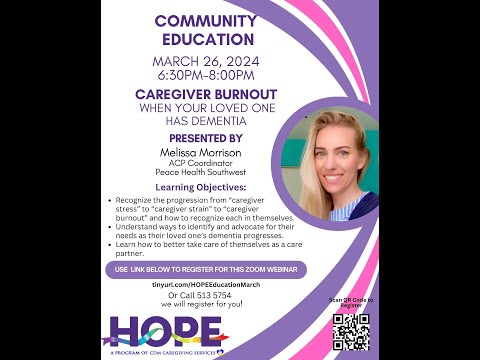 Caregiver Burnout when your Loved One has DementiaThis video focuses on the unique aspects of dementia caregiving that lead to burnout, reinforcing that your experience is valid and that placement is a legitimate option.
Background
Burnout Is Not Just Stress: It's a Health Crisis
Caregiver burnout goes far beyond the everyday stress of caregiving. It is a state of physical, emotional, and mental exhaustion that can compromise your health, your ability to think clearly, and your capacity to provide safe care. As one dementia expert explains, burnout is when stress has impacted your life to the point where your physical health, mental health, or emotional health is compromised. This is not something to 'tough out' or dismiss as feeling sorry for yourself, it is a real phenomenon that requires attention and action. When you are burned out, your immune system may weaken, making you more susceptible to every cold or virus. You may experience sleep difficulties, either sleeping too much or too little, and your mind may race at night with worry. These are not character flaws; they are biological responses to chronic overload.
The Hidden Danger: When Burnout Affects Your Loved One's Safety
Perhaps the most sobering reason to take burnout seriously is the risk it poses to the person you are caring for. Research and clinical experience both show that caregiver burnout is a significant risk factor for unintentional neglect or even elder abuse. When you are exhausted, irritable, and emotionally numb, your patience thins and your reactions may become sharper. You might snap more easily, feel disconnected, or go through the motions of caregiving without the warmth and attention your loved one needs. As one source notes, ignoring burnout symptoms can lead to a decline in your own health and, in turn, to elder abuse or neglect. This is not about blame, it is about recognizing that you cannot pour from an empty cup. If you find yourself thinking, 'I just don't care anymore,' or feeling that you are going through the motions, these are red flags that the current situation is no longer safe or sustainable for either of you.
Why Placement Is a Valid Choice: Not a Failure
Many caregivers carry an immense burden of guilt at the thought of placing a loved one in a memory care facility. But the decision to move someone to a higher level of care is not an admission of defeat; it is an act of wisdom and love. As one care expert puts it, the decision about when someone is ready for memory care is ultimately made by the family caregiver, not because they 'can't do it anymore,' but because it is no longer in their best interest or their loved one's best interest to continue. When you are increasingly burned out and struggling to manage your own life, let alone your loved one's, placement becomes a legitimate, even necessary, option. Another source reminds us that it is okay to say out loud that you either cannot or do not want to be a caregiver anymore. There should be no guilt or shame in that. Your health matters, and your loved one deserves care from someone who is not running on fumes.
Practical tools
5
The 'Burnout as Placement Signal' Self-Checklist
Print or write down these questions and answer honestly:
If you answer 'yes' to three or more, consider this a strong signal to explore placement.
The 'Two-Week Respite Trial' Plan
Call three local memory care facilities and ask about respite stays. Explain that you are a caregiver experiencing burnout and need a short-term break to evaluate placement. Most facilities offer this service. During the respite period, use the time to rest, see your doctor, and attend a caregiver support group. After the two weeks, ask yourself: 'Do I feel more like myself? Do I dread going back to full-time care?' Your answer will guide your decision.
The 'Doctor's Visit Script' for Caregivers
When you see your doctor, say this: 'I am a full-time caregiver for someone with dementia. I am experiencing symptoms of burnout, including [list your symptoms: insomnia, irritability, frequent illness, depression]. I am concerned about my health and about my ability to provide safe care. Can you help me assess whether my condition is serious enough to consider placing my loved one in a memory care facility?' This opens the door for a medical opinion that can validate your experience.
The 'Guilt-Busting Mantra' for Decision Time
Write this on a sticky note and put it where you will see it daily: 'I am not failing my loved one by choosing placement. I am ensuring they receive care from someone who is not burned out. My health matters, and their safety matters. This is an act of love, not abandonment.' Repeat it out loud whenever guilt arises.
The 'Support Group Reality Check' Exercise
Join an online or in-person dementia caregiver support group (e.g., Alzheimer's Association, Dementia With Grace Facebook group). Post or share: 'I am considering placement because of my own burnout. Has anyone else made this decision? How did you know it was the right time?' Hearing others' stories can normalize your experience and provide practical insights.
Different situations
For a spouse caregiver in late-stage dementia
The emotional bond is often deeper, and guilt may be more intense. Acknowledge that you have likely been caregiving for years and that your own health may have suffered significantly. Consider couples counseling with a therapist who specializes in dementia to help you both process the transition. Also, explore whether your spouse qualifies for hospice or palliative care in a facility, which can provide additional support.
For an adult child caregiver with their own family and job
Your burnout may be compounded by competing responsibilities. Prioritize a conversation with your employer about family leave or flexible hours. If you have siblings, hold a family meeting to share the assessment of your burnout and ask for concrete help, either with caregiving tasks or with the financial and logistical aspects of placement. You do not have to carry this alone.
For a caregiver of someone with Lewy body dementia or frontotemporal dementia
These conditions often involve more pronounced behavioral symptoms (hallucinations, agitation, impulsivity) that can accelerate caregiver burnout. If you are experiencing physical safety concerns (e.g., aggression, wandering), placement may be necessary sooner rather than later. Document specific incidents and share them with the facility during tours so they can assess their ability to meet your loved one's needs.
For a caregiver who is already in a facility but still feeling burned out
Even after placement, you may still experience burnout from the emotional toll, frequent visits, and advocacy demands. Use this as a signal to set boundaries: limit visits to a schedule that works for you, delegate communication with staff to another family member, and prioritize your own recovery. Consider joining a support group for caregivers whose loved ones are in facilities, you are not alone in this phase either.
For a caregiver with limited financial resources or relying on Medicaid
Financial stress can amplify burnout. Contact your local Area Agency on Aging or a Medicaid planner to understand what facilities accept Medicaid in your area and whether there is a waiting list. Some facilities offer sliding-scale fees or charity care. Do not let financial fear prevent you from exploring options, there are resources available, and a social worker can help you navigate them.
For the doctor
5
- Ask your doctor: 'Given my current health status, is it medically advisable for me to continue as a primary caregiver, or is placement a safer option for both me and my loved one?'
- Ask your doctor: 'Could my burnout symptoms (e.g., depression, anxiety, high blood pressure) be causing me to make decisions that are not in my loved one's best interest? How can I monitor this?'
- Ask a geriatric care manager: 'What are the specific signs that my burnout is putting my loved one at risk for neglect or unsafe care?'
- Ask your loved one's neurologist or primary care doctor: 'Given my loved one's stage and behaviors, would a memory care facility be better equipped to handle their needs than I am at home?'
- Ask a therapist or counselor: 'I am considering placement due to burnout. Can you help me work through the guilt and make a decision I can live with?'