Step by step
What not to do
- Do not argue or try to prove they have dementia. This will only escalate into a fight and damage trust.Instead, validate their feelings and redirect to a neutral topic.
- Do not correct them when they say something inaccurate about their abilities. For example, if they say they drove yesterday when they did not, simply say, ‘Oh, okay,’ and move on. Correcting them will only cause confusion and distress.
- Do not try to reason with them using logic or evidence. Their brain cannot process the information.Instead, use emotional connection and distraction to achieve your goal.
- Do not discuss their problems in front of them as if they are not there. This erodes their dignity and can make them feel humiliated. Have those conversations privately with other family members or professionals.
- Do not take their resistance personally. Their anger is a symptom, not a reflection of your care. Remind yourself that they are not choosing to be difficult, their brain is damaged.
- Do not force them to watch educational videos about dementia. If they have anosognosia, they will not see themselves in the content and may become confused or upset. Only share such resources if they show genuine curiosity or insight.
Key points
- Anosognosia is a neurological symptom, not denial, the brain literally cannot recognize the disease.
- Arguing, correcting, and reasoning will always fail and often escalate conflict.
- Validate their reality first, then redirect to a task or activity without mentioning the diagnosis.
- Use therapeutic fibs and the ‘friend approach’ to introduce help without triggering resistance.
- Involve a doctor or trusted third party for safety issues like driving or cooking.
- Take care of yourself, join a support group and seek professional help to manage the emotional toll.
Videos
 Why your loved one doesn't believe they have dementia- It's NOT denial.This video clearly explains the difference between anosognosia and denial, which is crucial for understanding why your loved one cannot accept the diagnosis.
 Jill Couch DAWN Dementia SpecialistJill Couch offers practical, compassionate strategies for communicating with someone who lacks insight, including the ‘friend approach’ and therapeutic fibs.
 3 things to NEVER do with your loved one with dementiaThis video reinforces the key ‘what not to do’ steps, argue, correct, reason, and explains why they backfire so badly.
 Don't Make This Dementia Caregiving MistakeCovers common caregiver errors when dealing with anosognosia, such as trying to force insight, and offers better alternatives.
2 more videos
 Why Your Loved One Doesn't Believe They Have Dementia - It's NOT DenialAnother deep dive into the neurology of anosognosia, helping you internalize that this is a brain problem, not a behavior problem.
 Time with Teepa - What is Anosognosia Again?Teepa Snow explains anosognosia with her trademark warmth and provides specific phrases and approaches to use in daily care.
Background
What Anosognosia Actually Is, and Why It’s Not Denial
Anosognosia is a symptom of brain damage, not a psychological defense. It results from injury or deterioration in the frontal or parietal lobes, the parts of the brain responsible for self-awareness. In Alzheimer’s disease and other dementias, these regions can become damaged, and the person literally cannot perceive their own cognitive or functional losses. Unlike denial, which is a conscious or subconscious choice to avoid painful truth, anosognosia means the brain’s ability to recognize the problem is gone. As one expert explains, the part of the brain that understands awareness of a particular disease no longer exists. This is why your loved one may truly believe nothing is wrong, even when symptoms are obvious to everyone else.
Why Arguing, Correcting, and Reasoning Will Always Fail
When you try to convince someone with anosognosia that they have dementia, you are asking their brain to do something it can no longer do. The result is not understanding, it is frustration, anger, and resistance. As dementia care specialists emphasize, you cannot reason with a brain that lacks the wiring for that insight. Trying to be right only leads to conflict and erodes your relationship. The hard truth is that you must choose between being right and getting results. Your loved one’s brain is not capable of accepting the diagnosis, so your job shifts from explaining to protecting, using gentle redirection, therapeutic fibs, and environmental changes to keep them safe without triggering a fight.
The Emotional Toll on You, and Why It’s Not Personal
When your loved one resists your help, it can feel like a personal rejection. But their anger and irritability are not about you, they are a reaction to being asked to do something that makes no sense in their reality. You are constantly managing safety, meals, hygiene, driving, and finances, yet in their brain, the connection between needing help and receiving it is broken. This is why caregivers often bear the brunt of their loved one’s frustration. Recognizing that this is a symptom, not a choice, can help you separate your feelings from the behavior. You are not failing; you are navigating a condition that is designed to be invisible to the person who has it.
Practical tools
6
The ‘Friend Approach’ Script
When you need to help with a task, use this exact phrasing: ‘I could really use your help with this, can you come with me?’ or ‘I’m feeling a bit overwhelmed, would you sit with me while I do this?’ This frames the help as a mutual activity and avoids triggering their resistance.
The ‘Doctor’s Orders’ Card
Keep a small card in your wallet or on the fridge that says, ‘Per Dr. [Name], please avoid driving/cooking alone for now.’ When they resist, show them the card and say, ‘The doctor asked us to follow this for a little while.’ This uses an authority figure they may still trust.
Environmental Cues Checklist
Create a simple checklist for safety:
These cues prevent arguments by making safety automatic.
The ‘Pause and Validate’ Phrase List
Write down and practice these phrases: ‘I hear you,’ ‘That makes sense,’ ‘I know you feel fine,’ ‘Let’s just do this together,’ ‘I’m here for you.’ Having them ready helps you stay calm in the moment.
Support Group Directory
Keep a list of local or online support groups for caregivers of people with dementia. The Alzheimer’s Association offers free groups. Sharing your experiences with others who understand can reduce isolation and provide practical tips.
The ‘Redirection Menu’
Prepare a list of 5–10 activities your loved one enjoys (e.g., looking at photo albums, listening to music, folding laundry, walking outside). When they become agitated about their diagnosis, immediately suggest one of these activities to shift their focus.
Different situations
Early-stage Alzheimer’s vs. moderate stage
In early stages, they may have brief moments of insight. You can gently say, ‘Sometimes I notice you forget things, does that bother you?’ If they agree, you can explore the topic together. In moderate stages, insight is usually absent, so avoid any mention of the diagnosis and focus entirely on redirecting to tasks.
Lewy body dementia or Parkinson’s dementia
These conditions often involve fluctuating cognition and visual hallucinations. Anosognosia may come and go. When they are more lucid, you might have a short conversation about safety. But when they are confused, use the same validation and redirection techniques. Also, be aware that they may have more paranoia, so avoid sudden changes in routine.
Spouse vs. adult child caregiver
Spouses may have a harder time being seen as an authority figure. Use the ‘friend approach’ more heavily, say, ‘Honey, I need your help with this.’ Adult children may need to defer to a doctor’s authority more often, as the parent may resist being told what to do by their child. In both cases, avoid power struggles and use a team approach.
Living in a facility vs. at home
In a facility, staff can be trained to use the same techniques. Ask the care team to avoid mentioning the diagnosis and to use redirection. If your loved one insists on going home, staff can say, ‘Let’s go for a walk first, then we’ll talk about it.’ At home, you have more control over the environment but may feel more isolated, lean on support groups.
When other family members are in denial
If siblings or relatives insist your loved one is fine, share educational materials about anosognosia. Explain that it is a neurological symptom, not a choice. Invite them to a doctor’s appointment or a support group. If they still resist, focus on what you can control in your own caregiving and set boundaries about what you will discuss.
For the doctor
4
- Ask your loved one’s doctor: ‘Given their anosognosia, what is the safest way to manage driving cessation? Should we involve the DMV or a driving assessment program?’
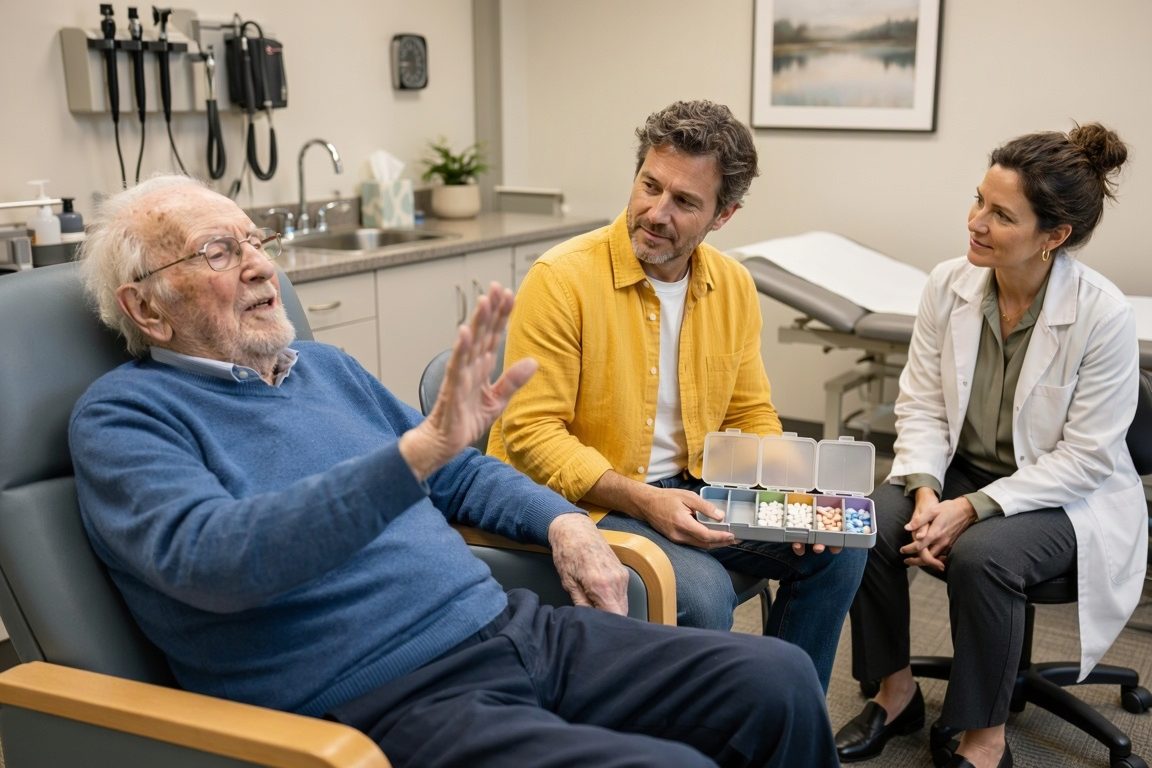
- Discuss medication management: ‘My loved one refuses to take their dementia medication because they don’t believe they need it. Are there alternative forms (e.g., liquid, patch) or ways to disguise it in food that are safe?’
- Ask about legal and financial planning: ‘Should we consider a conservatorship or power of attorney now, given that they cannot recognize their need for help? What steps should we take?’
- Inquire about safety risks: ‘They insist on cooking alone. Are there any specific safety devices or home modifications you recommend to prevent accidents?’