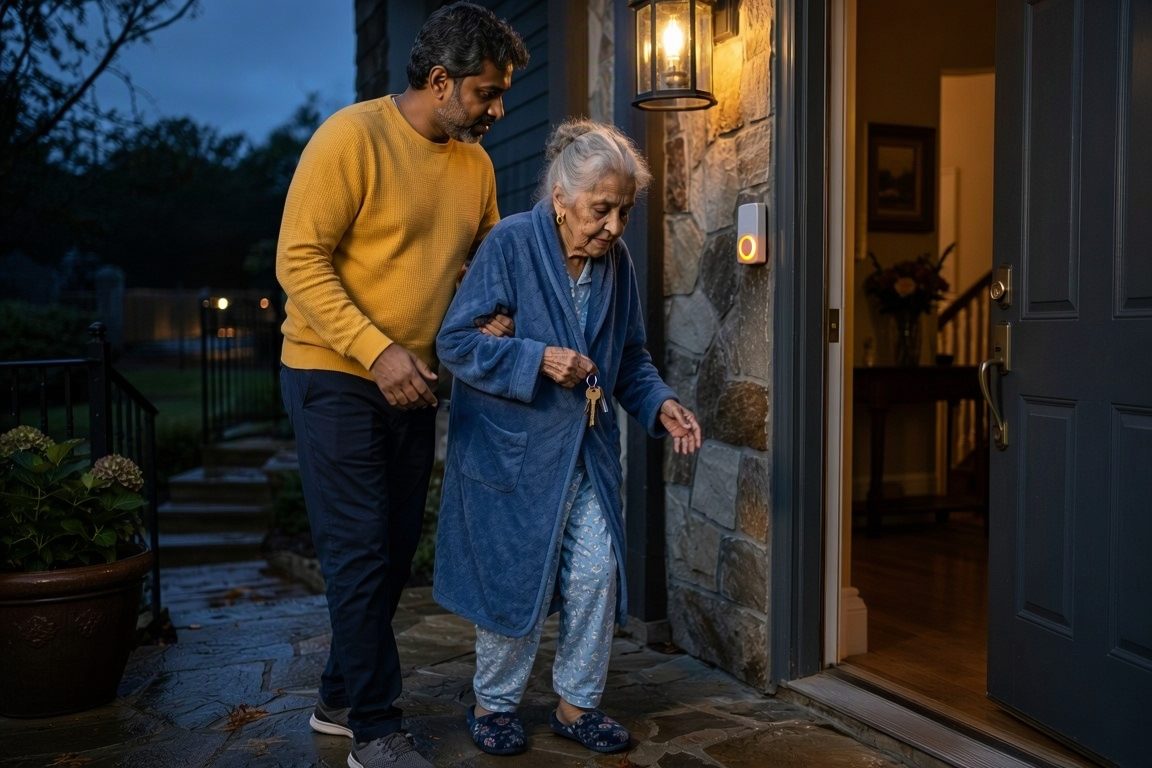
Step by step
What not to do
- Do not rely on hiding keys or telling them not to leave: People with Alzheimer’s often forget instructions and may become more determined to leave if they feel restricted.Instead, use environmental barriers like locks out of sight and alarms that alert you without confrontation.
- Do not leave them alone in a car or at home, even for a few minutes: A person with dementia can become disoriented and wander off in seconds, especially in unfamiliar places. Always have someone with them or use a secure environment.
- Do not assume that because they have not wandered yet, they never will: Wandering can start suddenly at any stage of Alzheimer’s. Be proactive with safety measures early, even if your loved one seems fine now.
- Do not try to reason or argue with them about why they cannot leave: Their reality is different, they may believe they need to go home to care for young children or go to work. Arguing can cause agitation and make wandering more likely.Instead, validate their feelings and redirect: ‘I know you want to go home. Let’s sit down and look at some photos of the house together.’
- Do not delay the decision to move to a secured setting out of guilt: The risk of serious injury or death from wandering is real. A locked memory care unit is not a failure, it is a life-saving measure. Your loved one’s safety must come first.
Key points
- Wandering can start at any stage of Alzheimer’s and often repeats, research suggests six out of ten people with dementia will wander.
- The tipping point for unsafe living is when the person can still exit the home despite alarms, locks, and GPS devices.
- Extreme weather, water, cliffs, traffic, and access to a car make wandering life-threatening.
- Address unmet needs (hunger, bathroom, boredom) every two hours to reduce wandering triggers.
- A locked memory care unit is often the safest option when wandering cannot be controlled at home.
- Never leave a person with dementia alone in a car or at home, even briefly, they can wander in seconds.
Videos
 Alzheimer's and Wandering - Professional Caregiver WebinarThis webinar explains the reasons behind wandering and offers professional-level strategies for prevention and response.
 How Do You Know When It's Time For A Nursing Home?Helps you recognize the signs that home care is no longer safe, including wandering, and guides the decision to move to a facility.
 Alzheimer's LA Caregiver Tips - Ep. 2 'Wandering'Practical tips from a caregiver support organization on how to keep a loved one safe from wandering at home.
 Why Do Dementia Patients Keep Saying They Want To Go Home?Explains the emotional and memory-based reasons behind the ‘want to go home’ phrase, which often triggers wandering.
2 more videos
 What Do You Do When A Dementia Patient Starts Wandering?Step-by-step guidance on what to do in the moment if your loved one wanders off, including how to search and when to call 911.
 Alzheimer's Dementia Hospice Care What to ExpectCovers late-stage care, when wandering is less common but other safety issues arise, and what to expect as the disease progresses.
Background
Why Wandering Changes the Safety Equation
Wandering is not just a frustrating behavior, it is a serious safety signal. Alzheimer’s disease gradually strips away a person’s ability to recognize familiar places and faces, so even a well-known neighborhood can become a confusing maze. When a person with dementia wanders, they often have an unmet need, like hunger, needing the bathroom, or a restless urge to ‘go home’ to a past memory, but they can no longer communicate that need or ask for help. This leaves them extremely vulnerable to traffic, extreme weather, and people who might take advantage of them. Once wandering begins, it tends to repeat: research suggests that six out of ten people with dementia will wander at least once, and most will do it again.
The Danger of ‘Still Able to Exit’
The most critical question is not whether wandering happens, but whether the person can still get out of the home despite your best precautions. If you have installed door alarms, bed alarms, GPS tracking devices, and locks, yet your loved one still manages to exit, especially in a climate with extreme heat or cold, near water, cliffs, or high-traffic areas, or if they have access to a car, the situation becomes extremely dangerous. At this point, the person is at high risk of serious injury or death. Many assisted living facilities will not accept someone who wanders frequently because they are considered high-maintenance and high-liability; the safest option is often a locked memory care unit. The decision to move to a secured setting is heartbreaking, but it can be life-saving.
How to Recognize the Tipping Point
You may notice your loved one becoming disoriented even on short walks, trying to leave the house at odd hours, or repeatedly asking to ‘go home’ when they are already home. They might forget why they went outside and become agitated or lost. If they are still driving and you suspect they could get lost, have their doctor contact the DMV to revoke their license, driving with wandering risk is a recipe for disaster. Other red flags include: the person no longer recognizes familiar landmarks, they cannot follow a simple route back to the house, or they have already been found wandering by neighbors or police. When these signs appear, it is time to act, not wait for another incident.
Practical tools
6
The ‘Unmet Needs’ Checklist
Before assuming wandering is ‘just the disease,’ run through this quick checklist:
Addressing these needs can prevent many wandering episodes. Post this list near the door as a reminder.
Door and Window Alarm Kit
Purchase a set of wireless door/window alarms (available at hardware stores or online) that chime when a door is opened. Place them on all exterior doors and any windows that open to ground level. This gives you an immediate alert so you can intervene before they step outside.
GPS Tracking Device (e.g., AngelSense, Jiobit, or Apple AirTag in a shoe insert)
A wearable GPS tracker sends location updates to your phone. For someone who may not tolerate a wristband, hide a small tracker in a shoe insert or sewn into a jacket pocket. **Only use with the person’s consent if possible, or under a doctor’s recommendation. If the person is distressed by the device, stop using it and discuss alternatives with your clinician.** Test it regularly to ensure it is charged and working.
MedicAlert Safe Return Program
Enroll your loved one in this program through the Alzheimer’s Association. They receive an ID bracelet or necklace with a 24/7 emergency hotline number. If they are found, the hotline operator contacts you and local authorities. This is especially helpful if they wander while you are not present.
Visual Camouflage for Doors
Paint the door the same color as the wall, or hang a curtain over it to reduce the visual cue that it is an exit. Some caregivers place a ‘STOP’ sign or a black mat in front of the door, which can trigger a hesitation in some people with dementia. **If the person becomes distressed or tries to force the door, discontinue this measure and consult a dementia care specialist. This trick should only be used temporarily and under professional guidance.**
Daily Routine Chart
Create a simple picture chart showing the daily schedule (e.g., breakfast, bathroom, walk, lunch, rest). Post it in a visible spot. A predictable routine reduces confusion and the urge to wander. Include a ‘bathroom break’ every two hours to prevent urgency-related wandering.
Different situations
Early-stage Alzheimer’s (still living alone)
If your loved one is still independent but you are worried about future wandering, start with non-invasive measures: install simple door alarms, enroll in MedicAlert Safe Return, and have a conversation about driving cessation. Do not remove all independence yet, focus on monitoring and planning. Ask their doctor to assess driving safety and consider a GPS tracker worn as a watch.
Moderate-stage Alzheimer’s (living with a caregiver)
At this stage, wandering is more likely and the person may not recognize their own home. Use all the home safety measures listed above. If they repeatedly try to ‘go home’ to a past residence, validate the feeling and redirect to a comforting activity. Consider a locked memory care unit if they are able to exit despite alarms, this is a common tipping point.
Late-stage Alzheimer’s (bedbound or very limited mobility)
Wandering is less common in late-stage because the person is often bedbound or requires significant assistance to walk. However, they may still attempt to get out of bed or a chair. Use bed alarms and pressure-sensitive mats to alert you. Focus on comfort and preventing falls rather than exit-seeking.
Spouse caregiver vs. adult child caregiver
Spouse caregivers may feel a stronger emotional pull to keep their partner at home, even when it is unsafe. Adult children may have an easier time making the decision to move to a facility, but may face guilt or conflict with the other parent. Both roles need support: join a caregiver support group, talk to a social worker, and consider respite care to reduce burnout.
Living near water, cliffs, or high-traffic areas
If your home is near a pond, river, cliff, or busy road, the danger of wandering is magnified. You must use the highest level of security: locked doors, fences with locked gates, and possibly a locked memory care unit. Do not rely on alarms alone, the risk of drowning or being hit by a car is too high.
For the doctor
8
- Ask your doctor: ‘At what point should I consider a locked memory care unit for my loved one who wanders?’
- Ask your doctor: ‘Are there medications that might reduce wandering or agitation, and what are the risks?’
- Ask your doctor: ‘How do I know if my loved one’s wandering is caused by an infection (like a UTI) that needs treatment?’
- Ask your doctor: ‘Can you help me with a letter to the DMV to revoke their driver’s license?’
- Ask your doctor: ‘What are the signs that my loved one is no longer safe at home, even with 24/7 care?’
- Ask your doctor: ‘Is it safe to use a GPS tracking device hidden in their clothing, and what should I do if they become distressed by it?’
- Ask your doctor: ‘How should I safely disable a vehicle if my loved one is at risk of driving, and what are the alternatives?’
- Ask your doctor: ‘Are there professional guidelines for using visual camouflage on doors, and when should I stop if it causes distress?’