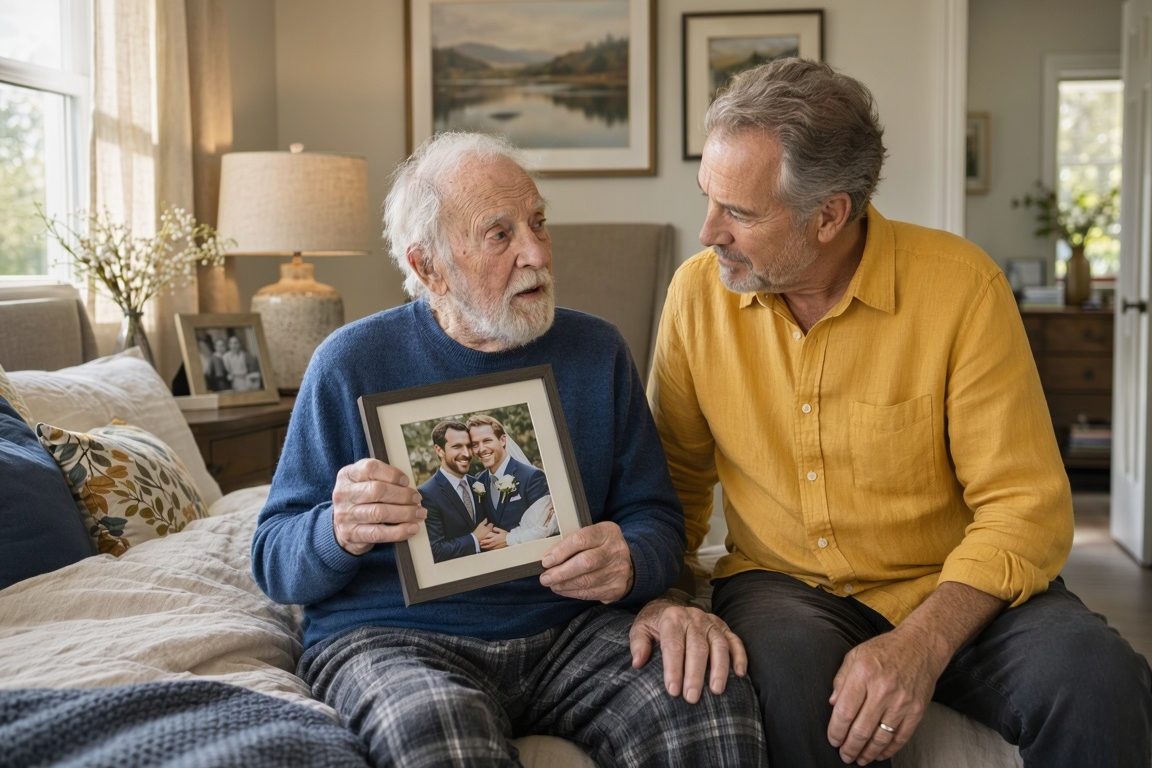
Step by step
What not to do
- Do not correct them by saying, 'Don't you remember? They died last year.' This can feel hurtful and confusing because they truly do not remember.Instead, validate their feelings and redirect.
- Do not use vague phrases like 'they're in a better place' or 'they passed away.' These can imply the person might return. Use direct words like 'died' to avoid confusion.
- Do not argue or try to prove the death happened. This only causes distress for both of you. Your goal is comfort, not accuracy.
- Do not hide all reminders of the spouse. Some photos or mementos can bring comfort.Instead, observe what triggers the question and adjust accordingly. If a photo causes distress, move it; if it brings a smile, keep it.
- Do not ignore your own grief. Caregivers often experience 'ambiguous grief' long before the death, and then 'conventional grief' after. Acknowledge both. As one source says, 'give yourself permission to grieve the loss of the relationship the way it was'.
- Do not assume that because they forget, they don't feel. Their emotions are real and need to be honored. Avoid dismissing their tears or saying, 'It's okay, you'll forget again.'
Key points
- The person is not in denial; they genuinely forget the death due to memory loss.
- Always validate their feelings first before addressing the facts.
- Use direct, simple language like 'died' instead of euphemisms.
- Remove or adjust environmental triggers that cause the question.
- Redirect to a comforting activity after validation.
- Take care of your own grief, you are losing your loved one twice.
Videos
 When someone with dementia remembers someone is deadThis video directly addresses the moment of realization and offers practical ways to respond with compassion.
 Losing Your Spouse Twice: The Truth About Dementia and MarriageExplains the caregiver's own grief journey and how to cope with losing your spouse twice.
 WHEN YOUR LOVED ONE WITH DEMENTIA REPEATS THE SAME QUESTIONS: 5 TIPSProvides general tips for repetitive questions that apply to this specific situation.
 TELLING A PARENT WITH DEMENTIA ABOUT A DEATHFocuses on how to communicate a death to a parent with dementia, which parallels this topic.


Practical tools
6
Validation Phrases
Keep a short list of phrases ready: 'I know you miss them so much.' 'It's so hard to lose someone you love.' 'I'm here with you.' 'Let's sit together for a moment.' These acknowledge grief without correcting memory.
Trigger Audit Checklist
Walk through their living space and note what triggers the question. Common triggers:
Decide to move, cover, or keep each item based on whether it brings comfort or distress.
Comfort Kit
Assemble a small box with items that soothe:
Use this when they become upset.
Whiteboard or Digital Reminder
Place a small whiteboard in their room with a gentle note: 'Your spouse died. It's okay to be sad. I love you.' Or use a smart speaker to set a daily reminder that says, 'Remember, your spouse has died. You are safe.' This can reduce the need to ask.
Grief Journal for Caregiver
Write down your own feelings each day. This helps you process the repeated grief and track patterns. One caregiver found that journaling before bed helped him dream of his wife without dementia.
Ritual of Remembrance
Create a small daily ritual to honor the spouse, like lighting a candle for five minutes or saying a short prayer. This can help both of you feel connected without needing to talk about the death repeatedly.
Different situations
Early-stage dementia
In early stages, they may still have some awareness of the death but forget intermittently. You can gently remind them, but always validate first. Use a calendar or notes to help them remember. Avoid over-correcting.
Late-stage dementia
In late stages, they may not understand death at all. Focus entirely on comfort and validation. Do not try to explain. Use touch, music, or a familiar routine to soothe them. The goal is emotional safety, not factual accuracy.
Lewy body dementia or Parkinson's dementia
These conditions often involve visual hallucinations or fluctuating cognition. The person may see or sense the spouse as present. Do not argue. Instead, say, 'I see you're thinking of them. Tell me about them.' This validates without reinforcing a false reality.
Spouse caregiver vs. adult child caregiver
If you are the spouse, you are grieving your own loss while also managing your loved one's grief. This is doubly hard. Seek support for yourself. If you are an adult child, you may feel less personal grief but still need to manage the situation with compassion. In both cases, remember that your loved one's grief is real, even if their memory is gone.
In a facility or with professional caregivers
Train staff on this approach. Provide a written 'comfort script' for them to use. Ensure that the environment is free of triggers that cause distress. Ask staff to call you if the repeated grief becomes overwhelming, so you can offer support.
For the doctor
4
- Ask your doctor if a referral to a neuropsychologist could help assess how memory loss is affecting your loved one's ability to process grief.
- Discuss whether medications for anxiety or depression might help reduce the emotional intensity of repeated grief episodes.
- Ask about grief counseling or support groups for yourself, as caregiver grief can be complicated and prolonged.
- If your loved one becomes aggressive or severely distressed when reminded of the death, ask about behavioral health strategies or medication adjustments.