Step by step
What not to do
- Don't assume that a nice-looking facility or a friendly salesperson means the staff are well-trained. The real test is what happens on the floor, not in the marketing office.Instead, ask specific training questions and observe staff interactions directly.
- Don't rely only on the nurse or director to tell you about training. The people who spend the most time with residents are aides, housekeeping, and dietary staff. Ask about their training specifically, and if possible, speak with them during your visit.
- Don't accept vague answers like 'we train our staff' or 'we use a person-centered approach.' Ask for details: length of training, topics covered, how often it's repeated, and whether staff must demonstrate skills. If they can't give specifics, that's a red flag.
- Don't forget to watch for signs of overstimulation or under-stimulation. If residents seem agitated, withdrawn, or are left alone for long periods, the staff may not have the skills to engage them appropriately. A good program offers small groups, quiet spaces, and varied activities.
- Don't assume that a facility that handles behaviors well for one resident will do the same for yours. Ask how they individualize approaches based on a person's history, preferences, and triggers. Every person with dementia is different.
Key points
- The people with the most contact, aides, housekeeping, dietary, activities, need the most training, not just nurses.
- Ask for specific behavior scenarios (exit-seeking, refusing baths) and listen for multiple, concrete solutions.
- Watch staff interactions during your visit; that tells you 90% of what you need to know.
- Look for low staff turnover and a core team that works in memory care daily.
- Don't accept vague answers, ask for training length, topics, frequency, and whether skills are demonstrated.
- Include family in care planning and ask how they communicate changes in behavior or health.
- Discuss any medication-based behavior management with your loved one's clinician before agreeing.
Videos
 How To Choose a Memory Care Facility For DementiaThis video walks through the key questions to ask during a tour, including how to assess staff training and behavior management approaches.
 Ep. 173: What Should Families Look For When Choosing a Memory Care Facility?This episode dives into the specifics of staff training, turnover, and how to spot a well-trained team during a visit.
 What To Ask When Looking For A Memory Care Facility?A practical guide to the exact questions you should ask about training, behavior management, and staff consistency.
 Things to consider when looking for a nursing home or other care facilityCovers broader facility considerations, including how to evaluate staff interactions and the importance of ongoing training.

Background
Why Staff Training Is the Hidden Heart of Memory Care
In most states and provinces, there is no requirement for staff to demonstrate a specific skill or knowledge test before working with people living with dementia. This means a facility can call itself a 'memory care' or 'special care unit' and still have almost no real dementia expertise among its workers. The people who have the most contact with your loved one are not the director, the marketer, or even the nurse, it's the aides, housekeeping, dietary staff, and the activities director. These are the ones who truly need extensive, ongoing dementia training, yet they are often the least trained.
What 'Good' Training Looks Like vs. What's Common
Effective training goes beyond a one-time video or a state-mandated minimum. It includes hands-on practice with real techniques, like how to redirect someone who is exit-seeking, how to help a person who refuses to bathe, or how to de-escalate agitation without using restraints or medications. Staff should be able to walk you through a specific scenario and offer multiple solutions. If the salesperson or director can describe good techniques but the aides on the floor don't use them, that training hasn't stuck. You want to see that the people who work in memory care use these skills every day, not just once in a while.
The Real Test: Watching Staff in Action
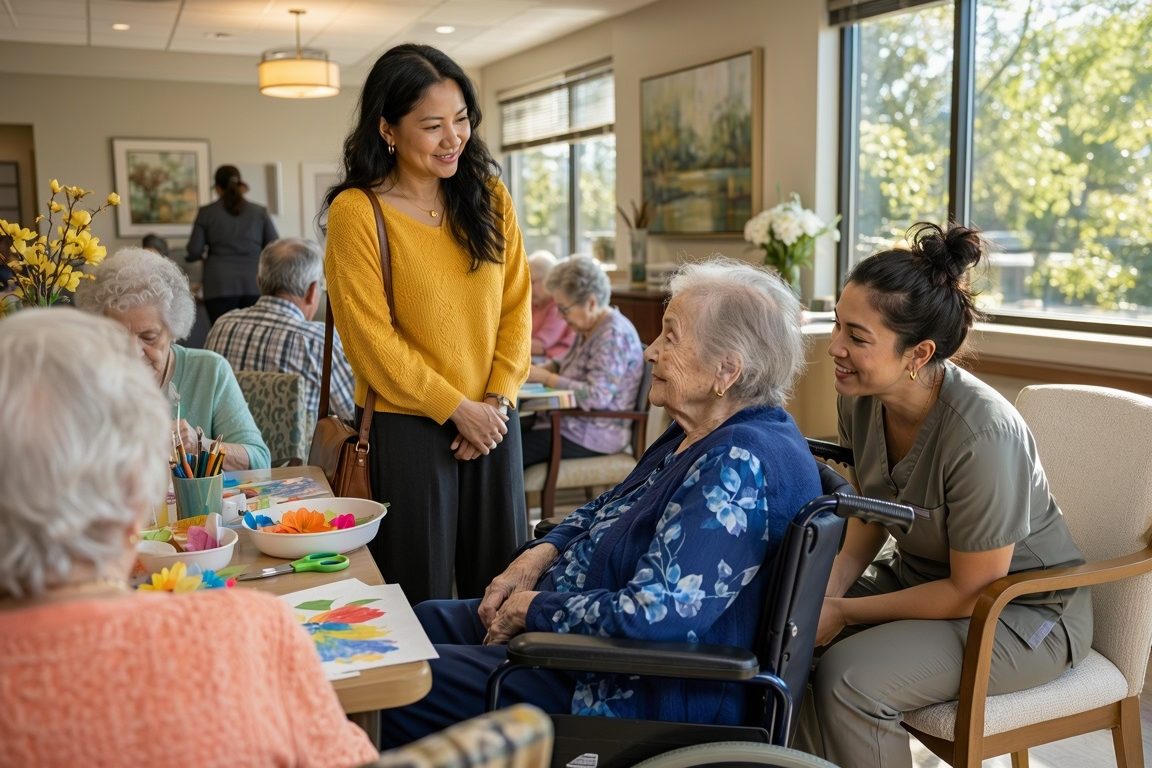
The most reliable way to gauge staff training is to watch how they interact with residents during your visit. Pay attention to whether they approach residents calmly, use their names, make eye contact, and speak slowly and clearly. Notice if they seem rushed or dismissive, or if they take time to listen and respond. A well-trained team will also include housekeeping and dining staff in basic dementia training, because every person who touches your loved one needs to understand how to communicate and respond to behaviors. If you see staff members who are patient, creative, and kind, that's a strong sign that the training is working.
Practical tools
5
The 'Walk Me Through' Script
Use this exact phrase during your tour: 'Walk me through a scenario where a resident is exit-seeking or refusing to bathe. Tell me a couple of solutions your staff might use.' If the person can describe two or three specific techniques (like offering a warm towel, using a calm voice, or redirecting to a favorite activity), that's a good sign. If they say 'we call the nurse' or 'we use medication,' that's a red flag.
The 'Who Gets Trained?' Checklist
Before your visit, write down these roles:
. During the tour, ask: 'Does every person in these roles receive dementia training? What does it cover?' If they say only nursing staff are trained, that's a problem. Bring a small notebook to jot down their answers.
The Observation Scorecard
During your visit, quietly note:
Give one point for each 'yes', a score of 4 or 5 is excellent.
The 'Tell Me About Your Leaders' Question
Ask: 'What training do your supervisors and managers receive in dementia care? How do they coach and support the direct care staff?' Well-trained leaders model good techniques and provide ongoing feedback, which makes a huge difference in how staff perform day-to-day.
The 'What Happens When Money Runs Out' Question
While not directly about training, this question reveals the facility's philosophy. Ask: '
' A facility that plans for this shows they care about long-term stability, which affects staff continuity and training investment.
Different situations
If your loved one has a history of aggression or wandering (e.g., in Alzheimer's or frontotemporal dementia)
Focus your questions on how staff handle aggressive behaviors and exit-seeking. Ask for a specific example of a recent situation and how it was resolved. Also ask about the staff-to-resident ratio during high-risk times (like shift changes or evenings). A facility with a lower ratio and staff trained in de-escalation is safer.
If your loved one has Lewy body dementia or Parkinson's disease dementia
These conditions often involve visual hallucinations, fluctuating cognition, and sensitivity to medications. Ask staff how they respond to hallucinations, do they validate the person's experience or argue? Also ask if they have training on medication management for these conditions, as some antipsychotics can be dangerous. Discuss with your clinician before any medication changes.
If you are an adult child placing a parent (vs. a spouse)
As an adult child, you may have less firsthand experience with daily care. Lean on the observation scorecard and the 'walk me through' script. You can also ask to speak with a current family member of a resident (the facility should provide references). Spouses may want to ask about family involvement in care planning and how they can visit or participate in activities.
If your loved one is in an early stage of dementia
Early-stage residents may still be verbal and socially aware. Ask about activities that match their current abilities and interests, and how staff support independence while ensuring safety. Also ask about the facility's approach to 'exit-seeking', someone in early stages may try to leave and become frustrated if stopped without explanation.
If you are considering a facility that accepts Medicaid or has a mix of private-pay and Medicaid residents
Ask if staff training and ratios are the same for all residents, regardless of payer source. Some facilities may have different staffing levels on Medicaid units. Also ask about staff turnover, higher turnover can mean less consistent training and poorer behavior management.
For the doctor
3
- If the facility mentions using medications to manage behaviors, ask your loved one's doctor: 'What are the risks and benefits of this medication for my loved one's specific type of dementia? Are there non-drug approaches we should try first?'
- If your loved one has a history of falls or is on blood thinners, discuss with the clinician how the facility's behavior management approach (e.g., using physical restraints or sedating medications) might increase fall risk.
- If the facility recommends a specific behavior management program (like the 'Positive Approach to Care' or 'P.I.E.C.E.S.'), ask your clinician if they are familiar with it and if it's appropriate for your loved one's stage and condition.