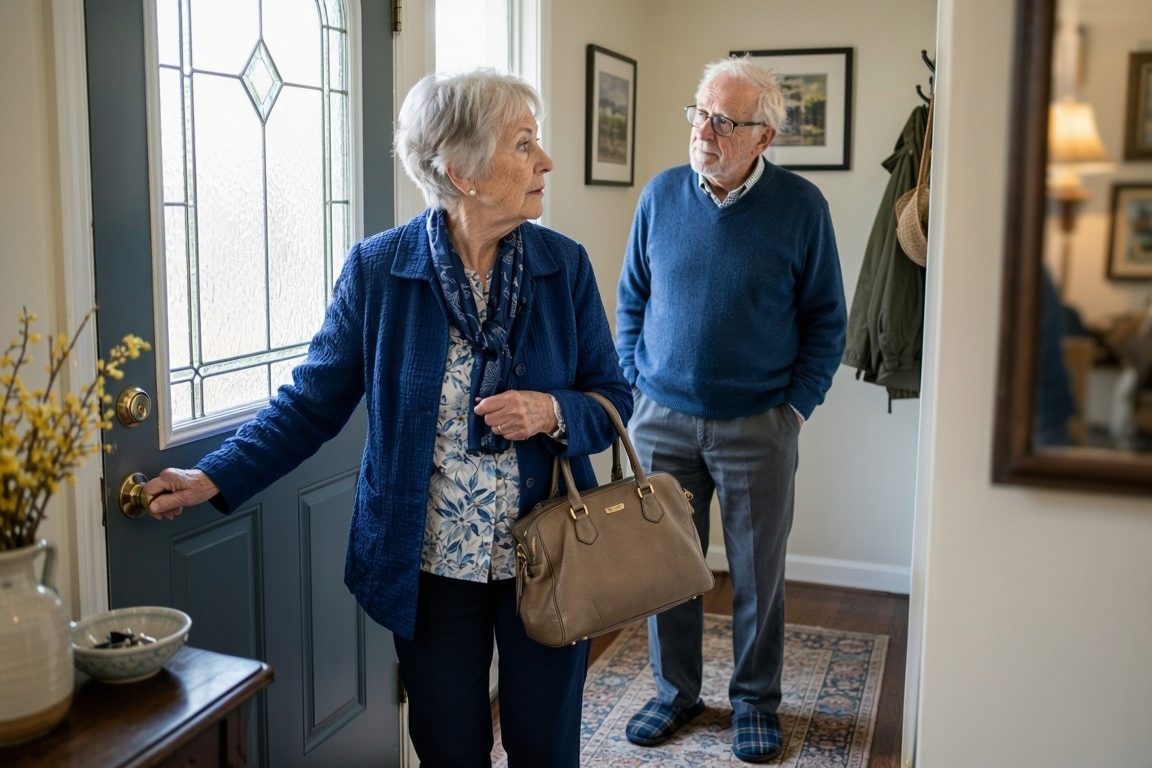
Step by step
What not to do
- Do NOT argue or try to reason with them. Saying 'This IS your home' will only increase their confusion and agitation.Instead, validate the feeling and redirect.
- Do NOT physically block the door or restrain them. This can escalate into a dangerous situation where they may try to hurt themselves or you to get out.Instead, use gentle redirection and distraction.
- Do NOT leave them alone if they are actively trying to leave. This is a high-risk moment. Stay with them, or if you must step away, ensure the door is locked and they are in a safe room.
- Do NOT take their exit-seeking personally. It is not about you or your care. It is a symptom of the disease. Feeling hurt or frustrated is normal, but try not to let it show in your voice or body language.
- Do NOT use complicated explanations or long sentences. Keep your words short and simple. Too much information overwhelms their brain and can trigger more anxiety.
Key points
- Exit-seeking is a symptom, not a choice. It is driven by unmet needs: feeling lost, anxious, bored, or needing to use the bathroom.
- Never argue or try to reason with them. Validation and redirection are far more effective.
- Use therapeutic fibbing to buy time and reduce anxiety. A simple white lie can prevent a crisis.
- Remove visual triggers like coats and keys from sight near the door.
- Create a safe environment with door alarms, locks, and a 'wandering path' indoors or in a fenced yard.
- Take care of yourself. Caregiver stress is real. Seek support from groups, friends, or professional counseling.
Videos
 When someone with dementia wants to leave the houseThis video directly addresses the moment of exit-seeking and gives practical, calm strategies for caregivers.
 Why Do Dementia Patients Want To Go Home?Explains the emotional and neurological reasons behind the 'I want to go home' plea, helping caregivers understand the need behind the behavior.
 Why Does My Mom With Dementia Keep Asking To Go Home?A caregiver-focused video that offers specific phrases and redirection techniques for the 'going home' question.
 How To Respond When Someone With Dementia Constantly Asks To Go HomeProvides a step-by-step response framework for the repetitive 'go home' request, including therapeutic fibbing examples.
2 more videos
 Live on TikTok | Tips on Driving and Dementia, Decoding Messages, Adapting Situations, and MoreCovers how to decode the hidden messages in exit-seeking behavior and adapt the environment to reduce triggers.
 Dementia Wandering: Prevention + What to Do If They Go Missing | Dr. Khushboo VermaFocuses on prevention strategies and what to do if your loved one does manage to leave, including safety planning and community resources.
Background
It's Not About the Door: It's About a Feeling
When your loved one tries to leave the house, they are not being willful or trying to escape you. They are experiencing a deep, often wordless feeling of being in the wrong place. As one expert explains, 'home is a feeling, not a place.' Their brain may be telling them they are young, that they need to get back to their childhood home, or that they are supposed to be doing something important. They might feel lost, even in a house they've lived in for decades, because dementia erases newer memories and leaves older, more familiar ones intact. So when they say 'I want to go home,' they are often referring to a home that no longer exists, their childhood home, a place of safety and belonging.
The Many Hidden Reasons Behind Exit-Seeking
The urge to leave can be triggered by many things. Sometimes it's a physical need: they need to use the bathroom, they're hungry, they're in pain, or they have restless energy and just need to stretch their legs. Other times it's emotional: they miss someone, they feel anxious or scared, or they feel like a stranger in their own home. They might see a coat by the door or a set of keys and those objects trigger the old habit of 'leaving for work' or 'going to the store.' In some cases, they may have a very real, logical reason in their mind, like needing to see a doctor, and they are simply trying to act on it. The key is to stop seeing the behavior as a problem to be stopped and start seeing it as a message to be decoded.
Why Arguing or Explaining Makes It Worse
It is incredibly tempting to say, 'But honey, you ARE home. This is your house. We've lived here for 20 years.' But this almost never works. Your loved one's brain cannot process that logic. Instead, it creates confusion, frustration, and often agitation. They may feel you are lying to them or that you are trying to trap them. The more you try to convince them with facts, the more they will dig in. The goal is not to make them understand reality, it's to help them feel safe and comfortable where they are. This means using therapeutic fibbing, redirection, and validation instead of correction.
Practical tools
6
The 'Where Are You Headed?' Script
A simple, non-confrontational phrase to start any exit-seeking moment. Say it with a warm, curious tone. This opens a conversation instead of a confrontation. Example: 'Oh, you're up! Where are you headed?' Then listen to the answer without judgment.
The 'Tell Me About Your Home' Redirect
When they say 'I want to go home,' instead of correcting them, ask: 'Tell me about your home. What does it look like? What's your favorite room?' This engages their long-term memory and often calms them. It also gives you clues about what they are really missing, maybe a certain feeling or person.
The 'Let's Go for a Walk' Strategy
If they are restless and want to leave, offer a short, supervised walk together. Say, 'Let's go check the mail' or 'Let's take a walk around the garden.' This satisfies the need to move and be outside, but keeps them safe and with you.
The 'Car is in the Shop' Fib
A classic therapeutic fib. If they insist on driving somewhere, say, 'The car is being repaired today. We can go tomorrow. Let's have a snack first.' This buys time and often the urge passes. Keep the car keys hidden and out of sight.
The Visual Cue Audit
Walk through your home and remove anything that says 'leave' to a dementia brain:
Store these items in a closet or a room that is not easily visible. Replace them with calming items like a plant, a photo, or a sign that says 'Welcome Home.'
The Door Alarm or Bell
A simple, inexpensive door alarm that chimes when the door opens can alert you without startling your loved one. You can also use a childproof door knob cover or a slide bolt lock placed high or low (out of their line of sight). Always ensure you have a way to exit quickly in an emergency.
Different situations
Lewy body dementia or Parkinson's disease dementia
These conditions often involve visual hallucinations and paranoia. Exit-seeking may be driven by a belief that someone is chasing them or that they see something frightening outside. In these cases, do not argue about what they see. Instead, say, 'I see you're scared. Let's go to a different room where it's safe.' Use calming music or a familiar object to ground them. Also, be aware that these individuals may have sudden changes in alertness and mobility, so a walk may need to be very short.
Late-stage dementia (unable to walk or communicate clearly)
Exit-seeking may manifest as repetitive vocalizations ('I want to go home') or agitated movements in bed or chair. The need is often physical: pain, hunger, thirst, or needing to use the bathroom. Check for these first. Use a weighted blanket or a familiar object (like a stuffed animal) to provide comfort. A calm, low voice and gentle touch can be very effective. Do not attempt to walk them if they are unsteady.
Spouse vs. adult child caregiver
Spouses often feel personally rejected or hurt by exit-seeking, especially if the person says 'I want to go home' while living with them. Remember: it's the disease talking, not your relationship. As an adult child, you may feel guilt or frustration that your parent doesn't recognize the home you've provided. In both cases, seek support from a dementia support group or counselor. Your emotional state directly affects your loved one's calmness.
Living in a facility (nursing home, assisted living, memory care)
Exit-seeking is very common in facilities because the environment is unfamiliar. Staff should be trained to use the same techniques: validate, redirect, and offer alternatives. As a family member, you can help by bringing familiar items from home (photos, a favorite blanket) to make the room feel more like 'home.' Visit at consistent times to reduce anxiety. If the facility uses alarms or locks, ask how they are monitored to ensure safety without causing distress.
Medicaid or limited resources
You may not have the budget for expensive alarms or home modifications. Focus on low-cost solutions: a simple bell on the door, a childproof knob cover, or a piece of furniture placed in front of the door (if safe). Use the 'therapeutic fibbing' scripts freely, they cost nothing. Reach out to your local Area Agency on Aging for free or low-cost resources like door alarms or respite care.
For the doctor
4
- If your loved one's exit-seeking is accompanied by new or worsening agitation, aggression, or hallucinations, discuss with their doctor. This could be a sign of an underlying infection (like a UTI), pain, or medication side effect.
- If they have a history of falls or are unsteady on their feet, ask the doctor about a safe walking program or physical therapy to reduce fall risk during wandering.
- If you are considering using a GPS tracker or a medical alert bracelet, discuss with the doctor or a social worker to ensure it is appropriate and to get guidance on how to introduce it without causing distress.
- If the exit-seeking is causing severe caregiver stress or sleep deprivation, ask about respite care options or medications that might help reduce agitation (only as a last resort and under medical supervision).