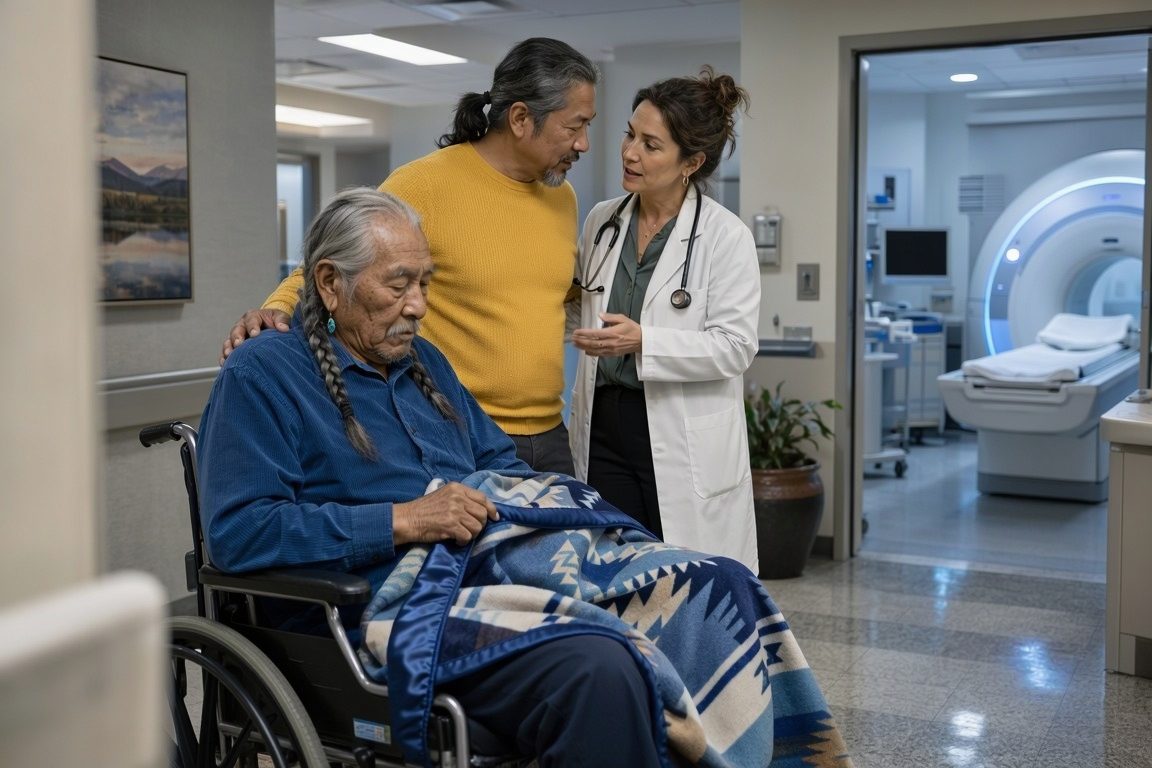
Step by step
What not to do
- Do not agree to a test out of habit, 'just in case,' or to ease your own grief. If the result won't change what you do, the test is not worth the trauma.
- Do not make this decision alone or wait for a crisis. Gather the proxy, family, and a palliative care specialist and build a plan around your loved one's wishes.
- Do not overlook nonverbal pain signs. In advanced dementia, your loved one cannot often tell you they hurt. Watch for moaning, grimacing, guarding a body part, rocking, or withdrawal, and use the PAINAD scale to make observations concrete.
Key points
- Always ask: 'Will this test change the treatment plan in a way that improves comfort or quality of life?' If no, skip it.
- Use the PAINAD scale to assess pain in nonverbal loved ones, do not rely on them to tell you.
- You have the right to refuse any test or procedure. You are not a bad caregiver for saying no.
- Focus on comfort: soft music, gentle touch, familiar routines, and appropriate pain medication.
- Involve a palliative care specialist to help guide decisions and manage symptoms.
- Document your decisions and share them with all providers to avoid repeated pressure.
Videos
 Putting someone with dementia through medical screeningsThis video directly addresses the dilemma of screening tests in dementia, using real examples like mammograms. It helps you think through whether the test is worth the distress.
 New Alzheimer's Medication TreatmentWhile this is about new medications, it underscores the importance of understanding that treatments are not one-size-fits-all and that you must weigh risks vs. benefits for your loved one’s stage.
 Dementia & Getting an MRI ScanThis video shows what an MRI experience is like for someone with dementia, including tips to reduce anxiety. It helps you decide if the test is feasible and how to prepare.
 How To Tell What Stage Of Alzheimer's Someone Is In?Understanding the stage helps you decide what tests are appropriate. This video explains staging in a practical way.

Background
Why This Decision Feels So Heavy
In advanced dementia, your loved one’s brain is struggling to process the world around them. Even a simple blood draw or an MRI can be deeply confusing and frightening. They may not understand why they are being moved, why they are in a loud machine, or why strangers are touching them. This can trigger agitation, crying, or even aggression. As one expert explains, if your loved one is already struggling just to get through a normal day at home, you have to ask: is it really worth putting them through a stressful procedure? (Source 1)
At the same time, you want to do everything possible to help them. But research shows that many medical interventions in advanced dementia produce no benefit or can even cause harm (Source 22). For example, if a screening test finds cancer, would you actually put your mother through chemotherapy or surgery at this stage? If the answer is no, then the test itself becomes unnecessary distress (Source 2). The key is to shift your focus from trying to fix every medical issue to maximizing their comfort and dignity.
The Real Question: Will the Results Change the Plan?
Before agreeing to any test or procedure, sit down with the doctor and ask bluntly: 'If we do this test, will the results lead to a treatment that will improve my loved one’s quality of life or reduce their suffering?' If the answer is no, for instance, if the only treatment for a positive finding would be something aggressive that you would not choose, then the test is likely not worth the distress it will cause (Source 2).
This is especially true for screening tests like mammograms or colonoscopies in someone with advanced dementia. But it also applies to diagnostic tests like MRIs or CT scans when the result would not change the care plan. For example, if your loved one has a fall and the doctor wants a head CT, but the only possible intervention would be surgery that you would not want them to undergo, then the scan may be unnecessary. Always ask: 'What will we do differently based on this result?' If the answer is nothing, skip the test.
How to Assess Your Loved One’s Current State
To make this decision, you need a clear picture of where your loved one is in their disease. Doctors often use staging tools like the Functional Assessment Staging (FAST) scale, which looks at physical symptoms, behaviors, and how well they can function day-to-day (Source 3, Source 11). But remember: every person’s decline is unique, and no single symptom tells the whole story (Source 14).
Pay attention to their overall quality of life. Are they still able to enjoy small pleasures, a favorite song, a soft blanket, a familiar face? Or are they mostly sleeping, withdrawn, or in visible discomfort? If they are in the late stages (often FAST stage 7), they may need 24/7 care and have trouble swallowing, communicating, or recognizing loved ones. At this point, comfort measures should be the priority, not aggressive testing (Source 10, Source 24).
Practical tools
6
Key Question Script
When a test is suggested, say: 'Thank you for explaining this. Before we proceed, I need to ask
'
PAINAD Scale (Pain Assessment in Advanced Dementia)
Print the PAINAD scale from a reputable source. It scores five observable signs on a 0–2 scale:
A total of 4 or more suggests real pain.
Comfort Kit for Procedures
Pack:
Ask in advance whether you can stay in the room.
MOLST Form (Medical Orders for Life-Sustaining Treatment)
Complete a MOLST form with the doctor. It turns your loved one's values into official medical orders about tests, treatments, and resuscitation, preventing unwanted procedures down the road. The healthcare proxy can sign based on known wishes.
Palliative Care Consult Request
Ask the doctor for a referral to a palliative care specialist. They focus on comfort and quality of life, manage pain, anxiety, and other symptoms, coordinate the care plan, and guide tough decisions. Many families say this consult was the turning point.
FAST Scale (Functional Assessment Staging Tool)
Ask the doctor or palliative care team for a copy of the FAST scale. It walks through seven stages of dementia, from early memory loss to complete dependence. Knowing your loved one's stage gives a shared starting point, by stages 6 and 7, almost no diagnostic test will improve comfort.
Different situations
If your loved one has Lewy body dementia (LBD)
People with LBD are extremely sensitive to antipsychotic medications and anesthesia. Even a mild sedative for an MRI can cause severe confusion or a Parkinson’s-like crisis. Discuss with the doctor whether the test can be done without sedation, or if there is a non-invasive alternative. Also, LBD often involves visual hallucinations, being in a strange machine may worsen these. Prioritize comfort even more strongly.
If your loved one is in the very late stage (FAST stage 7)
At this stage, they are likely bedbound, unable to speak, and may have trouble swallowing. Any test that requires moving them, holding still, or fasting is extremely burdensome. The focus should be 100% on comfort: pain management, gentle turning to prevent bedsores, and keeping them clean and calm. Most screening tests are inappropriate. Even diagnostic tests should be reserved for situations where the result would directly relieve suffering (e.g., a urine test for a suspected UTI that could be treated with oral antibiotics).
If you are a spouse vs. an adult child
Spouses often feel a deep sense of duty and may struggle more with letting go. Adult children may feel torn between honoring their parent’s earlier wishes and their own guilt. Both roles are valid, but it helps to recognize your own emotions. A spouse might benefit from joining a support group for dementia spouses. An adult child might need to remind themselves that they are acting as their parent’s advocate, not as a child trying to fix everything. In both cases, lean on the healthcare proxy document to guide decisions.
If your loved one is in a skilled nursing facility or memory care
Facility staff may have protocols that automatically recommend tests (e.g., annual labs). You have the right to refuse these. Talk to the director of nursing and the attending physician. Ask that the care plan be updated to reflect a comfort-focused approach. Also, facility staff are trained to spot changes like UTIs or strokes early, trust them to alert you if something truly needs attention (Source 12). You can also request a hospice evaluation if your loved one meets criteria (e.g., weight loss, recurrent infections) (Source 11).
If your loved one is on Medicaid or has limited resources
Medicaid often covers palliative care and hospice, but coverage for certain tests may be limited. Ask the social worker or case manager about what is covered. You may also want to explore whether a test is truly necessary to avoid unnecessary out-of-pocket costs. Focus on comfort measures that are covered, such as home health aides, respite care, and pain medications.
For the doctor
6
- Ask the doctor: 'Given my loved one’s stage of dementia, what is the likelihood that this test will cause significant distress or agitation?'
- Ask the doctor: 'If we skip this test, what are the risks of missing something? Are those risks worth the distress of the test?'
- Ask the doctor: 'Can we use a non-invasive alternative, like an ultrasound instead of a CT scan, or a simple blood test instead of an MRI?'
- Ask the doctor: 'If my loved one needs sedation for the test, what are the risks of sedation in someone with advanced dementia? Could it cause delirium or a longer hospital stay?'
- Ask the doctor: 'Can we get a palliative care consult to help us weigh the benefits and burdens of this test?'
- Ask the doctor: 'Is my loved one eligible for hospice? If so, would that change the approach to tests and treatments?'