Step by step
What not to do
- Do not put on a regular TV show or movie and assume it will work. Regular programming has plotlines and characters that require short-term memory, which can confuse or frustrate a person with dementia.Instead, use a program specifically designed for dementia, like Memory Lane TV, which has no plot dependency.
- Do not play music at high volume or with competing noises. Sensory overload can increase agitation. Always turn off the TV, close windows, and keep the volume at a comfortable level. If the person seems startled, lower it further.
- Do not force participation. If the person does not want to clap, sing, or dance, that is fine. Simply sitting and listening is still beneficial. Forcing them can cause distress and make them resistant to future sessions. Let them engage at their own pace.
- Do not leave the person alone with the screen for long periods without checking in. They may become confused or anxious if they do not understand what is happening. Stay nearby, even if you are doing something else, and check in every few minutes with a gentle touch or a smile.
- Do not use the same program every single day without variation. While repetition is good, too much of the same content can become boring. Rotate between different playlists or themes (e.g., nature sounds one day, big band music the next) to keep it fresh.
- Do not expect a miracle cure. Virtual music engagement is a tool to improve mood and reduce distress, not a treatment for the disease itself. If the person remains agitated or depressed, discuss other options with their clinician. This is a complement to medical care, not a replacement.
Key points
- Virtual music engagement programs are designed for dementia: no plot, no characters, just multi-sensory content that sparks memories and reduces distress.
- Set up the environment first: quiet, dim, clutter-free, with the screen at eye level and volume comfortable.
- Start with a familiar song from the person's young adult years and sit beside them to model engagement.
- Offer simple instruments like bells or rhythm sticks, but never force participation, listening is enough.
- Use the program as a respite tool: set a timer and give yourself permission to take a short break.
- Repeat successful sessions; because short-term memory fades, the same content can feel new and comforting each time.
Videos
 The Bridgetown Music Therapy TeamShows how a music therapy team uses music to engage people with dementia in a group setting, offering ideas for virtual programs.
 An Interactive and Media Collection for people living with dementia & their care partnersDemonstrates a virtual media collection designed for dementia, including music and visuals, and how to use it at home.
 How to keep a dementia patient busyProvides practical tips for engaging activities, including music-based ideas that can be adapted for virtual programs.
 Why Meal Refusal Happens with Dementia (And How to Tackle It Without a Fight)While focused on meals, this video offers communication strategies that apply to introducing music programs without resistance.
2 more videos
 The BIGGEST dementia advice for YOUOffers general caregiver advice that helps set realistic expectations when using virtual music programs.
 Top 5 Indoor Activities for Seniors with Dementia (For Free)Lists free indoor activities, including music-based ones, that can be done virtually or with minimal setup.
Background
What Is a Virtual Music Engagement Program?
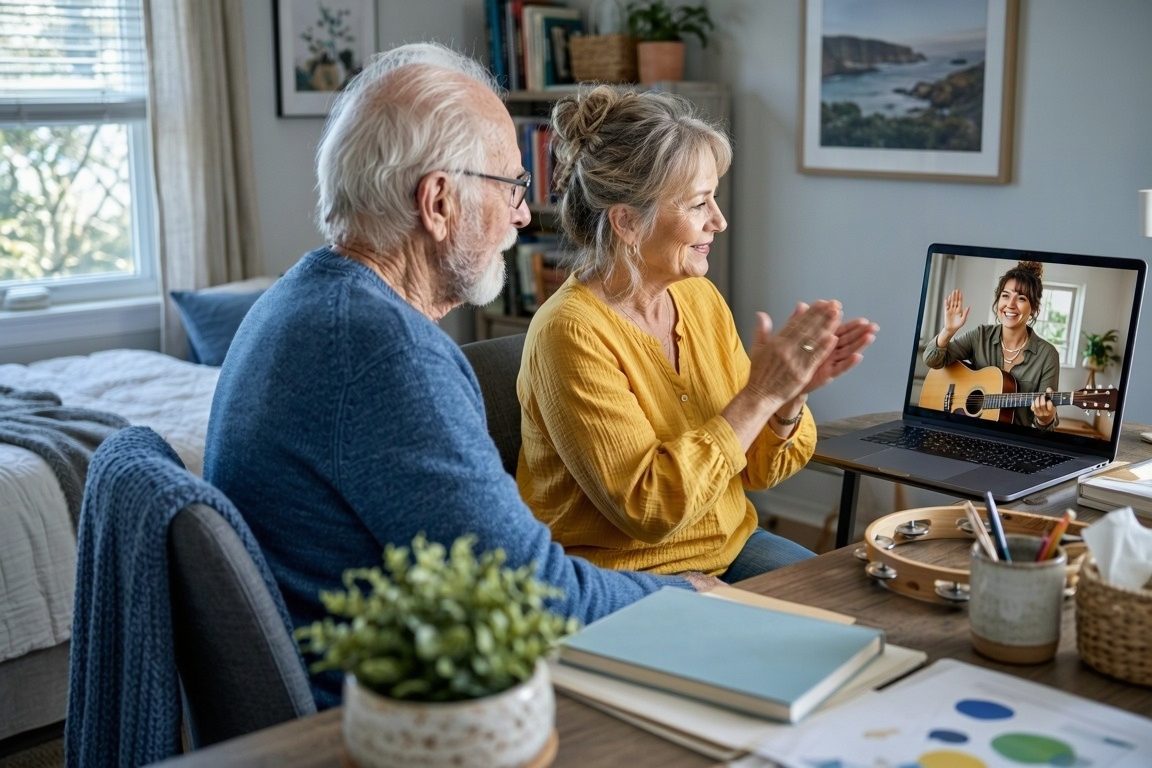
A virtual music engagement program is a non-pharmacologic digital intervention delivered through a television, tablet, or streaming device. Unlike regular TV shows or radio, these programs are specifically designed for people with dementia. They use multi-sensory stimulation, videos, music, photography, sounds, and even aromas, to create immersion and sustained engagement. Programs like Memory Lane TV are not plot- or character-dependent, so they don't require short-term memory to follow a story. Instead, they offer calming or energizing content that can be used morning, afternoon, or evening, depending on the person's mood and needs.
Why Does Music Work So Well for Dementia?
Music is processed through the entire brain, and that neural network is often one of the last to be affected by dementia. Familiar songs can link a person back to specific moments in their life, helping them express themselves and connect with who they are, even when other abilities fade. This is why a person who struggles to speak may still hum along to a childhood tune or tap their foot to a beat. Virtual programs harness this by offering curated playlists and visual content that trigger positive memories and emotions without overwhelming the person.
How Virtual Programs Differ From In-Person Music Therapy
In-person music therapy involves a trained therapist who adapts in real time to the person's responses. Virtual programs are a complementary tool, they are not a replacement for therapy but a practical, cost-effective way to provide regular music engagement. They are especially useful when a music therapist is not available, when a facility has an outbreak and cannot host outside vendors, or when a family caregiver needs a reliable activity that offers them a short break. Research suggests that music-based interventions can significantly decrease depression symptoms and improve well-being in people with moderate to severe dementia.
Practical tools
6
Memory Lane TV subscription
A streaming service designed specifically for people with dementia. It offers multi-sensory programming with videos, music, photography, and sounds. Available on any suitable TV or streaming device. Subscribe at memorylane.tv. Use it in the morning to energize or in the evening to calm. It is not plot-dependent, so it works across all stages.
Simple percussion instruments
Keep a small basket of rhythm sticks, a tambourine, a bell, or a shaker near the viewing area. When a song plays, offer one to the person and say, 'Let's play along together.' If they cannot hold it, gently tap their hand or arm in rhythm. This adds a physical activity component and deepens engagement.
Calming environment checklist
Before each session, run through this list:
Phrases to invite participation
Use warm, inviting language. Examples: 'Let's listen to some music together.' 'I remember you loved this song.' 'Can you tap your foot along with me?' 'Would you like to hold this bell?' 'That's it, you're doing great.' Avoid questions that require a yes/no answer if the person has trouble communicating, just offer a gentle invitation.
Free YouTube playlists
If you cannot afford a subscription, create a free YouTube playlist of songs from the person's young adult years (ages 18–30). Search for '1940s big band music' or '1950s oldies' and add 10–15 songs. Use the 'loop' feature so it repeats. Pair with nature videos (e.g., 'relaxing forest stream') for a calming visual component.
Respite timer
Set a timer for 15–20 minutes when you start the program. This gives you a clear window to step away, make a cup of tea, or simply sit and breathe. When the timer goes off, check on the person. If they are still engaged, reset the timer for another 10 minutes. This helps you actually take a break without worrying.
Different situations
Late-stage dementia or end of life
Focus on calming, slow-tempo music with no visuals or very gentle nature scenes. Use a tablet placed at the bedside. Do not expect any active participation. Simply let the music play softly in the background. Hold their hand or gently stroke their arm. The goal is comfort and connection, not engagement. Discuss with the hospice team if music is appropriate.
Lewy body dementia or Parkinson's disease dementia
These types often involve visual hallucinations and sensitivity to noise. Use only audio (no video) or very simple, static images. Avoid fast-paced or flashing visuals. Keep volume low. If the person becomes agitated, stop immediately. Music can still be helpful, but you may need to experiment with different genres and observe closely for signs of distress.
Family caregiver vs. activity professional in a facility
For a family caregiver, start with one-on-one sessions in a quiet room at home. Use a tablet or laptop. For an activity professional, you can run group sessions using a large TV or projector. In a group, assign one staff member to sit with each resident who needs extra support. Have multiple instruments available. Use the program as a structured activity on the daily calendar.
Person is deaf or hard of hearing
Focus on the visual component of the program, nature scenes, old photographs, or music videos with captions. Use a hearing aid or headphones if the person tolerates them. You can also use a subwoofer or place a speaker near their chair so they feel the vibration of the music. Drumming or tapping on a tabletop can provide a tactile experience.
Person has a history of trauma or PTSD
Avoid songs or images that might be associated with traumatic memories. Start with instrumental music or nature sounds. Watch the person's facial expressions and body language closely. If they seem tense or look away, switch to a different track. Consult with a music therapist or mental health professional for guidance on safe choices.
For the doctor
5
- If the person has a history of seizures, ask if flashing or rapidly changing visuals in some programs could trigger a seizure.
- If the person is on medications that affect heart rate or blood pressure, ask if upbeat music might cause overstimulation or a spike in blood pressure.
- If the person has hearing aids or cochlear implants, ask about safe volume levels and whether headphones are appropriate.
- If the person has a known allergy to scents, ask about programs that include aromatherapy components, some virtual programs may suggest using essential oils alongside the music.
- If the person is in hospice or end-of-life care, ask the hospice team about the best times and types of music to use for comfort.