What not to do
- Do not rely solely on a single brief memory test (e.g., Mini-Cog) for diagnosis, use comprehensive batteries
- Do not dismiss symptoms as normal aging without objective cognitive testing
- Do not assume a negative initial screening rules out dementia, especially in marginalized groups
- Do not delay specialist referral while waiting for 'official' primary care diagnosis
Key points
- Undiagnosed dementia is common: an estimated 40-80% of people with dementia in the community have never received a formal diagnosis.
- Diagnostic disparities affect racial/ethnic minorities, people with lower education, and those without regular healthcare access.
- Reversible conditions like depression, vitamin deficiencies, and medication side effects can mimic dementia, always rule these out first.
- Mixed dementia (more than one type) is very common, especially in people over 85, but is often missed.
- Early detection allows for better planning, access to treatments, and connection to support services.
- You can advocate by tracking symptoms, requesting a thorough evaluation, and seeking a second opinion if needed.
Videos
 Enhancing Everyday Activities in Dementia CareThis video offers practical strategies for adapting daily routines, which can help you observe and document functional changes that support a diagnosis.
 Podcast Ep: Mixed Dementia: Yes, Your Partner Can Have More Than One [What the Dementia]Explains why mixed dementia is so common yet underdiagnosed, and how to recognize when symptoms don't fit a single type.
 Depression and Dementia in Older AdultsHelps you distinguish between depression and dementia, and emphasizes the importance of screening for both.
 Zinnia Caregiver Support Session: Responding to Dementia-related Changes in the Person You SupportProvides communication and response techniques that can help you gather information and advocate effectively with healthcare providers.
2 more videos
 1 in 10 People With Dementia Have THIS Hidden DiagnosisReveals the hidden prevalence of mixed dementia and why it is often missed in standard evaluations.
 4 Most Common Types of Dementia in AgingGives a clear overview of Alzheimer's, vascular, Lewy body, and frontotemporal dementia, helping you understand what to look for.
Background
How Common Is Undiagnosed Dementia?
Dementia is far more widespread than official diagnoses might suggest. Worldwide, an estimated 47 million people live with dementia, and that number is expected to rise to 131 million by 2050 (source 2). In the United States alone, over five million older adults have dementia, yet many of them have never received a formal diagnosis (source 20). Community-based studies indicate that a large proportion of people with dementia, perhaps as many as 40 to 80 percent, are undiagnosed or diagnosed only in the later stages of the disease (source 7). This gap means that countless individuals and their families are navigating cognitive decline without the support, resources, and planning that a diagnosis can provide.
Why does this happen? One major reason is that dementia is not a single disease but an umbrella term for many different conditions: Alzheimer’s disease, vascular dementia, Lewy body dementia, frontotemporal dementia, and mixed dementia (source 6). Because symptoms overlap and can be subtle at first, healthcare providers may initially attribute memory or thinking problems to normal aging, stress, or depression (source 9). Additionally, some doctors are hesitant to give a dementia diagnosis because they feel they cannot offer a cure, or they worry about causing distress (source 22). The U.S. Preventive Services Task Force has concluded that current evidence is insufficient to recommend routine screening for cognitive impairment in older adults, which means many cases are not caught early (source 8).
Who Is Affected by Diagnostic Disparities?
Diagnostic disparities are not random, they follow patterns of social and economic inequity. People from racial and ethnic minority groups, particularly Black and Hispanic older adults, are less likely to receive a timely dementia diagnosis compared to their white counterparts (source 1). Lower education levels, limited English proficiency, and living in rural or underserved areas also increase the risk of being missed (source 24). Furthermore, individuals with lower income may have less access to specialists, cognitive testing, and follow-up care (source 20). These inequities are compounded by the fact that many older adults do not receive appropriate sensory care, such as glasses or hearing aids, which can mimic or worsen cognitive symptoms and further delay diagnosis (source 21).
Another often-overlooked group is people with mixed dementia, meaning they have brain changes of more than one type (e.g., Alzheimer’s and vascular dementia). Mixed dementia is actually more common than previously recognized, especially in people over age 85, but it is frequently underdiagnosed because clinicians may stop looking after identifying one cause (sources 12, 18). Similarly, depression in older adults can look very much like dementia, and if depression goes untreated, it can accelerate cognitive decline (source 5). Many seniors with depression are never evaluated for dementia, or vice versa, leaving both conditions unaddressed.
What Detection Initiatives Are Underway?
Recognizing the scale of undiagnosed dementia, researchers and public health organizations are launching initiatives to improve early and equitable detection. One key approach is developing better screening tools that are culturally sensitive and can be used in primary care settings, not just specialty clinics (source 1). For example, brief cognitive assessments that take only a few minutes are being tested in community health centers and senior centers. Another strategy is training healthcare providers, from doctors to nurses to social workers, to recognize the early signs of dementia and to differentiate it from reversible conditions like medication side effects, vitamin B12 deficiency, or thyroid problems (source 3).
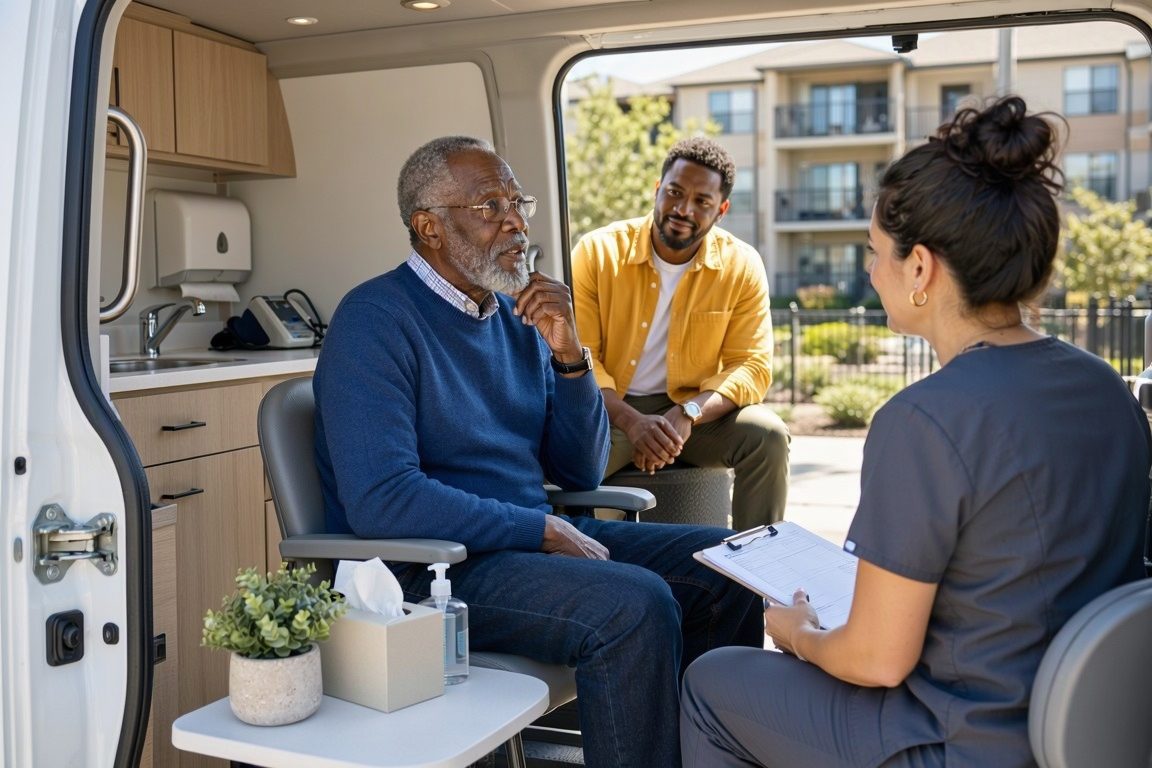
Community-based programs are also expanding. Organizations like the Alzheimer’s Association and local Area Agencies on Aging offer free memory screenings and educational workshops (source 22). Some initiatives focus on reaching underserved populations through churches, community centers, and mobile health units. Additionally, researchers are studying the role of sensory impairments, such as hearing loss, and whether treating them can improve cognitive outcomes or reveal underlying dementia earlier (source 21). While there is no national screening mandate yet, these grassroots efforts are helping to close the detection gap one community at a time.
Practical tools
3
Montreal Cognitive Assessment (MoCA)
Validated for mild cognitive impairment and vascular dementia; available in multiple languages and literacy-adapted versions.
Rowland Universal Dementia Assessment Scale (RUDAS)
Culturally fair test designed to minimize education and language bias, suitable for diverse populations.
Functional Activities Questionnaire (FAQ)
Measures real-world functional decline (e.g., managing bills, cooking) to complement cognitive scores.
Different situations
Lewy body dementia (LBD) or Parkinson’s disease dementia
People with LBD often have visual hallucinations, fluctuating cognition, and movement problems like stiffness or tremors. These symptoms can be mistaken for psychiatric illness or Parkinson’s. If you notice these, specifically ask the doctor: ‘Could this be Lewy body dementia?’ Also, be aware that people with LBD can have severe reactions to antipsychotic medications, so never accept those without a specialist’s guidance (source 4).
Late-stage dementia
If your loved one is already in late-stage dementia and undiagnosed, focus on comfort and safety rather than aggressive diagnostic testing. However, still rule out reversible causes like urinary tract infection or dehydration, which can cause sudden worsening. A diagnosis at this stage can still help with hospice eligibility and care planning (source 8).
Spouse vs. adult child caregiver
Spouses may be more likely to normalize changes or feel guilty about ‘betraying’ their partner by seeking a diagnosis. Adult children often have more energy to advocate but may face resistance from the parent. If you are a spouse, consider bringing a trusted friend or adult child to appointments to help voice concerns. If you are an adult child, approach the conversation with love: ‘Dad, I want to make sure you get the best care possible. Let’s see the doctor together.’
Person living alone or in a rural area
If your loved one lives alone, they may be hiding symptoms. Look for unpaid bills, spoiled food, missed appointments, or changes in hygiene. In rural areas, access to specialists may be limited. Ask the primary care doctor about telemedicine consultations with a memory clinic. Also, contact your local Area Agency on Aging for transportation assistance to appointments (source 20).
Low-income or uninsured individuals
Financial barriers can delay diagnosis. Look for sliding-scale clinics, community health centers, or university research studies that offer free cognitive assessments. Medicare covers an annual wellness visit that includes a cognitive assessment, make sure to request it. If uninsured, contact the Alzheimer’s Association for help finding low-cost resources (source 20).
For the doctor
5
- Ask your doctor: ‘Based on my loved one’s age, race, and medical history, are they at higher risk for being undiagnosed? What steps can we take to ensure a fair and accurate evaluation?’
- If a diagnosis of Alzheimer’s is given, ask: ‘Should we consider a lumbar puncture or amyloid PET scan to confirm? These are not routine but may be available in research settings.’
- If your loved one has a history of stroke or heart disease, ask: ‘Could this be vascular dementia or mixed dementia? Would an MRI of the brain help clarify?’
- If depression is suspected, ask: ‘What is the safest antidepressant for someone with possible dementia? Some medications can worsen cognition.’
- If your loved one is on multiple medications, ask: ‘Can we do a medication reconciliation and consider deprescribing any that might be affecting cognition?’