Step by step
What not to do
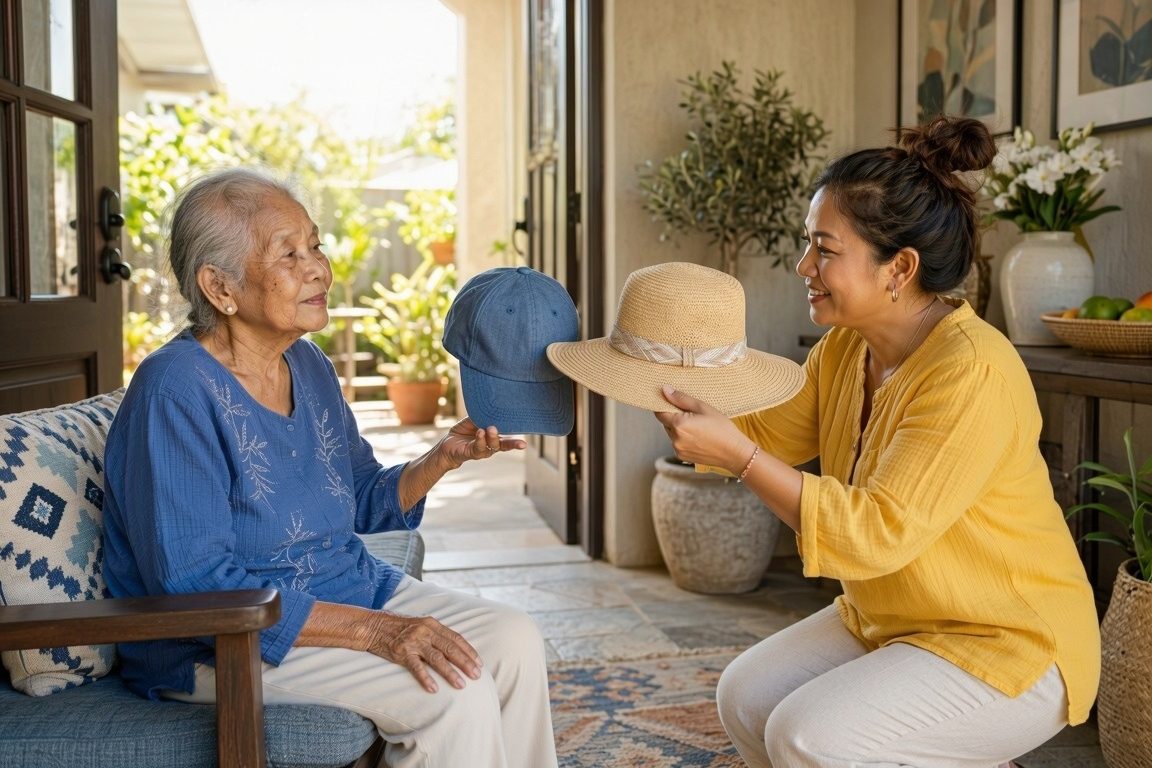
- Do not ask open-ended questions like 'What do you want for lunch?' This forces the person to scan too many possibilities and often leads to a request you cannot fulfill, setting up an argument.Instead, offer two specific options you can provide.
- Do not offer more than two choices. Even three can be overwhelming. Stick to two to keep the decision manageable.
- Do not use logic or reasoning to convince them. For example, do not say 'You need a coat because it's cold outside.' Their brain may not process that reasoning.Instead, just bring the coat and offer two coat options, or simply hand it to them when they go out.
- Do not correct them if they choose something you think is 'wrong' (e.g., wearing a summer shirt in winter). If it is safe, let them choose. You can always bring a sweater along. The goal is to preserve their autonomy, not to be right.
- Do not rush them. Giving them time to process is essential. If you fill the silence with more words, you increase their confusion.
- Do not use the technique for every single decision. Some things are non-negotiable (e.g., medication). Save the two-choice approach for situations where you can genuinely offer flexibility.
Key points
- Offer only two options that you are okay with, never a choice you cannot deliver.
- Use simple, short phrases and, if possible, show the two items visually.
- Wait patiently for a response; do not rush or add more options.
- Affirm their choice with a positive statement to reinforce their sense of control.
- If they refuse both, step back and try again later with the same or slightly different options.
- This technique works for many daily decisions: food, clothing, activities, and timing of tasks.
Videos
 How to ask someone with dementia a question without getting in an argumentThis video directly demonstrates how to use closed-ended questions (like two choices) to avoid arguments, which is the core of this technique.
 Time with Teepa - In This Situation What Do You NeedTeepa Snow explains why two options are ideal for processing and how to narrow down choices in real-time care situations.
 How to respond to 'Have You Seen My Mom?' when asked by someone living with dementiaThis video shows how to use the two-choice technique to redirect a person who is asking about a deceased or absent loved one, without correcting them.
 How to communicate with a dementia patientCovers the broader communication principles, including the importance of limiting choices and using simple language.
2 more videos
 Dementia FAQ Behavior Tips, Tricks | Power of ROUTINE Facebook LIVE ReplayDiscusses how routine and limited choices work together to reduce anxiety and improve cooperation.
 PAC Live @ 5 - PPA Final Steps of the ProcessTeepa Snow and team demonstrate the 'this or that' two-choice technique in action, including why it works for the brain.
Practical tools
6
The 'Two-Option Menu' Phrase Bank
Keep a mental or written list of common two-choice phrases for daily decisions: 'Would you like the blue towel or the green towel?', 'Would you like soup or pasta for lunch?', 'Would you like to do laundry now or after breakfast?', 'Would you like the red shirt or the white shirt?', 'Would you like cookies or a fruit bowl for dessert?' These are simple, clear, and easy to say.
Visual Choice Cards
Create or buy simple picture cards for common options:
Hold up the two cards as you ask. This reduces the need for verbal processing and can be especially helpful in middle or later stages.
The 'Let's Try' Script
When the person is hesitant, use this script: 'Let's just try the turkey sandwich. If you don't like it, that's okay.' The word 'try' gives permission to not like it, reducing pressure. This is especially useful for tasks the person may resist, like bathing or changing clothes.
Daily Choice Chart
Create a simple paper chart with two columns: 'Breakfast' and 'Lunch' (or 'Morning' and 'Afternoon'). Each day, write or check off two options for each meal. The person can point or check the box. This also helps them remember what they chose and reduces confusion about time of day.
Environment Setup: Two Visible Items
When offering a choice, physically place the two options in front of the person. For example, put two shirts on the bed, or two bowls of soup on the table. This makes the choice concrete and visual, reducing the need for abstract thinking.
The 'Reflect and Offer' Technique
When the person asks a question like 'Have you seen my mom?', instead of correcting them, reflect back and then offer two choices: 'I know you're thinking of your mom. Would you like to look at a photo album or take a walk?' This redirects without confrontation.
Different situations
Early-stage dementia
In early stages, the person may still be able to handle three options or open-ended questions. Use two choices as a gentle support, not a necessity. You can also involve them in planning the two options for the day, giving them a sense of partnership.
Middle-stage dementia (moderate cognitive decline)
This is where the two-choice technique is most critical. The person's processing speed is slower, and they are easily overwhelmed. Always use two choices, and pair them with visual cues. Keep your tone calm and patient. Avoid any hint of frustration.
Late-stage dementia (severe cognitive decline)
In late stages, the person may not be able to make even a two-choice decision. In that case, you may need to make the choice for them, using a gentle, reassuring tone. For example, say 'I have a blue towel here. Let's use it.' The goal shifts from autonomy to comfort and safety.
Lewy body dementia or Parkinson's dementia
These conditions often involve fluctuating cognition and visual hallucinations. Use the two-choice technique when the person is lucid. If they are confused or hallucinating, simplify further: offer only one option, or use a visual cue that is very clear and not overwhelming. Avoid asking during episodes of confusion.
Vascular dementia
Vascular dementia can cause uneven cognitive decline. The person may be able to make decisions one day but not the next. Be flexible: on good days, you can offer two choices; on bad days, use a single option or a 'let's try' approach. Watch for signs of frustration and adjust immediately.
Adult child caregiver vs. spouse caregiver
Adult children may find it harder to shift from a parent-child dynamic to a care partner role. Practice the two-choice technique in low-stakes situations first (e.g., 'Would you like tea or coffee?'). Spouses may need to unlearn old habits of open-ended questions. Both roles benefit from using the same scripted phrases to reduce emotional charge.
In a facility setting
In a nursing home or assisted living, coordinate with staff so they use the same two-choice approach. For example, if the person is offered 'shower now or after breakfast?' by staff, reinforce that at home visits. Consistency reduces confusion. Also, use the technique for activities: 'Would you like to go to the garden or the lounge?'
For the doctor
3
- If the person consistently refuses both options and becomes agitated, discuss with their doctor whether there may be an underlying medical issue (e.g., pain, infection, medication side effect) that is affecting their ability to engage.
- If the person is on medications that affect cognition (e.g., antipsychotics, sedatives), ask the clinician how these might impact their decision-making ability and whether the two-choice technique is appropriate at certain times of day.
- If the person has a history of severe anxiety or depression, ask the clinician for additional strategies to use alongside the two-choice technique, as emotional distress can block even simple choices.