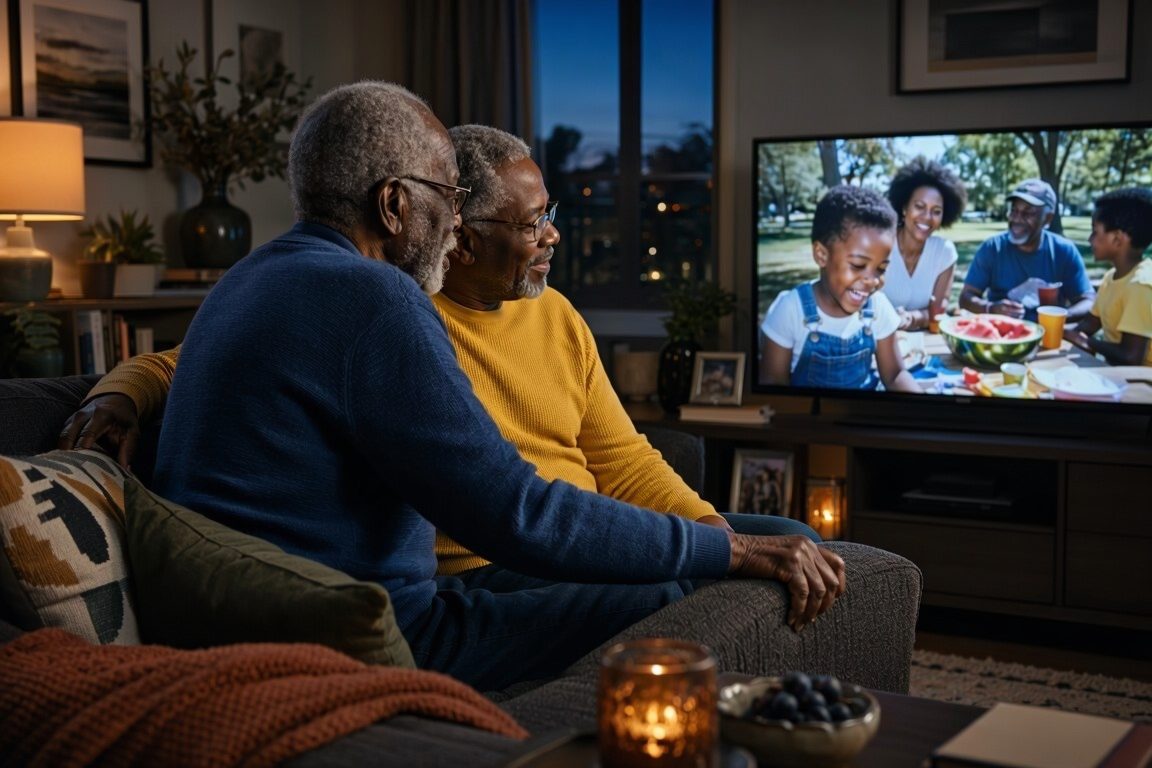
Step by step
What not to do
- Do not use the film to step out of the room, its power comes from shared attention. Stay beside them, watch together, and comment gently.
- Do not play the film on a large bright TV in a dark room. Use a tablet or laptop at low brightness in a warmly lit room.
- Do not force the film when the person is already highly agitated (pacing, yelling, hitting). First calm the environment and offer presence; use the film only after they settle.
- Do not expect the film to cure sundowning alone. Check for pain, hunger, thirst, medication side effects, or infection if agitation persists.
- Do not use generic non-personalized videos (nature docs, cartoons). The dementia-affected brain responds best to familiar, emotionally meaningful content.
- Do not correct or argue about details in photos if the person remembers them differently. The emotional comfort matters, not factual accuracy.
Key points
- A personalized remembrance film, using familiar photos, calming music, and a gentle voiceover, can reduce sundowning agitation by providing a safe, predictable, and emotionally meaningful activity during the vulnerable late-afternoon hours.
- The film works best when it is part of a consistent daily routine that starts before sundowning peaks (around 3–4 PM), and when you watch it together with your loved one, offering reassurance and gentle commentary.
- Do not use generic videos or passive TV; personalization is key. The brain with dementia responds to familiar, emotionally charged content, not to generic nature scenes or cartoons.
- If the person is already highly agitated, do not force the film. First, use calming techniques (lowered voice, reduced stimulation, check for unmet needs), then try the film once they are slightly calmer.
- Adapt the film for different stages and dementia types: use audio-only for late stages, avoid screens for Lewy body dementia, and keep it very short for frontotemporal dementia.
- Always pair the film with other non-drug strategies: optimize lighting (close curtains, use warm lamps), ensure physical comfort (warmth, hydration, pain relief), and maintain a calm, validating demeanor.
Videos
 Forget Dementia - Pecha Kucha Talk - Alban MainoThis talk explains the science behind personalized multimedia for dementia, including how it reduces sundowning anxiety and agitated movements. It is the foundation for the remembrance film concept.
 What Stage of Dementia is Sundowning?Helps you understand when sundowning typically appears (middle to late stages) and why non-drug approaches like the remembrance film are especially important at these stages.
 Tips for Coping With SundowningProvides practical, step-by-step tips for creating a calming environment, including lighting, music, and routine, all of which complement the remembrance film.
 How Does Light Therapy Help Dementia Sundowning? - Dementia Help HubExplains the role of circadian rhythm disruption in sundowning and how morning light exposure can help. This is a key companion strategy to the evening film.
2 more videos
 What is Sundowning Syndrome in Dementia and How Can You Manage It?A comprehensive overview of sundowning triggers and management strategies, including the importance of reducing shadows and using calming activities like the remembrance film.
 SERVICE OVERVIEW AND PROGRAM DESCRIPTIONShows how professional programs like Memory Lane TV create personalized daily sessions. You can adapt their approach at home with your own photos and music.
Background
What is Sundowning and Why Does a Remembrance Film Help?
Sundowning is not a disease itself but a cluster of symptoms, agitation, confusion, pacing, yelling, or even hallucinations, that typically worsen in the late afternoon or evening. It happens because dementia damages the brain’s internal clock, called the circadian rhythm, which normally regulates sleep and wakefulness. As natural daylight fades, the brain loses its time-of-day cues, and shadows from the setting sun can create confusing or frightening illusions. The person may feel lost in time and space, unable to recognize familiar faces or their own home. They are not being difficult; they are genuinely disoriented and afraid.
How a Remembrance Film Works on the Brain
A remembrance film is a short, personalized video (typically 5–15 minutes) that combines calming music, familiar photographs, and a soothing voiceover. It works on multiple levels. First, it provides a gentle ‘temporal reference’, a predictable, structured activity that signals ‘this is evening, and we are winding down.’ Second, it taps into the part of the brain that holds long-term memories and emotional connections, which often remains strong even in later stages of dementia. Seeing a photo of a childhood home, a wedding day, or a beloved pet can trigger a sense of recognition and safety. Third, the combination of music and familiar images can reduce anxiety and agitated movements, creating a calmer environment for both the person with dementia and the caregiver. This approach is grounded in research: studies have shown that personalized multimedia reminiscence therapy can significantly reduce behavioral and psychological symptoms like agitation and restlessness, without the side effects of medications.
Why This is Different from Passive TV Watching
Simply turning on the television or a generic nature video is unlikely to help and may even overstimulate. A remembrance film is different because it is *personalized*. It uses the person’s own history, favorite music, and familiar voices. It is also *interactive* in a gentle way, you can sit with them, point to the screen, and say, ‘Look, that’s you and Grandma at the beach.’ This shared attention creates a connection and reduces feelings of isolation. The film is also designed to be *calming*, not stimulating: it avoids fast cuts, loud noises, or complex storylines that can confuse. Instead, it uses slow transitions, soft music, and a warm, reassuring tone.
Practical tools
4
Evening Wind-Down Film Template
A 5-minute film: 10 calm, happy photos (garden, pet, vacation), one slow instrumental track (piano or acoustic guitar), and a voiceover offering only reassurance, 'You are safe,' 'I am here,' 'It's evening, time to rest.' No questions, no instructions.
Pre-made Relaxation Audio (Fallback)
When no personalized film is ready, use a pre-recorded relaxation audio (from apps like Calm or gentle YouTube channels) with a slow voice and no sudden sounds. Play quietly starting around 4 PM, paired with a warm blanket and herbal tea (if swallowing is safe).
Weekly Memory Lane Rotation
A rotating weekly schedule: Monday – family photos, Tuesday – hometown nature scenes, Wednesday – wedding-era music, etc. Rotating content prevents boredom and matches the day's mood.
Sundowning Signal Cue Kit
A consistent multi-sensory wind-down cue:
Over days, these cues become a powerful anchor.
Different situations
Early-stage dementia (still verbal and aware)
In early stages, the person can help create their own film. Ask them to choose photos and music. This gives them a sense of control and purpose. They may also be able to tell you what is calming for them. Use the film as a shared activity, not just a passive viewing. Pause and ask, ‘Do you remember this day?’ Let them lead the conversation.
Middle-stage dementia (increasing confusion, may not recognize family)
Focus on sensory comfort: use very slow transitions, soft music, and a voice that is warm but does not ask questions. The film should be a ‘safe container’, no surprises. Use photos from their childhood or young adulthood, as these are often the most intact memories. If they become upset by a photo (e.g., of a deceased spouse), remove it and try a different one.
Late-stage dementia (non-verbal, bed-bound, or in hospice)
Use the film as audio only. Play it softly in the room during evening hours. The familiar music and your recorded voice can provide comfort even if they cannot respond. Hold their hand or gently stroke their arm while it plays. The goal is not engagement but presence and soothing. Monitor for signs of distress (e.g., grimacing, tensing) and stop if needed.
Lewy body dementia (marked by visual hallucinations and sensitivity to light)
Be very cautious with screen use. Bright or flickering images can trigger hallucinations. Use a tablet with a matte screen protector and very low brightness. Prefer audio-only or a physical photo book. Avoid any images with patterns, faces that are not clearly recognizable, or fast motion. Stick to simple, high-contrast photos (e.g., a single flower, a clear blue sky).
Frontotemporal dementia (often with behavioral changes and loss of empathy)
The person may not respond to emotional or nostalgic content. Instead, use films that are more sensory or rhythmic, e.g., slow waves on a beach, a cat purring, or simple geometric patterns with calming music. The goal is to reduce overstimulation, not to evoke memory. Keep the film very short (3–5 minutes) and observe for signs of agitation.
For the doctor
4
- If sundowning is severe or includes aggression, hallucinations, or attempts to leave the house, discuss with your doctor whether an underlying medical issue (like a urinary tract infection, pain, or medication side effect) could be the trigger. Do not assume it is ‘just dementia.’
- Ask your doctor or pharmacist to review all current medications. Some drugs, including certain sleep aids, antihistamines, and anticholinergics, can worsen confusion and agitation in people with dementia. A medication review can identify potential culprits.
- If non-drug approaches (including the remembrance film, light therapy, and routine changes) do not reduce sundowning after 2–3 weeks, ask your doctor about a short-term, low-dose medication trial. Be aware that antipsychotics and benzodiazepines carry significant risks (e.g., increased falls, sedation, stroke risk) and should be used only as a last resort, with close monitoring for side effects.
- If your loved one has a history of falls, discuss with the doctor whether any new medication (including over-the-counter sleep aids) could increase fall risk. Also ask about non-drug fall prevention strategies, such as removing rugs and using nightlights.