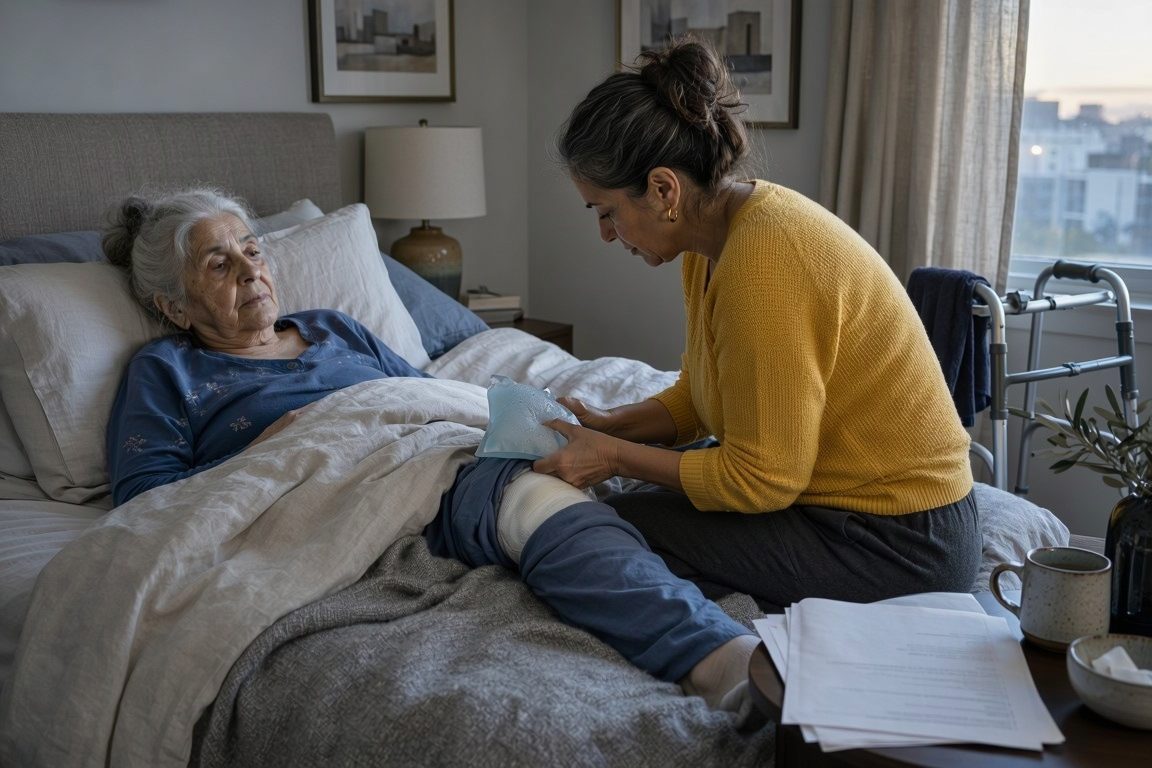
Step by step
What not to do
- Do not assume recovery will take a few days. Plan for two to four weeks, especially after orthopedic surgery, to avoid stress from unmet expectations.
- Do not refuse help. Make a list of small tasks others can do (grocery shopping, driving to follow-ups, sitting with your loved one while you rest) and accept offers. Asking for help is strength, not weakness.
- Do not neglect your own basic needs. Skipping meals, losing sleep, ignoring pain, or bottling up frustration weakens your health and your care. Find a safe outlet (friend, journal, caregiver group) and see a doctor if symptoms persist.
- Do not leave the hospital without a written list of red flags. Ask: 'What symptoms mean I should call you vs. go to the ER?' Post the list where you can see it.
Key points
- Outpatient surgery recovery often takes longer than expected, especially after orthopedic procedures. Adjust your expectations and plan for at least two to four weeks of caregiving.
- Caregiver burden is real and includes physical strain, emotional stress, and financial pressure. Recognizing this early helps you take action before burnout sets in.
- Prepare your home and create a simple daily schedule before the surgery. This reduces chaos and gives you a sense of control.
- Do not try to do everything alone. Ask for and accept specific help from friends, family, or hired aides. Use clear scripts to make it easy for others to assist.
- Monitor your own health daily. If you notice signs of stress (poor sleep, irritability, skipped meals), take a break and seek support. Your well-being is essential to your loved one's recovery.
- Communicate openly with the medical team about pain management, red flags, and your own needs as a caregiver. You are a key part of the care team.
Videos
 What Is Caregiver Burden During Dementia Progression? - TestThis video explains the concept of caregiver burden in a clear, relatable way, helping you understand that the stress you feel is normal and shared by many.
 An Interview with Denise Brown the Founder at The Caregiving Years AcademyDenise Brown offers practical wisdom on the emotional journey of caregiving, including how to cope with the ups and downs and find meaning in the role.
 Caregiver Stress and Depression, Dr. Helen Lavretsky - UCLAMDChatA psychiatrist discusses the link between caregiving stress and depression, offering evidence-based strategies for protecting your mental health.
 Caregiving: How to Deal With Strained Caregiver Relationships Between Siblings and Elderly ParentsThis video addresses the common challenge of sibling conflict during caregiving, providing tools for communication and setting boundaries.
2 more videos
 Navigating the Emotional Terrain of Caregiving: Understanding and Overcoming Caregiver GuiltCaregiver guilt is a frequent and painful emotion. This video helps you identify it and offers compassionate ways to move through it.
 Coping with Caregiver BurnoutA straightforward guide to recognizing the signs of burnout and taking practical steps to recharge and prevent it from worsening.
Background
Why outpatient surgery can be harder than expected
Outpatient surgery is designed to get people home the same day, but that doesn't mean recovery is quick or easy. Studies show that patients may take longer to recover than previously recognized, and this is especially true for orthopedic surgeries, where pain levels tend to be higher. As a caregiver, you might assume your loved one will be back to normal in a few days, but the reality is often a longer, more gradual process. This mismatch between expectations and actual recovery can leave you feeling unprepared and overwhelmed. You may find yourself juggling pain management, wound care, mobility assistance, and emotional support, all while trying to keep your own life running.
The physical and emotional toll on caregivers
Caregiving after outpatient surgery is not just about helping with tasks; it is a physically and emotionally demanding role. You might be lifting, transferring, or steadying your loved one, which can strain your own body. Emotionally, you may feel anxious about complications, guilty for feeling tired or frustrated, and isolated as friends and family assume everything is fine. This is a form of caregiver burden that is often unrecognized. Many caregivers report that their own health suffers, with increased stress, sleep problems, and even a higher risk of depression. It is crucial to recognize that your well-being matters too, and that taking care of yourself is not selfish, it is essential for both of you.
Financial and practical pressures add to the load
Beyond the day-to-day care, there are often hidden financial and practical burdens. You may need to take time off work, which can mean lost income. There are out-of-pocket costs for medications, special supplies, or even home modifications like a shower chair or raised toilet seat. If you are the primary caregiver, you might also be the one coordinating follow-up appointments, managing insurance paperwork, and communicating with the surgical team. This administrative load can be exhausting, especially when you are already stretched thin. Recognizing these pressures early can help you plan and seek support before you reach a breaking point.
Practical tools
3
Recovery Station
A dedicated area with a recliner/bed, extra pillows, a small table for water/medications/phone/remote, a waste bin, a symptom notebook, and a bell/call button. Reduces your need to constantly run back and forth.
Pain and Symptom Log
A chart with columns for Date/Time, Pain Level (0-10), Medication Given, and Other Symptoms (nausea, dizziness, wound appearance). Helps identify patterns, communicate with doctors, avoid errors, and regain a sense of control.
Medication Management Kit
A weekly pill organizer (morning/afternoon/evening), phone alarms for each dose, and an updated list of every medication, dose, and reason. Bring the list to every follow-up to prevent duplications or missed doses.
Different situations
For a spouse caregiver (vs. adult child)
Spouses often feel the burden more intensely because they share the same home and daily life. They may also be older and have their own health issues. If you are a spouse, prioritize your own health check-ups and consider couples counseling to navigate the role shift from partner to caregiver. Adult children may have more external support but also face conflicts with siblings. If you are an adult child, set clear boundaries with siblings about who handles what, and do not be afraid to delegate.
If the patient has dementia or cognitive impairment
After surgery, confusion and delirium are common in people with dementia. This can make pain management and cooperation much harder. Use simple, one-step instructions: 'It is time to take this pill. Open your mouth.' Avoid arguing. Keep the environment calm and quiet. If the patient becomes agitated, stop and give them space. Discuss with the surgeon and geriatrician about using non-pharmacological pain relief (like ice packs) and avoiding certain sedatives that can worsen confusion.
If the patient has a history of anxiety or depression
Surgery and recovery can trigger or worsen mental health symptoms. Watch for signs of withdrawal, excessive worry, or hopelessness. Encourage them to continue any prescribed mental health medications. If they seem very distressed, ask: 'Are you feeling scared or sad right now?' Offer reassurance and remind them that recovery is a process. If symptoms persist, contact their primary care doctor or therapist. You may also need extra emotional support for yourself.
If you are caring for someone with limited mobility or a fall risk
Safety becomes the top priority. Remove all throw rugs, secure cords, and ensure good lighting, especially at night. Use a bed alarm or a motion sensor light if they try to get up alone. Consider a temporary hospital bed if the patient cannot get in and out of bed safely. Have a plan for what to do if they fall: do not try to lift them alone; call for help or use a lift sheet if trained. Keep a phone within reach at all times.
If you are a long-distance caregiver or coordinating from afar
You cannot be there in person, but you can still help. Hire a local home health aide for a few hours a day to assist with bathing, meals, and medication reminders. Use a video call to check in visually and offer emotional support. Set up a shared online calendar for appointments and tasks. Send a care package with easy-to-open snacks, a cozy blanket, and a handwritten note. Make sure the patient has a local emergency contact who can step in if needed.
For the doctor
5
- Ask the surgeon: 'Given my loved one's age and health conditions, what is the realistic recovery timeline? Are there any specific complications I should watch for?'
- Ask the pharmacist: 'Are there any interactions between the pain medication and my loved one's other prescriptions? What about over-the-counter pain relievers?'
- Ask the primary care doctor: 'As a caregiver, I am feeling very stressed. Are there any local support groups or counseling services you can recommend? Should I have a check-up for my own health?'
- Ask the physical therapist: 'Can you show me exactly how to help my loved one get in and out of bed and use the bathroom safely? Do I need a gait belt or other equipment?'
- Ask the social worker or discharge planner: 'Are there any financial assistance programs for home health aides or medical equipment? Can you help me apply for Family and Medical Leave Act (FMLA) paperwork?'