Step by step
What not to do
- Do not try to fill every minute of the day with activities. People with dementia need downtime to process and rest. Over-scheduling leads to exhaustion and agitation.Instead, leave intentional gaps for rest and quiet time. A balanced day includes both activity and restoration.
- Do not insist on finishing a task once you start it. The goal is enjoyment and connection, not completion. If your loved one loses interest or gets frustrated, stop immediately and switch to something else. Forcing them to finish can cause distress and make them resist activities in the future.
- Do not use the same activities every day without variation. Even enjoyable tasks become boring if repeated too often. Rotate activities within each category, for example, folding towels one day, sorting socks the next. This keeps the person engaged and prevents monotony. You can plan a month's worth of ideas in 30 minutes by listing 4–5 options per category.
- Do not choose activities based solely on the person's past abilities without considering their current stage. A person who loved crossword puzzles in early stages may become frustrated by them in middle stages. Adapt the activity: use large-print puzzles, fill in some answers yourself, or switch to word searches. Always match the challenge to their current skill level.
- Do not ignore the person's emotional state when planning activities. If they are anxious or agitated, a calming leisure activity like listening to music may be better than a productive task. If they are lethargic, a gentle self-care activity like washing hands with warm water can help re-engage them. Let their mood guide your choice.
- Do not forget to include yourself in the framework. Caregivers also need productive, self-care, leisure, and rest. If you are exhausted and resentful, you cannot provide good care. Schedule your own rest and leisure time, and ask for help when you need it. This framework works best when it supports both of you.
Key points
- Use four categories, productive, self-care, leisure, and rest, to ensure every day is balanced and meets your loved one's core needs.
- Adapt activities to the person's current stage, not their past abilities. The goal is engagement and connection, not completion.
- Watch for signs of frustration or boredom and switch activities immediately. Use the 'stop and switch' phrase to keep the day positive.
- Schedule rest after every 20–30 minutes of activity to prevent overstimulation and agitation.
- Involve the person in activities that feel real and purposeful, even holding a dustpan while you sweep counts as a productive contribution.
- Take care of yourself too. Use the same framework to plan your own day so you have energy and patience for caregiving.
Videos
 Top 4 Meaningful Activities for Dementia Patients (Activity Planning Made Easy)This video directly teaches the four-category framework (productive, self-care, leisure, rest) and shows how to plan a month of activities in 30 minutes. It's the core resource for this article.
 How To Distract Someone With Alzheimer's? Episode 1Demonstrates how to redirect a person who is agitated or stuck, using activities from the framework. Useful when a planned activity isn't working and you need a quick switch.
 How to increase activity for someone with dementiaOffers practical tips for gradually increasing activity levels without overwhelming the person. Helps you build up to a balanced day.
 How Do You Entertain Someone With Dementia?Focuses on leisure activities that bring joy and connection. Great for ideas when you're stuck on what to do for fun.
2 more videos
 What Activities Are Good For Dementia Patients? Module 1Covers a broad range of activities across all four categories, with emphasis on adapting to the person's interests and abilities.
 The Baffled Brain: Demystifying Dementia Episode 22 April 24 ,2021Explains the science behind why activity balance matters, including the role of rest in preventing overstimulation and challenging behaviors.
Background
Why a Balanced Activity Framework Matters
People living with dementia still have the same deep human needs they always did: to feel needed, to care for themselves, to have fun, and to rest. But the disease makes it hard for them to organize or express those needs on their own. As one expert explains, 'their ability to organize this and express that they need to feel needed suddenly goes away, but the need doesn't leave them.' That's why a structured framework is so powerful, it ensures each of these core needs gets met every day, even when your loved one can't tell you what they're missing.
Without a framework, caregivers often fall into two traps: either filling the day with only passive activities (like TV) or trying to keep the person 'busy' with tasks that don't match their abilities or interests. Both lead to frustration, agitation, or withdrawal. The four categories, productive, self-care, leisure, and rest, give you a simple lens to check if the day has variety and purpose. You don't need to plan every minute; you just need to make sure each category appears at least once.
This framework also respects the person's changing abilities. In early stages, they might engage in complex productive tasks like folding laundry or helping with meal prep. In later stages, a productive activity might be as simple as holding a cloth while you wipe the counter. The category stays the same; the difficulty adapts. The goal is never completion, it's the feeling of contributing, caring, enjoying, or restoring.
The Four Categories Explained
Productive activities are things that make the person feel they are contributing to the household or community. This could include folding towels, sorting silverware, watering plants, or setting the table. The key is that the task has a real purpose, it's not just busywork. Even in severe stages, you can adapt: let them hold the dustpan while you sweep, or choose between two options for dinner. The feeling of being needed is what matters.
Self-care activities are about caring for the body and mind. This includes personal hygiene like brushing teeth or washing hands, but also gentle exercise like chair yoga or tai chi, and brain-stimulating activities like simple crossword puzzles or sorting objects by color. These activities preserve dignity and maintain physical and cognitive function as long as possible. Always get medical clearance before starting any exercise program.
Leisure activities are pure enjoyment, hobbies, social time, or creative expression. This could be listening to music from their youth, looking at photo albums, painting with watercolors, or watching a favorite TV show together. The goal is pleasure and connection, not skill. If they loved golf, you might watch golf tournaments, flip through a golf magazine, or practice putting with a plastic club and ball. Adapt the activity to their current ability, but keep the spirit of the hobby alive.
Rest is just as important as activity. This includes naps, quiet time, meditation, or simply sitting together in a calm space. People with dementia can become overstimulated easily, so scheduled rest prevents sundowning and agitation. Rest is not 'doing nothing', it's intentional downtime that allows the brain to recover. Avoid filling every moment; leave gaps for the person to process and recharge.
Practical tools
6
The Four-Category Daily Checklist
Create a simple paper checklist with four columns:
Each morning, write one activity for each column that you plan to do that day. At the end of the day, check off what you did and note how your loved one responded. This takes two minutes and ensures balance. Example: Productive: sort socks; Self-Care: chair yoga; Leisure: look at photo album; Rest: 15-minute quiet time after lunch.
The 'Past Interest Adaptation' Worksheet
On a sheet of paper, list five hobbies or interests your loved one had before dementia (e.g., gardening, golf, cooking, sewing, fishing). Next to each, write three ways to adapt it for their current stage. For gardening: (1) water indoor plants together, (2) smell fresh herbs and name them, (3) sort seed packets by color. For golf: (1) watch a golf tournament on TV, (2) practice putting with a plastic club, (3) flip through a golf magazine and talk about favorite players. Keep this list handy to rotate activities.
The 'Stop and Switch' Phrase
When you notice frustration, fidgeting, sighing, looking away, say calmly: 'I think we've done enough of this for now. Let's try something else.' Then immediately offer a different activity from another category. For example, if folding laundry is causing frustration, switch to a leisure activity: 'How about we listen to some music instead?' This prevents meltdowns and keeps the day positive.
The 'Rest Signal' Setup
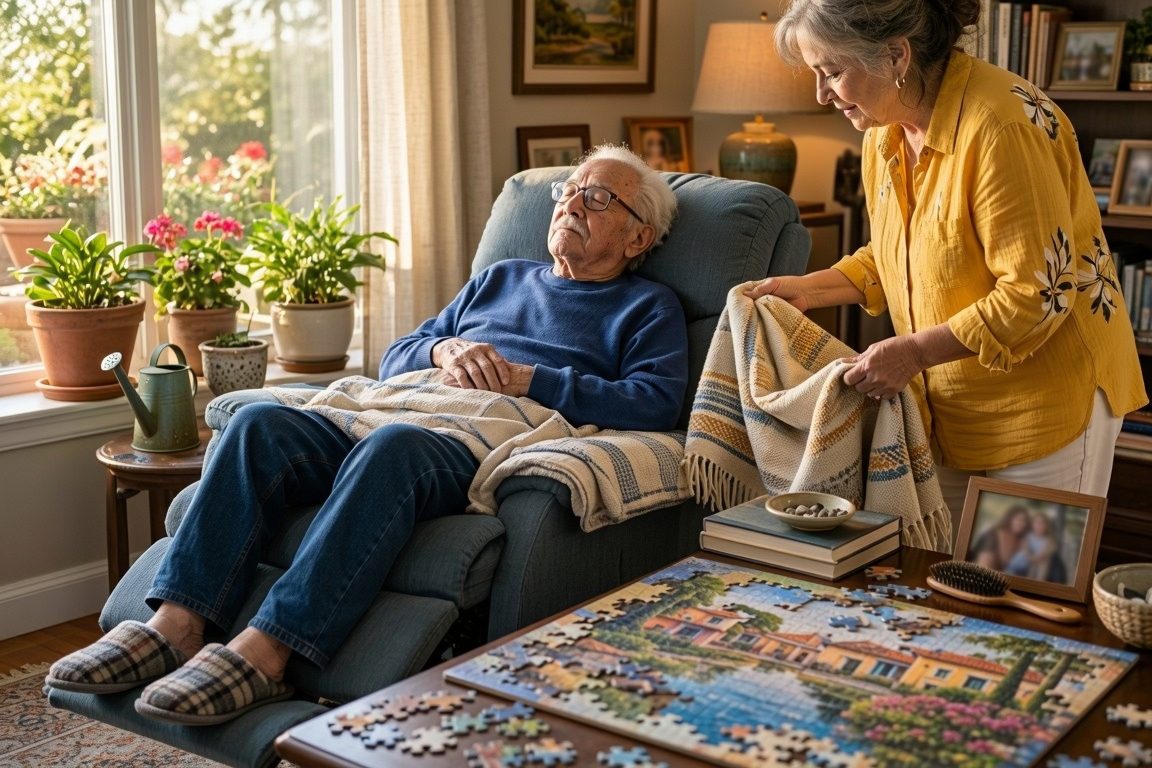
Create a calm rest space with a comfortable chair, soft lighting, and a blanket. Use a consistent signal to indicate rest time, like turning on a small lamp or playing a specific piece of quiet music. Say, 'It's time to rest now. Let's sit together and listen to this.' This helps the person transition from activity to rest without confusion. Keep rest periods short (10–20 minutes) to avoid disrupting nighttime sleep.
The 'Choice of Two' Method for Self-Care
When offering self-care activities like bathing or dressing, give two clear options to preserve dignity and reduce resistance. Hold up two towels and say, 'Would you like the blue towel or the green one?' Or ask, 'Do you want to brush your teeth before or after breakfast?' This gives the person a sense of control within a structured routine. Avoid open-ended questions like 'What do you want to do?' which can cause anxiety.
The 'Activity Adaptation Ladder'
For any activity, think of three levels of difficulty: independent (person does most of it with verbal cues), assisted (you do it together, hand-over-hand), and passive (person watches or holds materials while you do the task). For example, for making a salad: independent, they chop vegetables with a safe knife; assisted, they tear lettuce while you chop; passive, they hold the bowl while you toss. Start at the level where they can succeed, and move down the ladder as the disease progresses.
Different situations
Early-stage dementia (mild cognitive impairment)
In early stages, the person can still do many activities independently. Focus on productive tasks that feel meaningful, like paying bills (with supervision), gardening, or simple home repairs. Self-care can include more complex exercises like brisk walking or tai chi. Leisure can involve social outings, book clubs, or hobbies they've always enjoyed. Rest may be less structured, just quiet time with a book or nap if needed. The key is to maintain independence as long as possible while providing gentle support.
Middle-stage dementia (moderate impairment)
Now activities need more simplification and repetition. Productive tasks should be short and concrete, like folding towels or sorting silverware. Self-care may require step-by-step guidance: 'First, pick up the toothbrush. Now put toothpaste on it.' Leisure activities should be sensory and familiar, listen to old songs, look at photo albums, or do simple puzzles with large pieces. Rest becomes more important to prevent overstimulation. Schedule rest after every 20–30 minutes of activity. Use the 'choice of two' method frequently to reduce anxiety.
Late-stage dementia (severe impairment)
In late stages, focus on comfort and sensory engagement. Productive activities become passive, let them hold a cloth while you wipe the table, or place their hand on a dustpan. Self-care is entirely assisted; you do the care while talking soothingly. Leisure is about sensory pleasure: gentle hand massage, listening to calming music, looking at a mobile, or feeling different textures like soft fabric or a warm blanket. Rest is the primary category, most of the day may be spent resting, with short periods of gentle activity. Always watch for signs of discomfort or pain.
Lewy body dementia or Parkinson's disease dementia
These types often involve movement difficulties, hallucinations, and fluctuating alertness. Avoid activities that require fine motor control if tremors are present, use larger tools or adaptive equipment. For self-care, allow extra time and use hand-over-hand assistance. For leisure, avoid visually complex patterns that might trigger hallucinations; stick to simple, high-contrast images. Rest is crucial because these individuals fatigue easily. Be flexible, if they have a 'good' hour, use it for a productive task; if they are confused, switch to a calming leisure activity.
Frontotemporal dementia (behavioral variant)
This type often affects behavior and personality more than memory. The person may lose interest in previously enjoyed activities or develop repetitive behaviors. Use their current interests, even if they seem odd, if they want to sort objects repeatedly, turn it into a productive task by sorting laundry or coins. For leisure, try activities that involve movement or music, as these can be calming. Avoid activities that require social judgment or empathy. Self-care may need to be done quickly and calmly to avoid agitation. Rest may be needed after any stimulating activity.
Spouse caregiver vs. adult child caregiver
Spouse caregivers often have decades of shared history to draw on for activities, use inside jokes, favorite songs from their wedding, or familiar routines like making coffee together. Adult children may need to learn these preferences from the other parent or from old photos. Spouses may also need more support for their own self-care and rest, as they are often the sole caregiver. Adult children may have more energy but less emotional distance, use respite care and support groups to prevent burnout.
In a facility (memory care or nursing home)
In a facility, you may not control the daily schedule, but you can advocate for a balanced framework. Ask the activity director to include at least one productive, self-care, leisure, and rest activity each day. Bring familiar items from home, a favorite blanket, photo album, or music player, to personalize their leisure time. Visit during rest periods to provide calming presence. If the facility uses busy boxes or activity carts, ask staff to adapt the contents to your loved one's interests and abilities.
For the doctor
5
- Before starting any new exercise program, including chair yoga, tai chi, or walking, ask the doctor if it is safe given your loved one's current health conditions and medications.
- If your loved one has a history of falls, discuss which physical activities are appropriate and whether a physical therapy evaluation is needed before starting.
- If the person has swallowing difficulties, ask about safe textures for any food-related activities (like tasting or cooking) to prevent choking.
- If your loved one is on medications that cause drowsiness or dizziness, ask how to schedule activities and rest to avoid overstimulation or falls.
- If you notice sudden changes in behavior or ability during activities (e.g., new confusion, aggression, or withdrawal), discuss this with the doctor to rule out infection, pain, or medication side effects.