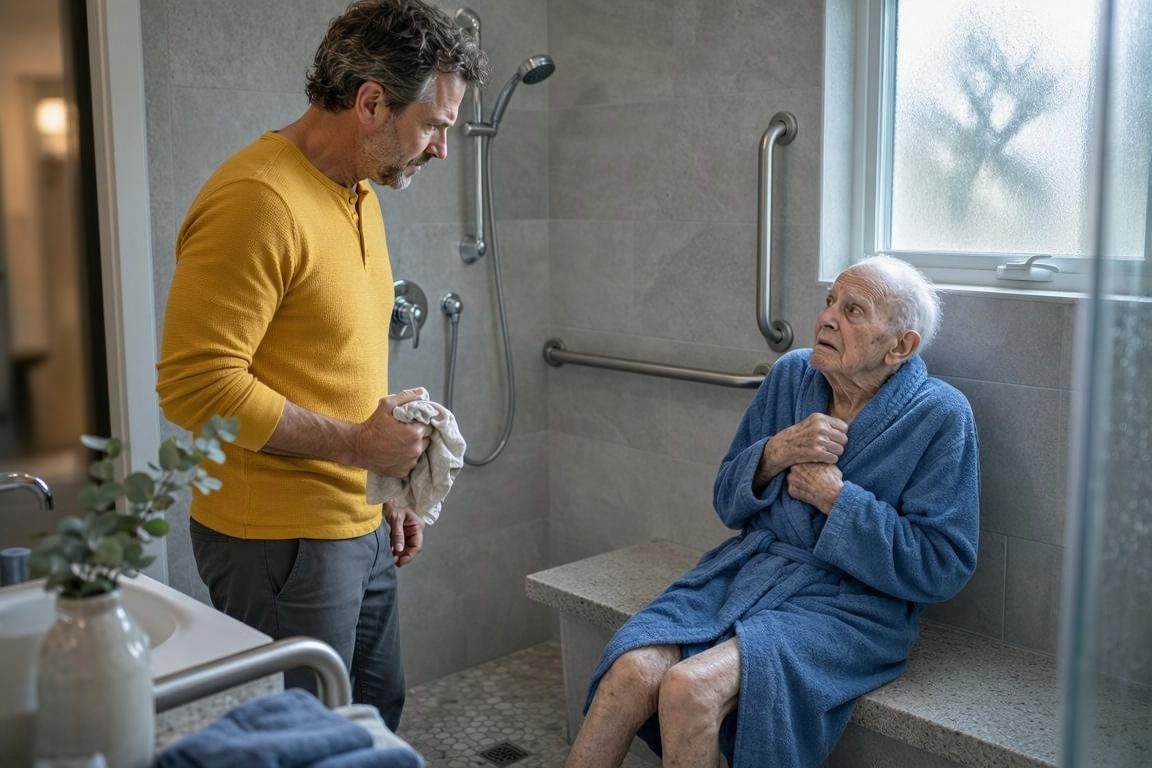
Step by step
What not to do
- Do not argue or correct them. Arguing raises your stress and theirs, and it never works because their brain cannot process logic in that moment.Instead, validate their feeling: ‘I hear that you’re upset. Let’s take a break.’
- Do not rush into a room with a tense or hurried demeanor. If you are already stressed from a phone call or a traffic jam, take five minutes to reset before approaching them. Your mood will set the tone for the entire interaction.
- Do not use a loud or high-pitched voice, even if you are trying to be cheerful. A high-pitched voice can sound alarming to a person with dementia. Keep your voice low and calm, like a radio set to a quiet station.
- Do not take their resistance personally. They are not trying to upset you; their brain is reacting to the emotional environment. If you feel hurt, remind yourself: ‘This is the disease, not them.’
- Do not try to force a task when they are highly agitated. Forcing only strengthens the negative pairing.Instead, postpone the task by 15 or 20 minutes, or try a different approach. Sometimes a snack or a walk can reset the mood.
- Do not neglect your own emotional needs. If you are running on empty, you cannot regulate yourself. Make time for a support group, a therapy session, or even 10 minutes of quiet. Your self-care is not selfish, it is essential for their care.
Key points
- Your mood directly shapes your loved one’s cooperation because they feel your emotions even when they cannot remember your words.
- Co-regulation is real: when you calm your own nervous system, theirs follows. Your stability is their medicine.
- Negative pairings happen over time when care tasks are associated with stress. You can rebuild a positive emotional environment by slowing down and using warm, neutral cues.
- Pausing before interactions, using a low voice, and offering simple choices are concrete tools that reduce resistance.
- Do not take resistance personally, it is the disease, not a rejection of you.
- Your own self-care is not optional; it is essential for both of you. A regulated caregiver creates a safer world for the person with dementia.
Videos
 How to not argue with someone with dementiaThis video directly addresses how arguing escalates the emotional mirror effect and offers practical alternatives to stay calm and connected.
 THIS is what you can control as a dementia caregiverReinforces the core message that you can control your own thoughts and mood, which is the foundation of the emotional mirror effect.
 THIS is why your loved one with dementia challenges you but is fine around othersExplains the phenomenon of negative pairings and why your loved one may be cooperative with others but resistant with you, a key aspect of the emotional mirror.
 Caregiver Training: Depression/Apathy | UCLA Alzheimer's and Dementia Care ProgramOffers strategies for timing activities according to mood and using incentives, which are practical tools to manage the emotional mirror effect.
2 more videos
 Working Through Caregiver GuiltGuilt can amplify your stress and worsen the mirror effect. This video helps you process guilt so you can show up more calmly.
 Dementia Progression: What I Wish Caregivers Were ToldProvides a broader perspective on the emotional journey of caregiving, helping you understand why your own emotional regulation is so critical.
Background
The Brain Science Behind the Mirror
When a person has dementia, the parts of their brain that process language, memory, and logic are damaged, but the emotional centers, like the amygdala, often remain more intact. This means your loved one may not remember what you said five minutes ago, but they will remember how you made them feel. As one dementia care expert explains, they tend to remember the emotions that come up when you are around, and if that primary emotion is negative, they start to resist all of your care efforts more and more. This is the emotional mirror effect: your mood becomes their mood, and their behavior then reflects back on you, creating a cycle that can feel impossible to break.
Why It Happens: Co-Regulation and the Nervous System
Humans are wired to regulate stress through connection. In neuroscience, this is called co-regulation, our nervous systems calm down in the presence of other regulated people. When you are anxious, angry, or rushed, your body sends subtle signals: a faster heartbeat, a tighter jaw, a higher-pitched voice. Your loved one’s brain picks up on these cues, even if they cannot name them. Their own nervous system then activates a stress response, which can look like agitation, aggression, or withdrawal. This is not intentional defiance; it is a biological reflex. As one clinician notes, your regulation, your tone, volume, and speed of speech, matters tremendously to their regulation. Your stability can literally be their medicine.
The Hidden Cost of Negative Pairings
Over time, if your loved one repeatedly experiences negative emotions when you are around, even if you are just trying to help, they begin to associate you with those feelings. This is called a negative pairing. For example, if every bath time involves you feeling stressed and them feeling scared, they may start to resist you even before the bath begins. One dementia specialist warns that these unintentional negative pairings can happen without you realizing it, and they are a major reason why a person with dementia may be cooperative with a calm visitor but challenging with you. The goal is to become the person whose presence brings safety, not stress.
Practical tools
6
The Calm-Down Script for Difficult Moments
When you feel your frustration rising, say these words to yourself: ‘I am safe. They are safe. This is the disease. I can slow down.’ Repeat it silently three times before you speak. This script interrupts the stress cycle and helps you return to a regulated state.
The ‘One Thing at a Time’ Checklist
Before starting a care task, write down or mentally list just three things:
This prevents you from rushing and helps you stay attuned to their emotional state.
The Emotional Temperature Log
Keep a simple journal for one week. Each time you interact with your loved one, rate your own mood on a scale of 1 (calm) to 5 (very stressed) before and after the interaction. Also note their cooperation level. You will quickly see patterns: when you are a 4 or 5, they are more resistant. This awareness alone can motivate you to pause and reset.
The ‘Soft Start’ Phrase Bank
Use these exact phrases to begin interactions: ‘Good morning, it’s me. I’m here to help.’ ‘Let’s do this together, nice and slow.’ ‘I know this isn’t your favorite, but I’ll stay right here with you.’ These phrases signal safety and partnership, not control.
The Two-Minute Reset Timer
Set a timer on your phone for two minutes. When you feel overwhelmed, press start and step into another room. Use those two minutes to breathe deeply, stretch your shoulders, or sip cold water. When the timer goes off, you are ready to return with a calmer presence.
The ‘After-Task’ Ritual
After every care task, no matter how difficult, do one small thing that brings you joy: listen to one song, drink a cup of tea, or step outside for 30 seconds. This prevents emotional residue from building up and helps you reset for the next interaction.
Different situations
Lewy body dementia (LBD) or Parkinson’s disease dementia
In LBD, mood fluctuations can be extreme and rapid. Your loved one may go from calm to agitated in seconds. The emotional mirror effect is amplified here. Use even slower, more rhythmic speech. Avoid sudden movements or loud noises, as these can trigger visual hallucinations or paranoia. If they seem confused or frightened, do not try to reason, simply say, ‘I’m here. You are safe.’ and sit quietly with them.
Late-stage dementia (severe cognitive decline)
In late stages, your loved one may not speak or recognize you, but they still feel your emotional state. Use gentle touch and a soft, humming voice. Your presence is now the primary form of communication. Avoid any sense of hurry; let tasks take as long as they need. If you feel sad or overwhelmed, it is okay to cry quietly, but try to do it away from them, as your tears can distress them even if they cannot say so.
Spouse caregiver vs. adult child caregiver
Spouses often have a deeper history of emotional patterns, old arguments or resentments can resurface. Be aware that your loved one may mirror old relationship dynamics. If you feel triggered by something they say or do, pause and remind yourself: ‘This is the disease, not my spouse.’ Adult children may feel guilt or a role reversal. If you feel like a parent to your parent, it can create tension. Use the phrase, ‘I am here as your daughter/son, and I love you. Let’s do this together.’ to maintain a loving connection.
In a facility or with paid caregivers
If your loved one is in a facility, the emotional mirror effect still applies during your visits. They may be calm with staff but agitated with you because of past negative pairings. To rebuild a positive association, keep visits short, warm, and focused on pleasant activities like looking at photos or listening to music. Avoid discussing problems or complaints in front of them. Let staff know about the emotional mirror effect so they can also use calm, regulated approaches.
Frontotemporal dementia (FTD) with behavioral variant
In FTD, the emotional centers of the brain are directly affected, so your loved one may have blunted emotions or unpredictable outbursts. The mirror effect still works, but you may need to be more exaggerated in your calmness. Use a very low, monotone voice and minimal facial expressions. Avoid showing surprise or frustration, as these can trigger a strong reaction. Consistency is key, keep your emotional presentation the same every time.
For the doctor
3
- If your loved one’s agitation or aggression is severe or dangerous, ask their doctor about whether medication adjustments or a referral to a behavioral neurologist might help.
- If you find yourself unable to regulate your own emotions despite trying these strategies, discuss with your own doctor or a therapist whether you might be experiencing caregiver burnout, depression, or anxiety that needs treatment.
- If your loved one has sudden, dramatic mood changes that seem unrelated to your emotional state, ask their clinician to rule out a urinary tract infection, pain, or other medical causes that can mimic emotional distress.