
Step by step
What not to do
- Do not argue or try to convince them of the diagnosis. They cannot rationalize or remember your points. Validate feelings and redirect instead.
- Do not use complex explanations or medical terms like 'cognitive decline.' Keep it simple: 'You're having some trouble with memory, and I want to help.'
- Do not correct their reality. If they say something untrue, enter their world: 'That sounds nice. Tell me about her.' This builds trust and reduces distress.
- Do not have the conversation when you are stressed, rushed, or emotionally flooded. Your anxiety will make them more anxious. Wait until you are calm and present.
- Do not make it all about the diagnosis. Focus on the emotions and the relationship. React and respond to them as a person, not a label.
Key points
- Your parent's world is different from yours, meet them there emotionally, not factually.
- Ask permission before starting the conversation to give them a sense of control.
- Use simple, gentle language and validate their feelings before sharing any hard news.
- Never argue, it is not a fair fight and only causes more distress.
- Offer concrete, collaborative solutions, not abstract demands.
- This is an ongoing process, not a one-time talk. Check in regularly with love and patience.
Videos
 HOW TO TALK TO A PARENT WITH DEMENTIA - DEMENTIA COMMUNICATION TECHNIQUESThis video offers practical, real-world strategies for communicating with a parent who has dementia, including how to step into their reality and use emotion-focused language.
 How to Deal With Dementia in a ParentThis video covers nine common caregiver questions and answers, including how to approach the diagnosis conversation and reduce caregiver stress.
 Supporting a Loved One with DementiaThis video provides a broad overview of how to be supportive and loving across different stages of dementia, emphasizing the importance of including the parent in planning.
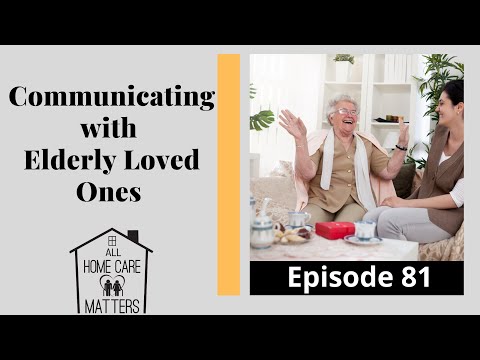 Communicating with Elderly Loved OnesThis video focuses on tone, pace, and non-verbal cues, key tools for making your parent feel safe and understood.
2 more videos
 What's Wrong with Grandpa? (Talking with Kids about Dementia and Alzheimer's Disease)If you have children or grandchildren in the family, this video helps you explain dementia to them in a gentle, age-appropriate way.
 5 TIPS FOR TALKING TO YOUR LOVED ONE WITH DEMENTIAThis video offers five concise, actionable tips for having more meaningful conversations with your loved one, especially in the moderate stage.
Background
Why This Conversation Feels So Hard (For Both of You)
When you try to talk to your parent about their dementia diagnosis, you are essentially trying to communicate across two very different realities. Your parent’s world is changing: their thoughts and memories may not always make sense even to them (source 1). If you speak to them in the same way you always have, it is like stubbornly speaking a language they no longer fully understand, and expecting them to keep up. This mismatch leads to frustration on both sides, not because anyone is being difficult, but because the old rules of conversation no longer apply (source 1).
Your parent may not remember what they had for breakfast, but they can still feel deeply, emotions like fear, embarrassment, or confusion often linger even when facts fade (source 4). The diagnosis itself can feel like a threat to their identity, and they may react with denial, anger, or withdrawal. This is not personal; it is a natural response to a frightening loss. Your job is not to 'win' the conversation or force them to accept reality, but to help them feel safe, heard, and supported (source 4).
Importantly, the earlier you seek out information and learn new ways to communicate, the better caregiver you will be and the less stressed you will feel (source 2). This is a skill you can learn, and you will make mistakes, that is okay. Just like learning a new language, there will be moments you get it wrong, but over time you will find your rhythm (source 6).
What Your Parent Needs Most: Emotional Safety, Not Facts
When a person has dementia, their brain's ability to process new information, reason, and remember is compromised. Arguing or trying to 'correct' their reality only creates more distress and can accelerate the rate of decline (source 5). What they need most is a loving, supportive environment. Research shows that dementia patients who feel encouraged, supported, and cared for generally decline at a slower rate than those who feel isolated and depressed (source 5).
This means the goal of your conversation shifts from 'getting them to understand the diagnosis' to 'helping them feel safe and loved in this moment.' It is not always about the facts anymore; it is about the emotions, how are they feeling right now? That is what matters most (source 4). By stepping into their reality instead of dragging them back to yours, you can make them feel safer and more understood (source 4). This approach reduces tension for both of you and opens the door for genuine connection, even when words fail.
Practical tools
5
The 'Ask Permission' Opener
Start hard conversations with: 'Dad, is it okay if we talk about something I'm concerned about?' This gives control and prepares them for a serious topic.
The 'I'm Here for You' Script
When upset, use: 'I'm listening. I'm here for you. Tell me why you're feeling this way.' Avoid 'Everything will be okay,' which can feel dismissive.
The 'Joint Plan' Approach
Before speaking, write down 2-3 positive, specific solutions you can offer, like 'I can drive you to the store every Tuesday.' This makes change feel collaborative.
The 'Emotion-First' Redirect
When they say something inaccurate, first acknowledge the feeling: 'I can see this is hard.' Then gently redirect: 'Would you like to look at photos with me?'
The 'Check-In' Calendar
Set a recurring reminder every two weeks for a brief, low-pressure check-in: 'How are you doing? Have you noticed any changes?' This normalizes ongoing conversation.
Different situations
For a parent in early-stage dementia (mild cognitive impairment)
You can have a more direct conversation about the diagnosis, as they may still have insight. Include them in planning for the future, such as legal documents, care preferences, and living arrangements. Use the 'Ask Permission' opener and be honest but gentle. They may be able to participate in support groups or counseling (source 3).
For a parent in middle-stage dementia (moderate)
Do not expect them to remember the conversation or the diagnosis. Focus on the present moment and emotional safety. Use short, simple sentences and avoid abstract concepts. Redirect often. The goal is not to inform, but to reassure. Use the 'Emotion-First Redirect' tool frequently (source 8).
For a parent with Lewy body dementia or Parkinson's dementia
Be aware that these types often involve visual hallucinations, fluctuating cognition, and movement issues. Do not argue about hallucinations, instead, validate the feeling (e.g., 'That must be scary for you'). Keep the environment calm and predictable. Consult a speech therapist early for communication workarounds (source 15).
For a spouse caregiver vs. an adult child caregiver
A spouse may have more emotional history and may need to grieve the loss of their partner. An adult child may need to navigate sibling dynamics. In both cases, use the 'Joint Plan' approach to include the parent. If siblings disagree, use neutral phrases like 'I can see how you would think that' or 'Let's stay focused on the problem and the solution' (source 14).
When the parent is in denial or refuses to accept help
Do not force the conversation. Instead, use a 'white lie' that aligns with their trust in a doctor: 'The doctor wants you to try this for a little while to monitor your blood pressure' (source 21). This can be a bridge to getting care without direct confrontation. You can also ask a neutral third party (e.g., a doctor, a trusted friend) to have the conversation (source 7).
For the doctor
4
- Ask your parent's doctor: 'What stage of dementia is my parent in, and how does that affect their ability to understand and remember a conversation about their diagnosis?'
- Ask the doctor: 'Are there any medications or treatments that might help with my parent's mood or anxiety before or after this conversation?'
- Discuss with a social worker or elder law attorney: 'What legal and financial documents (e.g., power of attorney, advance directives) should we have in place, and how do I bring this up with my parent?'
- If your parent has a history of severe depression or agitation, ask the clinician: 'How should I modify this conversation to avoid triggering a crisis?'