Step by step
What not to do
- Don't jump in the moment they struggle, wait a few seconds. They may figure it out on their own. Say 'Take your time, I'm here if you need me.'
- Don't correct or criticize unless it's unsafe. If they put the spoon in the wrong drawer, let it go. Constant correction erodes confidence.
- Don't do for them what they can do for themselves, even if it's slower or messier. A spill can be cleaned up; lost dignity is harder to repair.
- Don't use phrases like 'You can't do that anymore.' Instead say 'Let's find a way to make this work together.'
- Don't take over entire domains, like finances or driving, all at once. Phase in support gradually to avoid depression and resistance.
- Don't ignore your own needs. Exhaustion makes you more likely to take over out of frustration. Ask for help and take breaks.
Key points
- Ask permission before helping, this preserves dignity and reduces resistance.
- Break tasks into small steps and offer help only for the part they're stuck on.
- Use 'side-by-side' activities to keep them engaged without taking over.
- Set up the environment for success with labels, clear pathways, and accessible items.
- Celebrate small wins and avoid criticism, focus on participation, not perfection.
- Take care of yourself: set boundaries, ask for help, and use respite services.
Videos
 Can you care TOO MUCH for someone with dementia?This video directly addresses the risk of over-caring and how to step back without guilt.
 SHOULD YOU SACRIFICE YOUR LIFE TO CARE FOR AGING PARENTS? Balancing care and your own lifeHelps you set boundaries and find balance, which is essential for sustainable caregiving.
 How to Handle Aging Parents Who Refuse Your HelpPractical strategies for when your loved one resists support, turning standoffs into partnerships.
 Parenting the Parent (Caring for Aging Parents)Explores the role reversal dynamic and how to maintain respect and independence.


Background
Why 'Helping Too Much' Hurts
When you see your loved one fumbling with a credit card, forgetting how to make coffee, or struggling to dress, your instinct is to jump in and take over. But as the Dementia Careblazers explain, just because someone is having difficulty in one area does not mean you must do everything in that area. Taking over completely robs them of the chance to still have moments of competence and pride. Their sense of identity is tied to being able to do things for themselves, even if imperfectly. Over-helping can lead to resentment, depression, and a faster decline in abilities because the brain and body stop practicing those skills.
From the perspective of the person receiving care, being 'taken over' feels like a betrayal. They may think, 'I'm not that bad yet,' or 'You're treating me like a child.' This is often rooted in fear, fear of losing their independence, their home, their sense of self. As DailyCaring.com points out, refusal of help is often a defense mechanism, not a rejection of you. Understanding this shifts your approach from 'fixing' to 'partnering.'
The Middle Ground: Partnership, Not Rescue
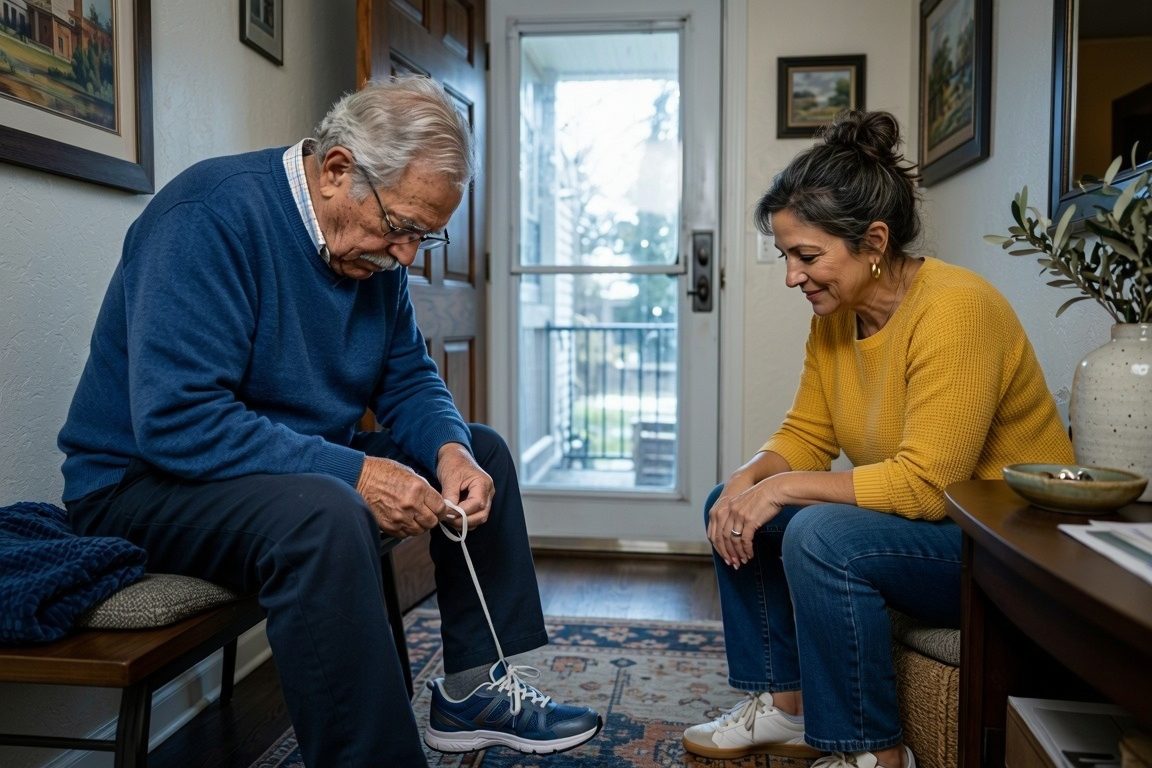
The goal is to find a middle ground where you support without smothering. This means asking permission before helping, letting your loved one take the lead on tasks they can still manage, and only stepping in for the parts that are truly beyond them. For example, if they can't handle all the steps of cooking a meal, you might chop the vegetables while they stir the pot, or you set out the ingredients and let them assemble the dish. This preserves their sense of contribution and control.
As All Home Care Matters advises, helping is okay and encouraged, but you must ask for permission first. A simple, 'Would you like some help with that?' or 'Can I show you a trick I learned?' respects their autonomy. When you do step in, frame it as teamwork: 'Let's do this together' rather than 'Let me do it for you.' This approach maintains dignity and can even strengthen your relationship.
Practical tools
6
The 'Can I Help?' Script
Phrases to practice: 'Would you like a hand with that?' / 'I have an idea, want to hear it?' / 'Let's do this together.' / 'Can I show you a trick I learned?' / 'You're doing great: I'll just be here if you need me.'
The 'Two-Choice' Method
When open-ended questions overwhelm, offer exactly two options: 'Do you want the blue sweater or the red one?' / 'For lunch, soup or a sandwich?' This preserves control without cognitive overload.
Environmental Setup Checklist
(1) Frequently used items at waist level in open bins. (2) Contrasting colors for important items (e.g., red mug on white counter). (3) Remove tripping hazards like loose rugs. (4) Label drawers with pictures or words. (5) Install grab bars in bathroom. (6) Use automatic nightlights in hallways.
The 'Respite Request' Card
A small card to hand to a friend or family member: 'I'm caring for [name]. I need a break. Could you sit with them for an hour while I take a walk? Thank you!'
The 'Daily Anchor' Ritual
A simple, predictable task they can do independently, like watering a plant, feeding a pet, or sorting mail. Small, achievable tasks give a sense of purpose and accomplishment.
The 'Permission to Pause' Technique
When you feel the urge to take over, take a deep breath and count to five. Ask: 'Is this task truly unsafe, or just imperfect?' If safe, step back. If unsafe, step in with a calm, supportive cue.
Different situations
Early-stage Alzheimer's vs. moderate dementia
In early stages, your loved one can still participate in complex tasks like managing medications or planning meals with verbal cues. In moderate stages, focus on simple, repetitive tasks like folding towels or sorting silverware. Always match the level of support to their current ability, not their past capability.
Spouse vs. adult child caregiver
Spouses often have a longer history of shared decision-making and may find it harder to shift from partner to caregiver. Adult children may struggle with role reversal. Spouses should use 'we' language ('We need to figure this out together'), while adult children can use 'I' statements ('I want to help you stay independent'). Both should seek outside support to avoid burnout.
Lewy body dementia (with fluctuating cognition and hallucinations)
Independence may vary hour to hour. Use the 'good hours' for tasks that require more focus, and accept that during 'bad hours' they may need more hands-on help. Avoid arguing about hallucinations, instead, validate their experience and redirect to a simple task. Safety is paramount due to fall risk and sensitivity to medications.
Living alone vs. living with family
If your loved one lives alone, focus on safety modifications (grab bars, automatic lights, medication reminders) and scheduled check-ins. If they live with you, you can more easily offer 'just-in-time' support but must be careful not to hover. In both cases, encourage social connections and community resources like meal delivery or adult day programs.
Financial decision-making
If your loved one can no longer manage finances, don't take over entirely without discussion. Start by offering to 'help organize' bills or 'review' statements together. Gradually move to joint accounts or a power of attorney. Always involve a geriatric care manager or elder law attorney to ensure legal and ethical boundaries. Discuss with your clinician before making any major financial changes.
For the doctor
5
- If your loved one is refusing help with medications, discuss with their doctor whether a pill organizer, blister pack, or medication management service is appropriate.
- If they are resistant to using a walker or cane, ask their doctor or physical therapist to explain the fall risk in a way that resonates with them.
- If you notice sudden changes in their ability to perform daily tasks (e.g., overnight decline), consult their doctor to rule out infection, medication side effects, or other medical issues.
- If you are considering hiring a professional caregiver or moving to assisted living, discuss the financial and legal implications with a geriatric care manager or elder law attorney.
- If your loved one has hallucinations or paranoia that interfere with their willingness to accept help, ask their doctor about possible medication adjustments or behavioral interventions.