
Step by step
What not to do
- Do not ask 'Do you remember me?' or 'Who am I?' This puts the person on the spot and can cause shame or distress.Instead, introduce yourself warmly: 'Hi Mom, it's Allison: I'm so glad to see you.'
- Do not ask 'What did you have for lunch today?' or other recent memory questions. They likely cannot recall, and the question only highlights their deficit.Instead, talk about the present moment: 'This soup smells wonderful, doesn't it?'
- Do not quiz them on names in photos. This is a classic test that creates pressure and proves nothing.Instead, simply talk about the photo: 'Look at that beautiful day at the beach: I love how happy we all look.'
- Do not argue or correct them when they give a wrong answer. Arguing is like trying to convince someone who has stepped through a time machine that their reality is wrong, it never works.Instead, validate the emotion and gently redirect.
- Do not use open-ended questions like 'What would you like to do today?' This overwhelms the brain and often leads to a shutdown or a 'no.' Instead, offer one or two simple, concrete choices.
- Do not rush them or speak quickly. Processing speed slows with dementia, and rushing triggers anxiety or defensiveness. Speak slowly, pause, and give them time to respond.
Key points
- Quizzing creates pressure, anxiety, and feelings of failure, it does not help memory or orientation.
- Replace all orientation questions with statements that give information without demanding recall.
- Use 'can you help me' invitations to tap into preserved procedural memory and build cooperation.
- Offer only two simple choices at a time to reduce decision fatigue.
- Validate their reality, even if it is not accurate, this builds trust and reduces distress.
- Focus on sensory and emotional activities (music, touch, familiar objects) rather than verbal recall.
- Every interaction should leave the person feeling successful and connected, not tested and defeated.
Videos
 Time with Teepa - Keep Quizzing to Keep Sharp?Teepa Snow directly addresses the harm of quizzing and offers a positive alternative approach to brain stimulation.
 The 'Dementia LIVE' Experience with AGE-u-cateThis immersive experience helps caregivers understand the emotional impact of being quizzed and how to shift to supportive communication.
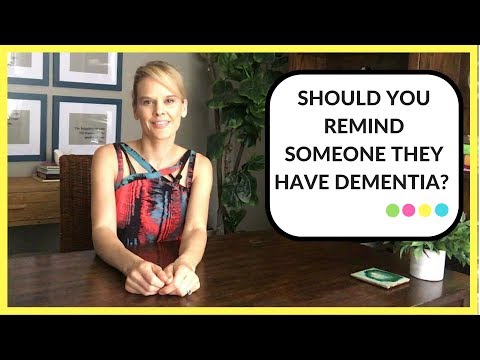 Should you remind someone they have dementia?Dr. Natalie from Dementia Careblazers explains when reminding is helpful and when it backfires, with practical alternatives.
 Communication & Dementia: Connecting with a Person living with Memory LossThis video demonstrates face-to-face communication techniques that reduce pressure and improve connection.
2 more videos
 Ep. 155: How Can We Become Dementia Curious?Explores the mindset shift from testing to curiosity, helping caregivers see the person behind the diagnosis.
 What Not To Do When Caring For Someone With Dementia?A clear list of common mistakes (including quizzing) and what to do instead, with real-life examples.
Background
Why Quizzing Feels Natural but Hurts
When you love someone with dementia, it is instinctive to want to help them hold onto their memories and orientation. Asking 'Do you remember what we had for lunch?' or 'Who is this in the picture?' seems like a gentle way to exercise their brain. But for a person with dementia, these questions feel like a test, and they know they are failing it. According to experts, a person with dementia may perceive questions as a test, and not getting the answer right can make them feel like a failure. This triggers anxiety, defensiveness, and even anger, because the brain is being asked to retrieve information it can no longer access reliably.
The Brain Science: Why Quizzing Backfires
Dementia damages the parts of the brain responsible for memory, reasoning, and language. Asking a direct recall question forces the person to confront their deficits head-on. This is not stimulating, it is stressful. The person may become agitated, withdraw, or lash out. One expert puts it bluntly: 'Stop freaking quizzing her. It creates a lot of pressure for them. And trust me, if they knew who that was in the picture, they would tell you'. Instead of building skills, quizzing erodes the relationship and the person's sense of safety. The goal of brain stimulation is to engage the person in a way that feels enjoyable and successful, not to test what they have lost.
What Real Brain Stimulation Looks Like
True brain stimulation for dementia focuses on the person's remaining strengths, procedural memory (how to do things), emotional memory, and sensory experiences. It uses open-ended invitations, not closed-ended quizzes. For example, instead of asking 'Do you remember this song?', you simply hum the tune and watch for a smile or a toe-tap. Instead of asking 'What did you do today?', you say 'Let's look at this photo album together : I love this one of us at the beach.' The stimulation comes from the activity itself, not from being tested. As one expert notes, 'If you're going to ask them questions, ask them pictures of like their brothers and sisters or their mom and their dad... just enjoy'. The key is to remove the pressure of needing to tap into many different parts of the brain at once.
Practical tools
6
The 'Help Me' Invitation
A simple phrase that turns a potential test into a cooperative task. Say: 'I need your help with something, can you help me sort these socks?' or 'Can you help me fold these napkins?' This taps into preserved procedural memory and makes the person feel valued.
The Two-Choice Menu
Instead of asking 'What do you want?', hold up two items and say: 'Would you like the red shirt or the blue shirt?' or 'Would you like tea or coffee?' This limits decision fatigue and makes the choice manageable.
The Positive Lead-In
Start every request with a positive, exciting phrase. Say: 'I have a great idea!' or 'Oh, I want to show you something special!' This sets a positive tone and reduces resistance.
The Validation Script
When your loved one says something that is not true (e.g., 'I need to go pick up my mother'), respond with: 'That sounds important. Tell me more about her.' This validates the emotion without correcting the fact. Then gently redirect: 'Let's sit here and talk about it while we have a snack.'
The Photo Talk Tool
Instead of quizzing on names, use photos as conversation starters. Say: 'Look at this picture: I love how happy everyone looks. What do you think they were laughing about?' This invites sharing without testing recall.
The Routine Anchor
Create a simple daily routine that uses the same activities at the same time each day. For example, after breakfast, always sort socks together. This uses procedural memory and reduces anxiety because the person knows what to expect.
Different situations
Early-stage dementia (mild cognitive impairment)
In early stages, the person may still be aware of their diagnosis and may appreciate gentle reminders about strategies (e.g., using a calendar). However, still avoid quizzing. Instead, use collaborative activities like making a grocery list together. If they ask 'Do I have dementia?', respond with empathy: 'You have some changes in your memory, and we are going to work together to make things easier.'
Middle-stage dementia (moderate cognitive decline)
At this stage, quizzing is most harmful because the person is often aware of their failures but cannot control them. Use only the 'help me' invitations and validation tools. Avoid any questions that require recent memory. Focus on sensory activities like listening to music, looking at textures, or smelling familiar scents.
Late-stage dementia (severe cognitive decline)
In late stages, the person may not respond to words at all. Quizzing is completely inappropriate. Instead, use gentle touch, humming, or rocking. The goal is comfort and connection, not stimulation. Say simple, soothing phrases like 'I'm here with you' and use a calm, low tone of voice.
Lewy body dementia or Parkinson's dementia
These types often involve visual hallucinations and fluctuating attention. Quizzing can increase confusion and paranoia. Instead, use very short, concrete statements. Avoid asking 'Do you see that?' if they are hallucinating, instead, say 'I see you are looking at something. Let's sit here together.' Validation is key.
Spouse vs. adult child caregiver
Spouses may feel a stronger urge to quiz because they are trying to 'keep' the person they knew. Adult children may feel guilt and want to 'fix' the memory loss. Both need to shift from a fixing mindset to a connecting mindset. The advice is the same, but the emotional work is different: spouses may need extra support to grieve the loss of shared history, while adult children may need permission to stop trying to 'teach' their parent.
For the doctor
4
- If your loved one becomes extremely agitated or aggressive when you stop quizzing, discuss with a clinician whether a medication adjustment or a referral to a behavioral specialist is needed.
- If you notice a sudden change in memory or behavior (e.g., they suddenly cannot recognize you at all), discuss with a clinician to rule out delirium, infection, or other medical causes.
- If you are unsure whether your loved one is in early or middle stage, ask the clinician for a formal assessment so you can tailor your approach appropriately.
- If your loved one asks repeatedly 'Do I have dementia?' and you are unsure how to respond, discuss with a clinician or dementia care specialist for guidance on how to answer truthfully without causing distress.