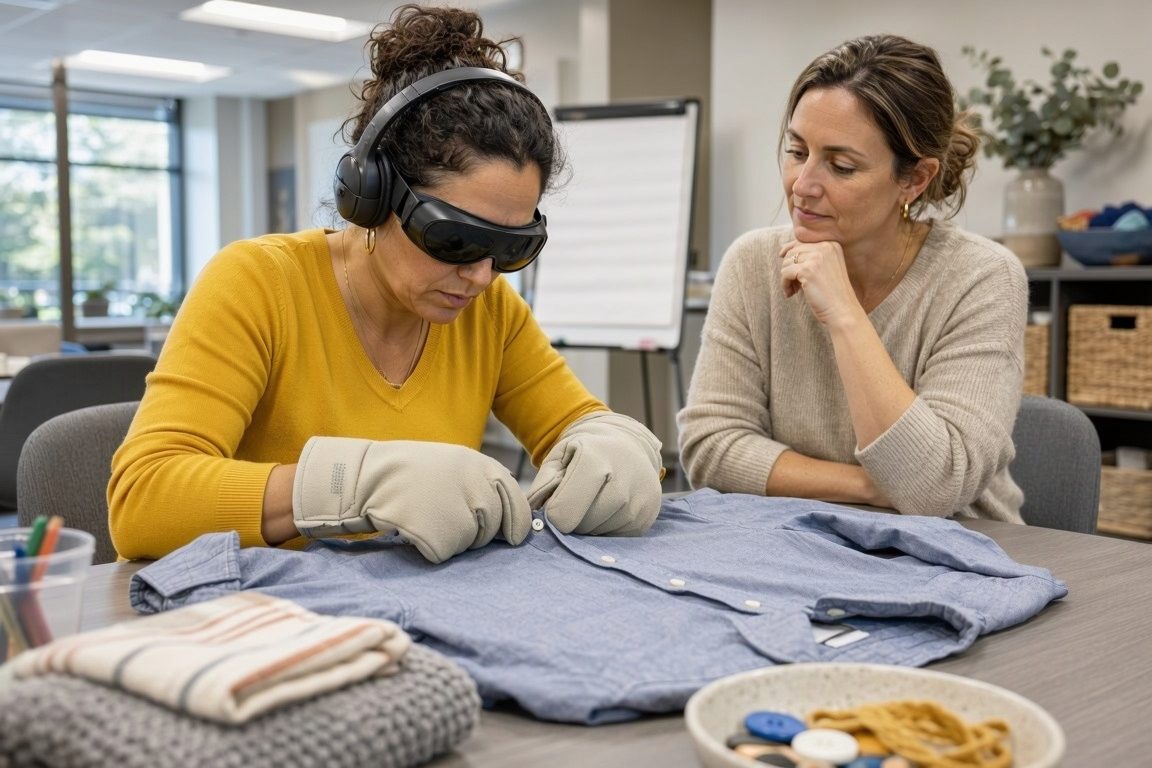
Step by step
What not to do
- Do not assume that a single simulation session is enough. Empathy is a skill that must be practiced. Without follow-up training and real-world application, the insights fade.Instead, schedule a follow-up session or join a caregiver support group to keep the lessons fresh.
- Do not use the simulation as a way to 'test' whether someone has dementia. The training is designed for caregivers, not for diagnosis. If you suspect dementia, consult a doctor. Using the simulation on someone with dementia can be distressing and is not recommended by the program developers.
- Do not compare your loved one's experience to your simulation experience in a dismissive way. Saying 'I know exactly how you feel because I did that training' can invalidate their unique struggle.Instead, use your experience to inform your compassion: 'I have a tiny glimpse of how hard this must be for you. I am here with you.'
- Do not neglect your own emotional processing after the simulation. The experience can be intense and may bring up grief, guilt, or anxiety. Give yourself time to decompress. Talk to a counselor or a trusted friend. If you feel overwhelmed, step back from caregiving for a few hours to recharge.
- Do not expect the simulation to change your loved one's behavior. It changes your response, which in turn can improve their quality of life and reduce your stress. But the disease will still progress. Focus on what you can control: your own reactions, your patience, and your willingness to adapt.
Key points
- Dementia LIVE is a hands-on simulation that builds empathy by letting you briefly experience sensory and cognitive challenges of dementia.
- The training shifts your focus from 'fixing' behaviors to understanding the unmet needs behind them.
- Empathy reduces caregiver stress and improves quality of life for both you and your loved one.
- The simulation is most effective when combined with follow-up training, debriefing, and real-world practice.
- Tailor the insights to your specific situation: dementia type, stage, and your role as a family or professional caregiver.
- Use the experience to build a community of empathy, share with other caregivers and your care team.
Videos
 The 'Dementia LIVE' Experience with AGE-u-cateThis video gives you a direct look at what a Dementia LIVE simulation involves, including the gear used and the emotional debriefing afterward. It is the best way to understand the training before you attend.
 Uniting for Better Dementia Care = Seni + Dementia LiveThis video shows how Dementia LIVE is used in a real partnership between a senior living company and the training provider. It highlights the ripple effect of empathy training on staff and residents.
 5 Surprising Reasons Your Loved One With Dementia Resists HelpThis video explains common resistance behaviors from the perspective of the person with dementia. It complements the simulation by giving you practical reasons behind the behaviors you experienced.
 Dementia Caregivers! 3 Signs You're Burning OutBurnout is a real risk for empathetic caregivers. This video helps you recognize the signs early so you can take care of yourself while continuing to provide compassionate care.
2 more videos
 How To Decrease Your Stress As A Dementia Caregiver Through Dementia CoachingThis video introduces the concept of dementia coaching, which can be a next step after the simulation. Coaching helps you apply empathy skills to your specific daily challenges.
 Should You Let Someone With Dementia Help You?This video addresses a common dilemma that empathy training helps you navigate. It offers practical guidance on preserving dignity while maintaining safety.
Background
What Is Dementia LIVE and Why Does It Work?
The training is not just for professional staff in facilities; it is equally valuable for family caregivers. In fact, many programs now offer community sessions or online versions. The key is that it is tailored and flexible, dementia changes over time, and so must the caregiver's approach. Dementia LIVE provides a foundational understanding that you can build on with other training, coaching, or support groups. It is a starting point, not an end point, and it works best when combined with ongoing education and real-life practice.
How Empathy Changes the Caregiving Dynamic
Dementia LIVE specifically targets the caregiver's ability to interpret behaviors. After the simulation, caregivers report feeling more confident in their ability to understand why a person is acting out, it is usually a response to an unmet need, not a personal attack. This understanding is critical because it allows caregivers to stop wasting energy on strategies that don't work, like trying to reason or convince. Instead, they can focus on what does work: redirection, validation, and creating a calm environment. The training also emphasizes the importance of self-care for the caregiver, because empathy without boundaries leads to burnout. You can't pour from an empty cup, and Dementia LIVE reminds you that taking care of yourself is part of taking care of them.
Practical tools
5
The 'Empathy Debrief' Journal
After a Dementia LIVE session, keep a small notebook dedicated to your insights. Write down one specific moment from the simulation that surprised you. Then, for the next week, each day write one sentence about a caregiving interaction where you applied that insight. For example: 'Today, when Mom got upset about her shoes, I remembered how confusing it was to have distorted vision. I slowed down and let her choose which pair.' This simple practice reinforces the learning and builds a habit of empathy.
The 'Pause and Validate' Script
Use this exact phrase when your loved one is distressed: 'I can see this is really hard for you right now. I am here with you. Let's take a breath together.' This script comes directly from the empathy-building approach of Dementia LIVE. It validates their feelings without arguing or fixing. Practice it in front of a mirror so it feels natural. It works because it meets the person where they are, not where you want them to be.
Sensory Simulation Kit (DIY Version)
If you cannot attend a formal Dementia LIVE session, create a mini-simulation at home with a partner. Use yellow-tinted safety glasses to mimic visual changes, put cotton balls in your ears to muffle sound, and wear thick gardening gloves to reduce tactile sensation. Then try to complete a simple task like buttoning a shirt or pouring a glass of water. Debrief together afterward. This is not a substitute for the real training but can give you a small taste of the challenges your loved one faces.
The 'One Thing' Commitment Card
After the training, write on an index card one specific change you will make in your caregiving. For example: 'I will not correct my husband when he calls me by his mother's name. I will just respond with love.' Keep the card in your pocket or on the fridge. Every time you see it, it reminds you of the empathy you felt during the simulation. Replace the card each week with a new commitment.
Online Dementia LIVE Resources
Visit the AGE-u-cate website (ageucate.com) for information on upcoming live and virtual Dementia LIVE sessions. They also offer a 'Dementia Live at Home' kit for family caregivers. Additionally, watch the video 'The Dementia LIVE Experience with AGE-u-cate' (linked below) to get a preview of what the training involves. Use this as a conversation starter with your care team or family members.
Different situations
For family caregivers vs. professional caregivers
Family caregivers may find the simulation emotionally raw because it brings up personal grief. Professionals should use the experience to build team cohesion and standardize empathy across shifts. For family caregivers, the debriefing should include time to process personal feelings. For professionals, the debriefing should focus on translating insights into daily care protocols, such as how to approach a resident who is agitated.
For early-stage vs. late-stage dementia
In early-stage dementia, the simulation helps caregivers understand the frustration of losing cognitive abilities while still being aware. Focus on communication strategies: slow down, use simple sentences, and avoid interrupting. In late-stage dementia, the simulation highlights the sensory and physical challenges. Focus on comfort: gentle touch, familiar music, and a calm environment. The training should be revisited as the disease progresses.
For different dementia types (Alzheimer's, Lewy body, frontotemporal)
Dementia LIVE is a general simulation, but you can tailor the debriefing. For Lewy body dementia, emphasize the visual hallucinations and fluctuating cognition, the simulation's visual distortions are particularly relevant. For frontotemporal dementia, focus on the emotional and behavioral changes , the simulation's disorientation can help caregivers understand why a person might act impulsively. Discuss these differences with a trainer or support group.
For caregivers in a facility vs. at home
In a facility, the training can be used to align the entire care team on a single approach. Create a 'Dementia LIVE Champion' on each shift who reinforces the empathy principles. At home, the training is more personal. Use it to educate other family members who may not understand why you are changing your approach. Host a family viewing of the simulation video and discuss how everyone can support the same empathetic care plan.
For caregivers experiencing burnout
If you are already burned out, the simulation may feel like an additional burden. Do not force it. Instead, start with a self-care plan: get rest, seek counseling, and join a support group. Once you have some emotional reserves, attend the training with a focus on how empathy can actually reduce your stress, because when you understand the behavior, you stop fighting it. The training is a tool for your well-being, not a test of your endurance.
For the doctor
3
- If you or your loved one have a history of severe anxiety, panic attacks, or PTSD, discuss with a clinician before participating in a simulation. The experience can be intense and may trigger emotional distress.
- If your loved one is in the early stages of dementia and you are considering using a simulation to help them understand their own condition, discuss this with their doctor first. The training is not designed for people with dementia and may cause confusion or distress.
- If you notice that your own stress or grief is significantly interfering with your ability to care for your loved one, discuss with a clinician whether additional mental health support, such as therapy or medication, is needed before or after the training.