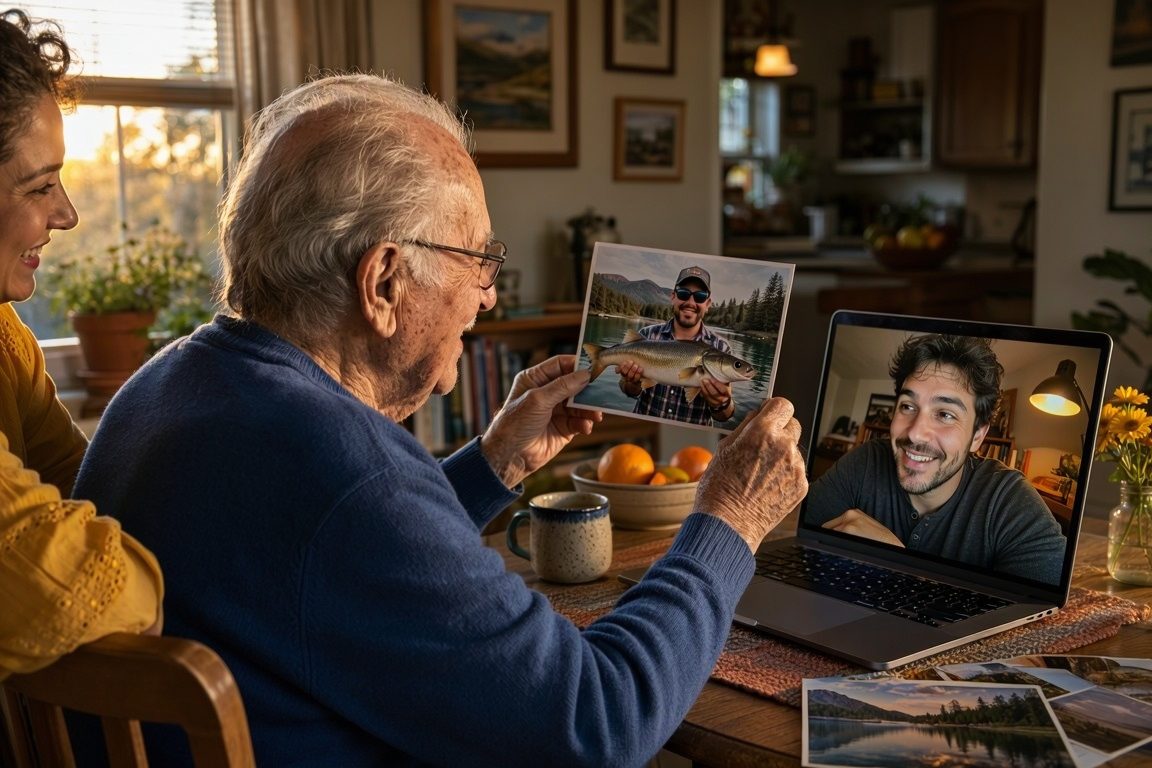
Step by step
What not to do
- Don't overwhelm your loved one with complex or open-ended questions like 'How was your day?' Instead, use simple, concrete statements such as 'I'm wearing my blue sweater today, what color is your shirt?'
- Don't neglect the primary caregiver: send a text saying 'I know you're doing so much. How are YOU doing? Is there anything I can help with from here?' or order them a meal delivery.
- Don't correct or argue when your loved one says something confused or incorrect, meet them where they are emotionally rather than factually.
Key points
- Consistency is key: a regular schedule and familiar opening words reduce confusion and build trust.
- Tangible objects (photo blankets, lotion, letters) create a physical bridge that words alone cannot.
- Build relationships with facility staff, they are your eyes, ears, and hands when you can’t be there.
- Attend appointments virtually to stay informed and show your loved one you’re still part of their team.
- Don’t forget the primary caregiver: a simple check-in or respite offer can make a huge difference.
- Educate yourself about your loved one’s specific dementia type and stage to adapt your approach.
Videos
 Long-Distance CaregivingThis video offers a broad overview of challenges and solutions for long-distance caregivers, including how to coordinate care and stay informed.
 Can't visit your LOWD? 5 tips for staying connected during COVID-19 lockdownFocused on facility lockdowns, this video gives practical tips for maintaining connection when in-person visits are restricted.
 Long distance dementia caregiverA personal perspective from a long-distance caregiver, with emotional support and concrete strategies for staying involved.
 Seniors and Isolation (Depression and Loneliness Tips)Addresses the emotional toll of isolation on seniors and offers ways to combat loneliness, which is especially relevant for dementia care.
2 more videos
 MAKE A DIFFERENCE FROM AFAR - How to Provide Care to Parents from a DistanceStep-by-step guide on practical actions you can take from afar, including organizing care and supporting the primary caregiver.
 #6.3 What Can Be Done from Far Away: Long Distance Caregiving (3 of 5)Part of a series, this video dives into specific tasks like arranging services and using technology to stay connected.
Background
Why Distance Feels So Hard for Dementia Caregivers
When a loved one has dementia, the disease gradually erodes their ability to initiate or sustain connection on their own. They may forget recent conversations, struggle with phone calls, or become confused by technology. For a long-distance caregiver, this can feel like a one-way street where your efforts to reach out are met with silence or confusion. You might worry that your loved one feels abandoned, or that you’re missing critical changes in their condition. These feelings are normal, and they’re a sign of how much you care.
At the same time, dementia often makes the person more reliant on routine, familiar faces, and sensory cues. A phone call without visual context can be disorienting. A video call might be overwhelming if the person can’t track the screen. But with the right approach, using simple language, consistent timing, and tangible objects, you can create a bridge that your loved one can cross, even from far away. The key is to adapt your communication style to match their current abilities, not to expect them to meet you halfway.
What’s Happening Emotionally for Your Loved One
Your loved one may not be able to articulate it, but they likely feel a deep sense of loss, loss of independence, loss of familiar surroundings, and loss of regular contact with people they love. In a memory care facility or nursing home, they are surrounded by staff and other residents, but that doesn’t automatically replace the comfort of family connection. They may feel lonely, anxious, or even depressed without knowing why. This is especially true if they have trouble remembering that you called or visited recently, each day can feel like starting from scratch.
For the primary caregiver (often a spouse or sibling who lives nearby), distance can add stress. They may feel they’re carrying the full emotional and practical load, and they might hesitate to ask for help. Your regular check-ins, even just a text saying “I’m thinking of you both”, can be a lifeline. It lets them know you’re a team, and that you see their effort. When you stay connected, you’re not just helping your loved one; you’re supporting the whole care circle.
Practical tools
4
Video calling apps
FaceTime, Skype, or Zoom for scheduled visual contact that helps your loved one see your face and hear your voice together, far more grounding than audio alone.
Photo printing services
Walmart Photo or Walgreens Photo for creating tangible items like photo blankets, pillows, or framed pictures they can hold and look at between visits.
Simple home cameras
Wyze or Amazon Blink cameras (no subscription needed) to gently check in visually and see if your loved one is up, eating, or interacting, requires facility permission and is for reassurance, not surveillance.
Care notebook
A physical binder or folder kept in their room with
Different situations
Lewy body dementia (LBD)
People with LBD often have visual hallucinations and fluctuating attention. Keep video calls very short (3–5 minutes) and use a plain background to reduce visual stimuli. If they seem confused by the screen, switch to a phone call with simple, soothing words. Avoid asking 'Do you see that?' as it may trigger distress. Instead, say 'I’m here with you. It’s okay.'
Late-stage Alzheimer’s (severe cognitive decline)
Your loved one may not recognize you or respond verbally. Focus on sensory connection: send a soft blanket, play familiar music during a call, or ask staff to hold your photo near their face while you speak. Use a calm, loving tone even if they don’t reply. Your presence, even by voice, can still provide comfort. Don’t expect conversation; just be there.
Spouse vs. adult child caregiver role
If you’re the spouse, you may feel a deeper sense of loss and identity shift. Prioritize your own emotional support, join a support group for spouses of people with dementia. If you’re an adult child, you may need to balance care with your own family and job. Set boundaries: schedule calls and visits, and don’t feel guilty if you can’t do everything. Both roles are valid and hard.
Loved one is in a memory care facility vs. nursing home
In memory care, staff are trained in dementia and may have more structured activities. Ask for a schedule of daily programs (e.g., music therapy, exercise) and try to call during a calm time. In a nursing home, staff may be less specialized. Be more proactive in educating them about your loved one’s needs and preferences. In both settings, build a relationship with the activities director.
Medicaid or limited budget
Many low-cost tools (like the care notebook, photo blanket, or connection jar) are free or under $40. For cameras, look for used or refurbished models. The Alzheimer’s Association offers free resources and support groups. You can also ask the facility’s social worker about volunteer programs that provide friendly visitors or phone calls at no cost.
For the doctor
5
- Ask your loved one’s doctor: 'Given their current stage of dementia, what communication strategies are most effective? Should I avoid certain topics or times of day?'
- Discuss with the facility’s medical director: 'Are there any safety concerns I should know about, like fall risk or wandering, that might affect how I connect from a distance?'
- If your loved one has a medical alert system, ask the provider: 'How do I get alerts if there’s an emergency? Can I be added as a contact?'
- Before setting up a camera, discuss with the facility administrator: 'What are your policies on in-room cameras? Do I need written consent from my loved one or the facility?'
- If your loved one shows signs of depression or anxiety, ask the clinician: 'Would a referral to a geriatric psychiatrist or a social worker be helpful? Are there non-drug approaches we can try?'