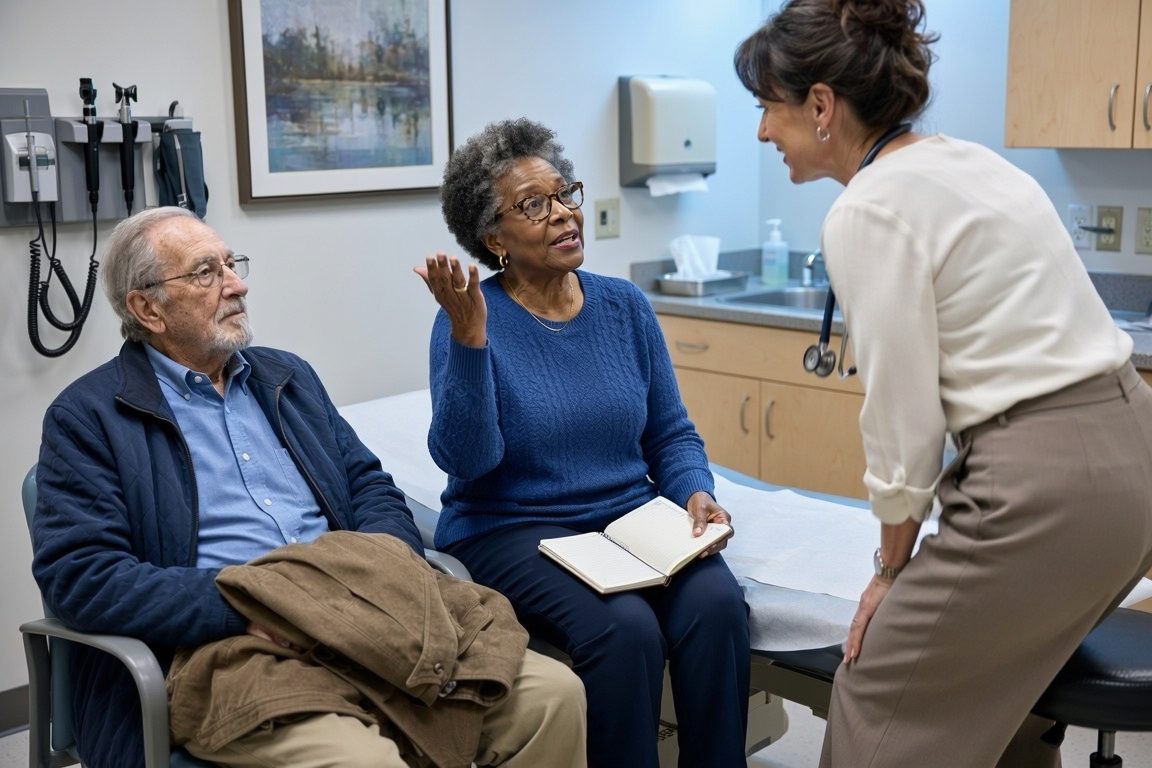
Step by step
What not to do
- Do not stay silent or accept dismissal without pushing back, silence can lead to missed diagnoses and worsening conditions.
- Do not become aggressive or confrontational; stay calm, use 'I' statements, and focus on facts.
- Do not leave without a clear next step; if told to 'watch and wait,' ask for specific criteria to return or call.
- Do not blame yourself, this is a systemic problem, not a personal failure.
- Do not ignore your own well-being; seek support from a counselor or caregiver group to prevent burnout.
Key points
- Medical gaslighting is real and common in dementia care; you are not overreacting.
- Use the phrase ‘sudden change from baseline’ to give providers a clear clinical signal.
- Document symptoms with dates and times to make your concerns concrete.
- If dismissed, ask for a specific next step or a second opinion.
- Bring a second person to appointments for support and advocacy.
- You have the right to escalate to a patient advocate or find a new provider.
Videos
 Medical GaslightingThis video directly addresses the experience of being dismissed by providers and offers strategies to advocate for yourself and your loved one.
 The Caregiver's Journal with Lance A. Slatton & Denise M. Brown: Chapter 2 'The Path to Diagnosis'This video explores the challenges of getting a diagnosis and the importance of persistence when facing dismissive attitudes from medical professionals.
 What Causes Sudden Decline In DementiaThis video explains common medical causes of sudden decline in dementia, which is exactly the kind of information you need to counter gaslighting.
 Palliative Care And Hospice Conversations For Dementia Patients, Families And CaregiversThis video provides guidance on having difficult conversations with providers about serious illness, which can help you advocate more effectively.
2 more videos
 Teepa for Ten : Medical Providers, What Would Be Helpful After You Give a Diagnosis?Teepa Snow offers insight into what providers should do after a diagnosis, helping you understand what good care looks like and what to ask for.
 A Daughter's Story of her Father's Alcohol Induced DementiaThis personal story illustrates the frustration of being dismissed and the importance of advocating for your loved one, even when it feels hopeless.
Background
What Is Medical Gaslighting and Why Does It Happen?
Medical gaslighting is when a healthcare provider dismisses, minimizes, or blames your concerns on something else, often the dementia diagnosis itself. You might hear things like ‘It’s just the dementia’ or ‘This is normal for their age.’ This is a form of diagnostic overshadowing, where new or worsening symptoms are incorrectly attributed to the existing condition, leaving caregivers feeling dismissed, guilty, and unsure whether to push back. Seniors and people with dementia are the highest population of victims of this kind of gaslighting, and it happens because many providers lack training in dementia-specific symptom management, especially around pain, infection, and sudden behavioral changes.
Why Your Instincts Matter More Than You Think
You know your loved one better than anyone. If you notice a sudden change from their baseline, like new confusion, agitation, withdrawal, or a change in appetite, that is a red flag for an underlying medical issue, not just ‘the dementia.’ Caregivers are often the first to spot these subtle shifts, and your observations are critical. Providers may not see the person every day, so they rely on your report. When you say ‘This is a sudden change from baseline, and I’m concerned something medical is happening,’ you are giving them a clear, clinical signal that something needs investigation. Trust your gut; you are not overreacting.
The Emotional Toll of Being Dismissed
Being dismissed by a provider can leave you feeling angry, frustrated, and isolated. You may start to doubt yourself or wonder if you are being ‘that difficult family member.’ But remember: you are the expert on your loved one, and you have a right to be heard. The healthcare system is overburdened, and providers are often rushed, but that does not make it acceptable for your concerns to be brushed aside. You are not alone, many caregivers face this, and there are steps you can take to change the dynamic and get the care your loved one needs.
Practical tools
5
'Sudden Change from Baseline' Script
Use the exact phrase: 'This is a sudden change from [name]'s baseline. I am concerned something medical is happening. Can we rule out infection, pain, or medication side effects?' This grounds the conversation in a clinical signal providers take seriously.
Symptom Tracking Log
A log with columns for date, time, symptom, context, and notes; bring to every appointment. Example: 'March 10, 3 PM: Refused lunch, more confused, pacing.' This makes concerns concrete and harder to dismiss.
Current Medication List
A one-page list of every medication, dose, frequency, prescriber, and reason, including OTC drugs and supplements. Side effects and interactions are common causes of sudden changes in dementia and this list enables quick review by any provider.
Patient Advocate Contact Card
Keep the hospital or clinic patient advocate's phone number handy. If dismissed, say 'I would like to speak with the patient advocate about my concerns.' Hospitals have formal processes that often get results.
Caregiver Support Contact
Keep the Alzheimer's Association helpline (1-800-272-3900) handy for finding providers, local support groups, and advocacy tips.
Different situations
Lewy body dementia (LBD)
People with LBD are especially sensitive to medications and can have sudden changes in cognition, alertness, and movement. If a provider dismisses a sudden change as ‘just the dementia,’ stress that LBD is known for fluctuating symptoms and that a medication review is critical. Ask specifically about checking for medication side effects or interactions, as LBD patients often react poorly to certain antipsychotics and other drugs.
Late-stage dementia
In late stages, the person may be nonverbal or bedbound. Pain is often underrecognized and undertreated. Use the ‘sudden change from baseline’ script but focus on nonverbal cues like facial grimacing, moaning, restlessness, or changes in breathing. Ask for a pain assessment using a validated tool like the PAINAD scale. If the provider dismisses, say: ‘I am seeing signs of pain, and I need a pain assessment today.’
Spouse vs. adult child caregiver
Spouses may be more likely to be dismissed as ‘overprotective’ or ‘emotional,’ while adult children may be seen as ‘controlling.’ If you are a spouse, emphasize your long-term knowledge: ‘I have lived with them for 40 years, and this is not normal.’ If you are an adult child, bring a written log and use clinical language to be taken more seriously. Both roles benefit from bringing a second person for support.
In a facility (nursing home or assisted living)
If your loved one is in a facility, the staff may dismiss changes as ‘just the dementia’ or ‘they do that sometimes.’ Use the same script but direct it to the facility’s medical director or nurse practitioner. Ask for a care plan meeting to discuss the change. If the facility is unresponsive, involve the ombudsman or state survey agency.
Medicaid or low-income setting
Providers in under-resourced settings may be more rushed and dismissive. Bring a written list and be prepared to advocate firmly but respectfully. If you cannot get a second opinion easily, ask for a telehealth consult with a specialist. You can also contact your state’s Medicaid managed care plan to request a care coordinator who can help advocate.
For the doctor
5
- Ask your clinician: ‘Could this sudden change be caused by an infection like a UTI or pneumonia, even if there are no typical symptoms?’
- Ask your clinician: ‘Is it possible that a medication is causing these symptoms? Can we review all medications for side effects or interactions?’
- Ask your clinician: ‘What are the signs of pain in someone who cannot communicate, and how can we assess for it?’
- Ask your clinician: ‘If we rule out infection and medication issues, what other medical causes should we consider for this change?’
- Ask your clinician: ‘Are there any tests, like blood work or a brain scan, that could help us understand what is happening?’