Step by step
What not to do
- Don't abruptly take away all screens, gradually reduce while offering appealing offline alternatives.
- Don't use screens as a long babysitter; set a timer and check in regularly to avoid worsening confusion and isolation.
- Don't ignore signs of overstimulation (fidgeting, irritability, repetitive speech); turn off the screen and switch to a quieter activity.
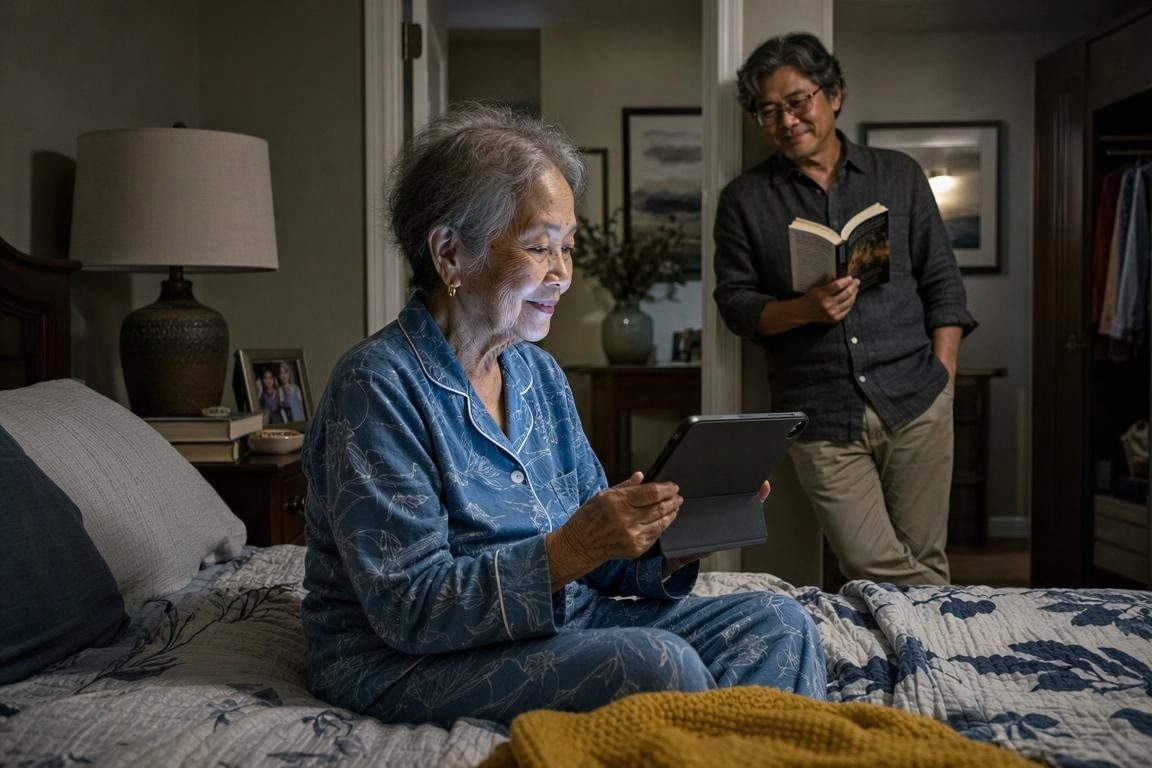
- Don't allow screens in the bedroom at night, as blue light disrupts the deep sleep needed for toxin clearance.
- Don't force screen-based brain games if they resist, offer a choice between the tablet and an offline activity like a bird book or puzzle.
Key points
- Excessive passive screen time can replace mentally stimulating activities, reduce social interaction, and disrupt sleep, all of which influence dementia risk.
- The goal is not to eliminate screens but to use them thoughtfully: for connection, calm, and brief engagement, not as a default activity.
- Replace one screen session per day with a hands-on, social, or physical activity to support brain health.
- Turn off all screens at least one hour before bedtime to protect sleep quality.
- Observe your loved one's response to screens: if they become agitated or confused, it's time to switch to a different activity.
- Work with your healthcare team to tailor screen time recommendations to your loved one's specific dementia type and stage.
Videos
 What Are The Most Common Risk Factors For Alzheimer's & Dementia?This video reviews modifiable risk factors for dementia, including hearing loss, high blood pressure, and sleep, all of which can be affected by screen time habits.
 14 Ways to Cut Your Dementia Risk in Half (Backed by Science)Provides science-backed strategies to reduce dementia risk, many of which involve replacing passive screen time with active lifestyle changes.
 5 Surprising Reasons Women Have A Higher Risk Of Developing DementiaExplores gender-specific risk factors, including social and lifestyle factors that can be influenced by screen time and isolation.
 Ep. 147: Seizures and Dementia, What Should We Be Aware of?Discusses how seizures can increase dementia risk and the importance of avoiding triggers like overstimulation from screens.
Background
What the Science Says About Screen Time and Dementia Risk
Research suggests that chronic, excessive screen exposure during brain development may increase the risk of Alzheimer's disease and related dementias later in life. This is because constant sensory stimulation from screens can affect how the brain develops, particularly in adolescents and young adults. However, for older adults who already have dementia or are at risk, the concern is different: too much passive screen time, like hours of TV or scrolling, can replace mentally stimulating activities, reduce social interaction, and disrupt sleep, all of which are known to influence dementia risk. The key is not to eliminate screens entirely, but to use them thoughtfully.
How Screen Time Affects Brain Health in Dementia
For someone living with dementia, the brain already struggles to process sensory input. Excessive screen time can lead to overstimulation, which may cause agitation, confusion, and restlessness, especially during sundowning hours. On the flip side, complete withdrawal from screens can lead to boredom and isolation. The goal is to find a middle ground: use screens for meaningful engagement (like video calls with family or simple brain games) while avoiding passive, repetitive content that doesn't challenge the brain. Also, screen use before bed can interfere with sleep, and poor sleep is linked to higher dementia risk because the brain uses sleep to clear out waste products.
The Role of Sleep, Social Connection, and Mental Stimulation
Sleep is when the brain cleans itself, removing toxins that can contribute to dementia. Screen time, especially late at night, can disrupt sleep by suppressing melatonin and keeping the brain alert. Social connection is another protective factor: when someone spends hours on a screen alone, they miss out on face-to-face interaction, which provides cognitive stimulation and emotional support. Mental stimulation from activities like puzzles, learning new skills, or volunteering can help build cognitive reserve. The challenge is to replace passive screen time with these more beneficial activities without causing frustration or resistance.
Practical tools
6
The 'Screen Swap' Script
Use: 'I know you enjoy that show, but I was thinking we could do something together. How about we look at that photo album? We can come back to the show later if you want.' This validates preferences while offering connection.
Visual Daily Schedule
Create a picture-based schedule showing screen time as one block (TV icon) alongside other activities (book, walk, meal). Place where visible to reduce anxiety and help anticipate transitions.
Calming Playlist for Wind-Down
Prepare a playlist of slow favorites from their younger years (e.g., 1940s–60s big band or classical). Play during the hour before bed instead of TV to soothe and signal sleep time.
The 'Two-Show Rule'
Agree: 'We'll watch two shows, then do something else.' Use a visual timer. After the second show, immediately offer a pre-planned offline activity to set clear boundaries and reduce arguments.
Screen-Free Activity Kit
Assemble a basket with simple items:
Keep near the TV to grab when switching off screens.
Blue Light Filter Settings
Enable 'night mode' or 'blue light filter' on tablets and phones to turn on automatically in the evening. For TVs, lower brightness and avoid dark-room viewing to reduce sleep disruption.
Different situations
For someone in early-stage Alzheimer's who is still independent
Focus on education and collaboration. Explain the link between screen time and brain health in simple terms: 'Too much TV can make it harder for your brain to rest at night. Let's try cutting back a little.' Involve them in setting goals, like 'We'll watch one less hour of TV and go for a walk instead.'
For someone in middle-stage dementia with agitation or sundowning
Avoid screens entirely in the late afternoon and evening. The overstimulation can worsen sundowning. Instead, use calming activities like listening to soft music, looking at a fish tank, or gentle rocking. If they ask for TV, offer a very short, familiar show (e.g., a 30-minute nature program) and then redirect.
For a spouse caregiver versus an adult child
Spouses may feel guilty about limiting screen time because it's a shared habit. Acknowledge this: 'I know we've always watched TV together in the evenings. Let's try something new, maybe we can listen to the radio instead and talk.' Adult children can be more directive but should still use a gentle, respectful tone.
For someone living in a facility or with Medicaid-funded care
Work with staff to create a consistent screen routine. Ask them to limit TV in common areas during meals and to offer alternative activities. If the person has a private room, you can bring a tablet loaded with calming apps or photo slideshows. Coordinate with the activities director to ensure screen time doesn't replace social programs.
For someone with Lewy body dementia or Parkinson's-related dementia
These individuals are often more sensitive to visual stimuli and may experience hallucinations or confusion from fast-moving screens. Stick to very simple, slow-paced content (e.g., a single camera shot of a garden). Avoid action movies or shows with frequent scene changes. If they become distressed, turn off the screen immediately and provide reassurance.
For the doctor
4
- Ask your doctor: 'Given my loved one's specific dementia type and stage, what is a safe daily screen time limit? Are there any types of content we should avoid entirely?'
- Discuss sleep issues: 'My loved one has trouble sleeping. Could screen time before bed be making it worse? Are there any medications or supplements that might help with sleep without interacting with their dementia meds?'
- If your loved one has a history of seizures or epilepsy, ask: 'Could screen time (especially flickering or fast-paced content) trigger seizures? What precautions should we take?'
- For those with high blood pressure or diabetes, ask: 'How does screen time affect their condition? Should we monitor blood pressure or blood sugar before and after screen use?'