Step by step
What not to do
- Do not visit if you feel unwell, even with mild symptoms like a runny nose or scratchy throat.
- Do not argue with staff about infection control rules; if frustrated, ask politely about alternative ways to stay connected.
- Do not bring young children or additional visitors without prior facility clearance.
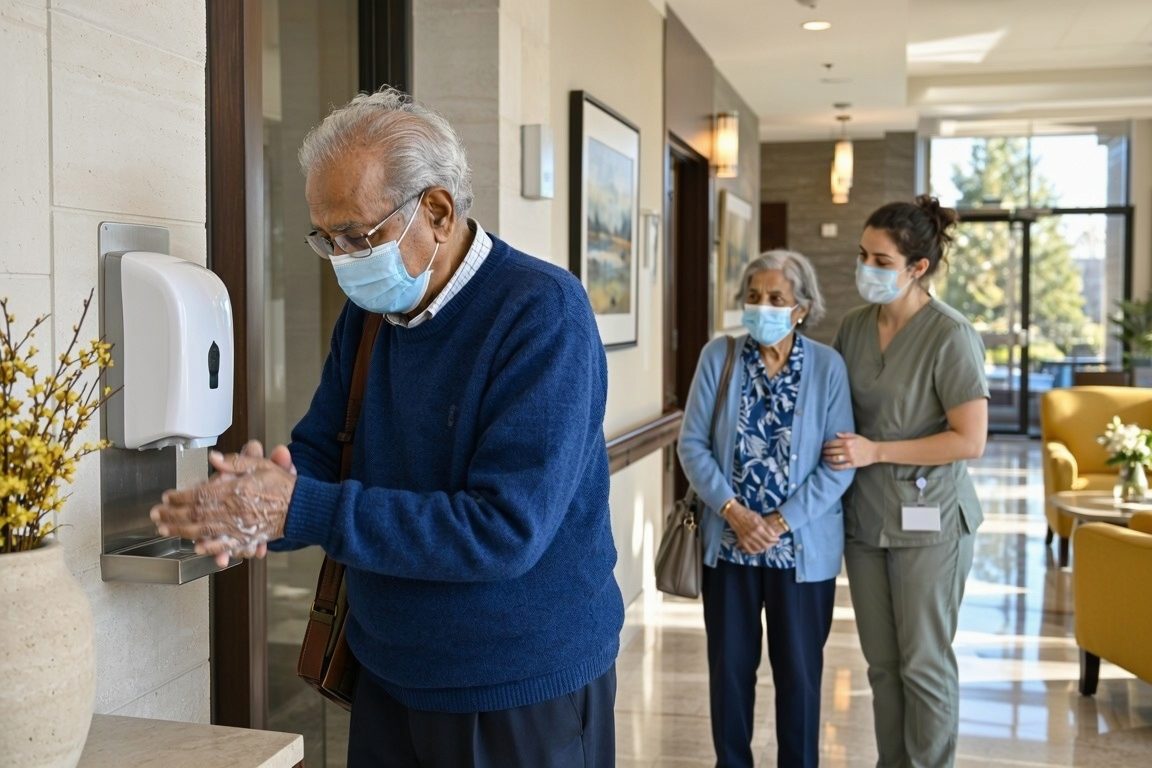
- Do not touch your face, your loved one's face, or shared surfaces unnecessarily; use hand sanitizer after adjusting your mask.
Key points
- Always call ahead to confirm infection control rules before visiting.
- Stay home if you feel unwell, even a mild cold can be dangerous for your loved one.
- Time your visit to when your loved one is at their best, usually in the morning.
- Use positive body language and a warm tone, even with a mask on.
- Keep visits short (15–30 minutes) to minimize exposure and fatigue.
- Build a partnership with staff through regular communication and gratitude.
Videos
 Can't visit your LOWD? 5 tips for staying connected during COVID-19 lockdownThis video offers practical tips for staying connected when you cannot visit in person, which is directly relevant to infection control situations.
 The Do's and Don'ts of Visiting a Loved One with DementiaThis video covers general visiting etiquette, which can be adapted for infection control settings.
 How Often Should You Visit Someone With Dementia In A Care Home?This video helps you think about visit frequency, which is important when visits are limited by infection controls.
Background
Why Infection Controls Exist and How They Affect You
Facilities like nursing homes, assisted living, and group homes have infection control measures to protect residents, who are often more vulnerable to illness due to age, chronic conditions, or dementia. As one expert explains, 'residents of long-term care facilities are at increased risk of acquiring infectious diseases' (source 22). These controls might include limited visiting hours, mask requirements, temperature checks, or even full lockdowns during outbreaks. While these rules can feel like barriers, they are designed to keep your loved one safe from infections that could be serious or even life-threatening.
The Emotional Impact of Restricted Visiting
Not being able to visit your loved one as often or as freely as you'd like can be deeply painful. You may feel like an intruder or worry that staff see you as a risk rather than a partner in care. One care expert notes that staff might say, 'your presence here is a risk and we actually would prefer that you not be here' (source 9). This can feel hurtful, but it is important to remember that these measures are not personal, they are about protecting everyone. Remind yourself that 'they're doing this for your loved one's own health, for your loved one's best interests' (source 5). Your role as advocate and family member remains vital, even from a distance.
The Balance Between Connection and Safety
Finding ways to stay connected while respecting infection controls is key. You can still be present and involved without putting your loved one at risk. Experts suggest that 'the same precautions that we use outside of the hospital should be used in the hospital' (source 10), meaning hand hygiene, staying home if you feel unwell, and wearing a mask when required. But beyond that, you can use technology, letters, and creative communication to maintain your bond. The goal is to 'maintain a sense of connection with your loved one even if you aren't physically able to talk with them and see them' (source 3).
Practical tools
5
Pre-Visit Checklist
Before leaving home:
Best Time Conversation Starter
When arranging a visit, say: 'I want to visit when Mom is at her best. Can you tell me what time of day she's most alert and calm?' This positions staff as partners and helps plan a positive visit.
Warm Greeting Script
Lead with joy: 'I couldn't drive here fast enough to see you today!' or 'All I could think about was getting over here to spend time with you.' Then add something concrete like 'Look what I brought, a photo of your garden from last summer.'
Mask Comfort Script
If your loved one seems upset by your mask, say: 'I know this looks funny, but I'm wearing it to keep us both safe so we can keep having visits.' Then redirect to a photo, favorite song, or gentle touch.
Video Call Setup Kit
If in-person visits are restricted, ask staff to help your loved one join a brief (10–15 minute) video call. Send photos or short video messages between calls. Speak slowly and use the Warm Greeting Script even on screen.
Different situations
For a loved one with advanced dementia or who is bedbound
Focus on sensory connection rather than conversation. Bring a soft blanket or a familiar scent (like lavender) on a cloth. Speak in a calm, low voice and hold their hand if allowed. Keep visits very short, 10 minutes may be enough. Ask staff what times they are most alert.
If you are a long-distance caregiver
Rely heavily on video calls and letters. Ask the facility to schedule a weekly video call at a consistent time. Send a card or a small gift (like a photo) through the mail. As one source advises, 'try to keep in touch with your loved one as much as possible... even sending a nice written letter by mail is nice too' (source 2). Also, ask a local family friend or volunteer to visit in your place if possible.
If your loved one has Lewy body dementia or Parkinson's disease dementia
Be extra cautious about timing, as these conditions can cause fluctuations in alertness and mood. Visit in the morning when they are often more lucid. Avoid sudden movements or loud noises. Keep your visit calm and predictable. If they seem confused or agitated, shorten the visit and try again another day.
If you are an adult child visiting a parent
You may need to balance your role as advocate with your emotional need to connect. It is okay to feel sad or frustrated, but try to keep your own emotions in check during the visit. Use the 'I missed you' script to set a positive tone. If you feel overwhelmed, step outside for a moment before returning.
If the facility is in a Medicaid-funded setting with fewer resources
Staff may be stretched thin, so be patient and proactive. Bring your own hand sanitizer and mask. Offer to help with small tasks, like adjusting the room temperature or fetching water. Build a relationship with the charge nurse by being respectful and appreciative. Your advocacy is even more important here.
For the doctor
4
- Ask your loved one's doctor if there are specific infection risks based on their medical conditions (e.g., COPD, diabetes, or a weakened immune system).
- Discuss whether your loved one is up to date on vaccines, including flu and pneumonia shots, which are especially important in long-term care settings (source 22).
- If your loved one has a fever or shows signs of infection, ask the doctor or nurse what symptoms to watch for and when to seek emergency care.
- Ask the facility's medical director if there are any additional precautions you should take based on current outbreaks in the community.