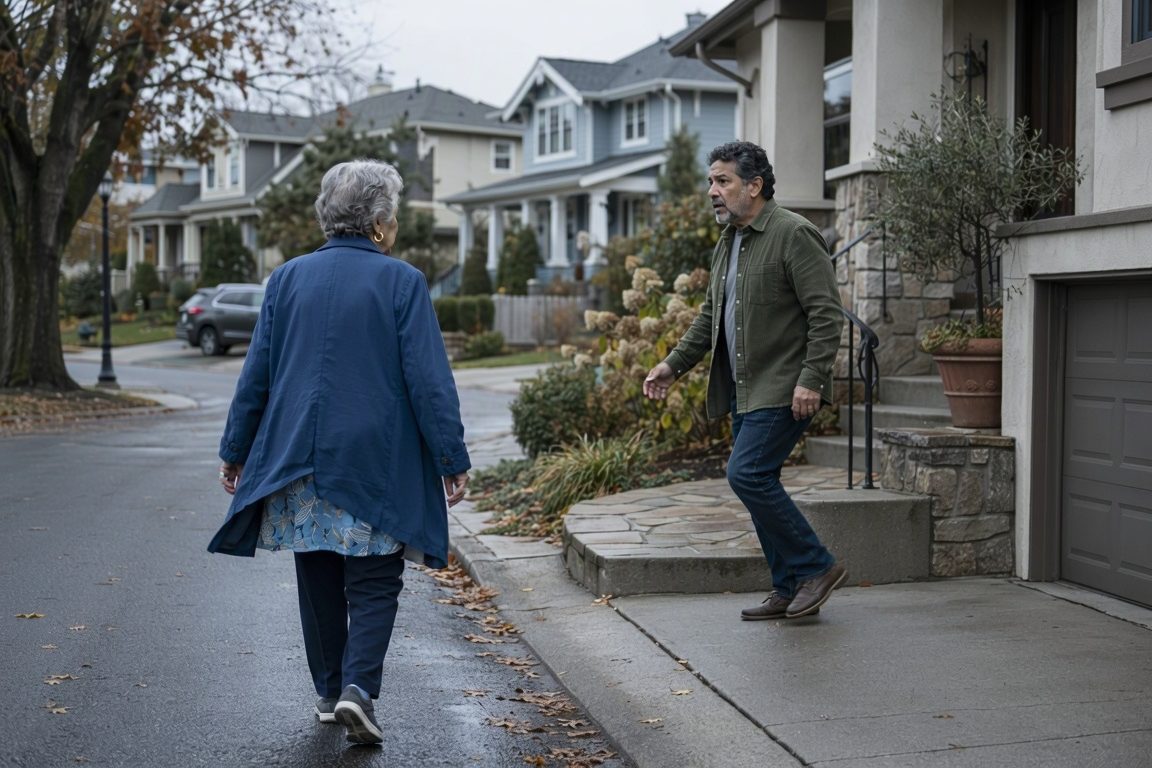
Step by step
What not to do
- Do not raise your voice or show alarm. This signals danger to their brain and can trigger fight-or-flight.Instead, speak softly and slowly, using their name.
- Do not physically block or restrain them from moving. Restraint increases fear and aggression.Instead, redirect to a safe activity or walk alongside them.
- Do not argue or correct their reality. If they say they need to go home, do not say ‘You are home.’ Say ‘Tell me about your home. What do you miss there?’ This validates their feeling without confrontation.
- Do not leave them alone in an unfamiliar or overstimulating environment. This raises the risk of wandering and falls. Stay nearby or provide a calm, familiar space.
- Do not ignore signs of physical distress. Pain, infection (especially UTI), medication side effects, or constipation can cause restlessness. Always rule out medical causes with a clinician.
- Do not try to ‘fix’ the behavior by giving a logical explanation. Their brain cannot process logic.Instead, meet the emotional need behind the movement.
Key points
- Risky movement is driven by the brain’s survival instinct, it is not defiance. The person is trying to meet a need or escape a threat.
- Your calm, curious response is the most powerful tool. Never argue, raise your voice, or physically restrain.
- Always rule out medical causes (pain, infection, medication side effects) before assuming the behavior is purely cognitive.
- Create a safe environment: clear paths, door alarms, pressure mats, and a calm evening routine to reduce sundowning.
- Redirect, don’t stop. Offer a safe alternative like walking together, folding towels, or looking at photos.
- Document patterns to identify triggers and share with care team or family. You are not alone, reach out for support.
Videos
 Providing Support When Mobility Rules Are Not Regarded | Teepa's ClipsTeepa Snow explains the brain science behind movement and why caregivers must adapt their approach. Essential for understanding the ‘why’ behind risky movement.
 How Do You Keep Someone With Dementia Safe From Wandering? - Dementia Help HubPractical, step-by-step home safety modifications (locks, alarms, mats) that are discrete and dignified.
 How Do You Handle Challenging Behaviour In Dementia Patients?Covers de-escalation techniques for agitation and aggression, including what to do when movement becomes unsafe.
 How to increase activity for someone with dementiaShows how to channel restless energy into meaningful activities, reducing the urge to wander.
2 more videos
 What Do You Do When A Dementia Patient Starts Wandering?Real-time response strategies for when wandering begins, including what to say and do in the moment.
 Caregiver Strategies How to Deal with Dementia Care Challenges Sundowning, Anxiety, and RestlessnessFocuses on sundowning-related restlessness and pacing, with medication vs. activity approaches.
Background
Why Risky Movement Happens: The Brain’s Survival Drive
In mid-to-late stage dementia, the brain’s primitive survival centers become more active while the parts that control reasoning and impulse fade. According to Teepa Snow’s Positive Approach to Care, people move for two core reasons: to avoid a threat or to get a need met. The threat can be real (a loud noise, a shadow, a stranger’s face) or imagined (a feeling of being lost, a memory of danger). The need can be physical (hunger, pain, needing the bathroom) or emotional (boredom, loneliness, anxiety). Because the person can no longer explain what they feel, their body acts out the urge. This is not a behavior problem, it is a communication problem.
What Risky Movement Looks Like in Mid-to-Late Stage
Risky movement takes many forms: pacing back and forth, trying to open doors or windows, wandering into unsafe areas (kitchen, stairs, outdoors), or physically resisting care. In memory care facilities, it may look like exit-seeking or agitation in hallways. At home, it might be repeatedly checking locks or trying to ‘go home’ even when already home. The Alzheimer’s Association notes that wandering often happens in the late afternoon or evening (sundowning) when fatigue and confusion peak. The person may appear purposeful, like they are going to work or picking up children, but they are actually lost in a memory. Understanding this helps you respond with compassion instead of frustration.
Your Reaction Matters More Than Their Movement
Teepa Snow emphasizes that the caregiver’s behavior directly affects the person’s behavior. If you become flustered, raise your voice, or try to physically block them, their threat response intensifies, they may freeze, fight, or flee more dangerously. The key is to ‘take a back seat’ and become curious: What need is this movement trying to meet? What threat are they sensing? Your calm, slow approach can de-escalate the situation. As Dementia Careblazers point out, all behavior has a purpose. Your job is not to stop the movement but to redirect it into a safe channel.
Practical tools
6
The ‘Curiosity Script’ for De-escalation
A set of phrases to use when you see risky movement. Say: ‘I see you’re moving. Let’s figure out what you need.’ ‘You seem like you want to go somewhere. Can you tell me about it?’ ‘I’m here with you. We’re safe.’ These phrases validate without challenging.
Door Alarm and Pressure Mat Kit
Install a simple battery-powered door alarm (like the GE Personal Security Window/Door Alarm) on exit doors. Place pressure-sensitive mats (like Smart Caregiver Floor Mat Sensor) near beds or chairs to alert you when they stand. These are non-restrictive and give you time to respond.
Safe Walking Path Checklist
Create a loop in your home or facility that is clear of obstacles, well-lit, and has interesting sights (a window, a fish tank, a wall of family photos). Use painter’s tape on the floor to mark a path. This gives them a safe route to pace without risk.
The ‘Redirect with Purpose’ Card
Keep a small card in your pocket with three go-to activities: 1) ‘Let’s fold these towels together.’ 2) ‘Can you help me water this plant?’ 3) ‘Let’s look at this photo album.’ Having a script ready reduces your own stress in the moment.
Sundowning Prevention Kit
Prepare a calm evening routine:
Use a weighted blanket if they are restless. The goal is to lower stimulation before the late-afternoon confusion peaks.
Medical Rule-Out Checklist for Clinician Visit
Before assuming the movement is purely behavioral, ask the doctor:
Print this list and bring it to appointments.
Different situations
Lewy body dementia (LBD) vs. Alzheimer’s
In LBD, movement issues may include parkinsonism (shuffling, stiffness) and visual hallucinations. Risky movement can be triggered by hallucinations (e.g., seeing a person in the room). Respond by acknowledging the hallucination without arguing: ‘I see you’re worried about that person. Let’s walk together to the other room.’ Avoid antipsychotic medications unless prescribed by a specialist, as LBD patients can have severe reactions. Focus on reducing visual clutter and using nightlights.
Late stage (bedridden or very limited mobility)
Risky movement may be limited to repetitive motions (kicking, thrashing, trying to get out of bed). Use a low bed or bed rails (with padding) to prevent falls. Offer a hand-held object to squeeze or a soft toy to hold. Never leave them unattended on a bed without rails. Use a bed alarm if they try to get up. Redirect their energy into gentle range-of-motion exercises or music.
Spouse caregiver vs. adult child caregiver
Spouses may feel more guilt or fear about ‘losing’ their partner. Adult children may be more willing to use technology (alarms, cameras). Both need to remember: the movement is not personal. Spouses can say ‘I’m your partner, I’m here to help’ instead of ‘Honey, stop that.’ Adult children can set up a shared calendar with siblings to monitor patterns and share the load.
In a memory care facility vs. home
In a facility, you have less control over the environment. Work with staff to create a consistent routine and share what works at home. Ask for a ‘wandering path’ or secure outdoor area. If the person is repeatedly trying to leave, request a ‘wander guard’ bracelet (RFID tag) that triggers an alarm at exits. At home, you can modify the environment more freely but must also plan for emergencies (neighbor contacts, ID bracelet).
Medicaid or limited budget
You do not need expensive gadgets. Use a simple bell on the door, a baby monitor, or a piece of dark tape on the floor to create a visual barrier. Contact your local Alzheimer’s Association chapter for free or low-cost safety supplies. Many area agencies on aging offer loaner programs for door alarms and bed rails.
For the doctor
7
- Ask the doctor: Could a new medication or change in dose be causing restlessness or dizziness that leads to risky movement?
- Ask the doctor: Is there an underlying infection (especially UTI), pain, or constipation that might be driving the behavior?
- Ask the doctor: Are there any non-pharmacological interventions (e.g., physical therapy, occupational therapy) that could improve balance and reduce fall risk?
- If the person is aggressive or the movement is dangerous despite your best efforts, ask the doctor about a referral to a geriatric psychiatrist for medication options (e.g., low-dose antidepressants or mood stabilizers) and behavioral strategies.
- Ask the doctor about a ‘wander risk assessment’ and whether a GPS tracking device (like a smartwatch or pendant) is appropriate for your loved one’s stage.
- Ask the doctor: What are the safest types of door locks or alarms for our home, given the person’s mobility and any fire escape concerns?
- Ask the doctor: Are there any specific medications or doses that might reduce restlessness without increasing fall risk or other side effects?