Step by step
What not to do
- Do not assume they are not enjoying something just because they don't smile. The common mistake is to interpret a blank face as boredom or unhappiness.Instead, look for the subtler signs described above. Remember, the internal feeling may be positive even if the external show is missing.
- Do not keep asking 'Are you having fun?' or 'Do you like this?' This puts pressure on the person to perform an emotion they cannot produce. It can also cause frustration or confusion.Instead, simply narrate what you are doing in a warm tone: 'I love this song, it always makes me feel so good.' Your enjoyment can be contagious.
- Do not stop offering activities because you don't see a reaction. The mistake is to think the effort is wasted. In reality, the person may still benefit from the sensory input, the routine, and your presence. Even if they never show it, the activity may be reducing anxiety, providing comfort, or maintaining a connection.
- Do not compare their reactions to how they used to be. This can lead to grief and disappointment. The person has changed, and their way of experiencing joy has changed too. Let go of the old benchmarks and learn to read the new, quieter language of their current self.
- Do not take their flat affect personally. It is easy to feel unappreciated or rejected, but this symptom is not about you. The person is not withholding joy; their brain is simply unable to transmit the signal. Remind yourself: 'They are not doing this on purpose, and they are not doing this to me' (source 12).
Key points
- Flat affect means the person cannot show their emotions outwardly, but they may still feel joy inside.
- Look for micro-expressions, body language, and mood changes after activities rather than expecting a smile.
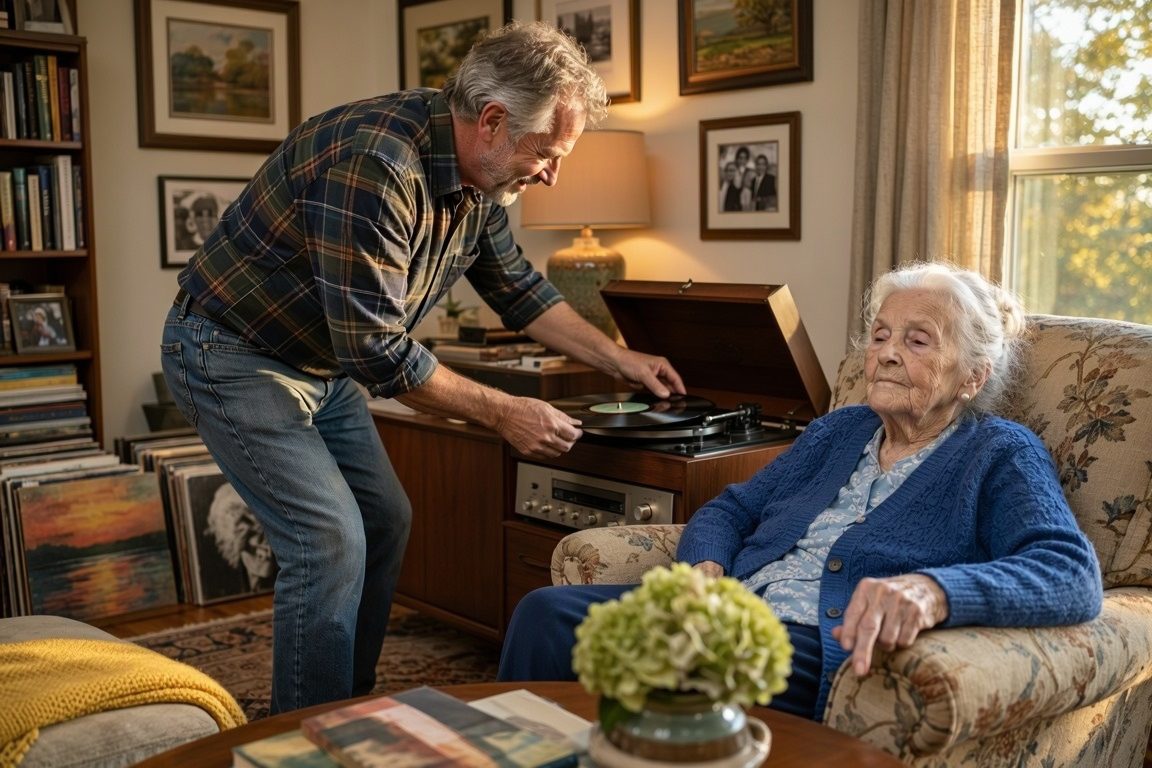
- Music is a powerful tool because it is processed throughout the brain and often remains accessible.
- Do not take the lack of visible reaction personally; it is a symptom, not a rejection.
- Acknowledge your own feelings of grief and guilt as normal; pushing them away makes them stronger.
- Keep a joy journal to track subtle responses and identify patterns over time.
Videos
 What is Flat Affect?This video explains the concept of flat affect clearly, helping you understand why your loved one may not show emotions.
 What is Flat Affect?A second perspective on flat affect, reinforcing that the internal experience may differ from the external appearance.
 What Is Flat Affect In Dementia?This video specifically addresses flat affect in dementia, giving you practical insights for caregiving.
 Surprising Symptoms of Dementia: Part 1Covers lack of affect and other surprising symptoms, helping you recognize that this is a common part of the disease.
2 more videos
 3 steps to help you manage guilt and sadness as a caregiverAddresses the emotional toll on you as a caregiver, which is essential when your loved one cannot show appreciation.
 Sexual Disinhibition in Dementia: How to Respond Safely (Without Shame or Escalation)While not directly about joy, this video helps you understand that all behaviors, including lack of affect, are symptoms to be managed with compassion.
Background
What is flat affect and why does it happen?
Flat affect is a common symptom in dementia, especially in frontotemporal dementia (FTD), but it can also appear in Alzheimer's disease. It means the person has a limited ability to show their inner emotions on the outside. They may appear uninterested, have a toned-down facial expression, and lack the usual body language that signals happiness, excitement, or appreciation. This is not a choice or a sign that they don't care; it is a change in the brain's ability to connect emotional experience with outward expression. As one source explains, people with flat affect 'won't show emotions that they're having on the inside on the outside' (source 4). This can be especially difficult for caregivers who put effort into planning activities and then see no visible reaction.
The difference between flat affect and lack of feeling
It is crucial to understand that flat affect does not mean the person is not feeling anything. The internal emotional experience may still be rich and positive, but the 'wiring' that translates that feeling into a smile, a laugh, or an excited gesture is damaged. In some cases, the person may even be experiencing joy more intensely than you realize, but they cannot show it. This is different from apathy, where the person lacks motivation to start an activity but still enjoys it once engaged. With flat affect, the enjoyment is present but invisible. Recognizing this distinction can help you shift from looking for a big smile to looking for subtler signs of engagement, such as a slight relaxation of the shoulders, a softening of the eyes, or a quiet hum.
How this affects you as a caregiver
It is completely normal to feel sadness, guilt, or even grief when your loved one does not react the way you expect. You might find yourself enjoying a beautiful walk or a grandchild's laughter and then feel a pang of guilt because your loved one cannot join you in that visible joy. One source reminds us that 'whenever we try to immediately push them away, they tend to hang around longer and tend to stay stronger' (source 6). Acknowledging your own emotions as a natural part of caregiving is the first step to managing them. Your loved one's lack of visible reaction is not a reflection of your efforts or their love for you. It is simply a symptom of the disease.
Practical tools
5
The Joy Triggers List
Create a written list of 5-10 things that have historically brought your loved one joy. Include sensory elements:
Keep this list handy and try one trigger each day. Observe and note any response, no matter how small. This tool helps you move from guesswork to intentional connection.
The 'One-Minute Check-In' Script
When you are unsure if they are enjoying something, use this gentle script: 'I am going to sit with you for a minute and just enjoy this moment together. I love being here with you.' Then sit quietly, breathe slowly, and watch their face and body. Do not ask questions. After a minute, say, 'That was nice. I am glad we did that.' This removes pressure and allows you to observe without interference.
Fidget Toys or Sensory Objects
Sometimes a person with flat affect may still show engagement through their hands. Offer a fidget toy, a smooth stone, a piece of soft fabric, or a stress ball. Watch to see if they hold it, manipulate it, or seem calmer while doing so. This can be a non-verbal sign of contentment. As one source suggests, 'buying some fidget toys so that their hands are busy' can help channel nervous energy and provide a window into their emotional state (source 7).
The 'After-Activity Mood Check'
After an activity, take 30 seconds to rate their mood on a simple 1-5 scale (1=very agitated, 5=very calm). Do this again one hour later. If the number goes up after the activity, that is a strong indicator of enjoyment, even if they showed no visible joy during the activity. Keep a log to track patterns over time.
The 'Mirroring' Technique
Sit facing your loved one and gently mirror their posture and breathing. Then, very slowly, introduce a small smile or a relaxed sigh. Sometimes the person will unconsciously mirror you back. If they do, even slightly, it suggests they are emotionally attuned and experiencing a shared positive moment. This works best when done slowly and without expectation.
Different situations
Frontotemporal Dementia (FTD)
Flat affect is much more common in FTD than in Alzheimer's. You may need to rely even more on subtle body language and micro-expressions. Also, be aware that FTD can sometimes cause inappropriate affect (laughing at sad moments) or labile affect (rapid mood swings). In these cases, the emotion you see may not match the internal feeling. Focus on the person's overall comfort and engagement rather than the specific emotion displayed.
Parkinson's Disease Dementia or Lewy Body Dementia
Facial masking is common in Parkinson's, where the face appears stiff or expressionless due to loss of motor control. This is not flat affect but a physical inability to move facial muscles. The person may be feeling joy but literally cannot show it. Look for other signs: a slight change in breathing, a gentle squeeze of your hand, or a softening of the eyes. Do not interpret a blank face as lack of emotion.
Late-Stage Dementia (moderate to severe)
In later stages, the person may have very limited ability to show any emotion. Focus on basic comfort: are they relaxed? Are they breathing easily? Are they free from pain? Use music, gentle touch, and familiar scents. Even a slight relaxation of the jaw or a decrease in moaning can be a sign of contentment. Your goal shifts from 'finding joy' to 'providing comfort.'
Spouse vs. Adult Child Caregiver
Spouses may feel a deeper sense of loss because they remember the person's former expressiveness. It can be especially painful to see a blank face where there used to be a warm smile. Adult children may feel guilt that they cannot 'make' their parent happy. Both roles benefit from acknowledging their own grief. Spouses might find it helpful to look at old photos to remember the joy that was, while adult children can focus on creating new, quiet moments of connection.
In a Facility Setting
In a facility, you may not be present during activities. Ask staff to note any subtle positive responses they observe. Request that they play familiar music during visits. Bring sensory objects from home. You can also ask the staff to try the 'after-activity mood check' and share the results with you. This can help you feel more connected and reassured.
For the doctor
3
- If you notice a sudden change in affect, such as a person who was previously expressive becoming completely flat over a few days, discuss this with their doctor to rule out infection, medication side effects, or depression.
- If the person shows signs of depression (hopelessness, sleep changes, appetite loss) in addition to flat affect, ask their clinician about a depression screening. Apathy and depression can look similar, but treatment differs.
- If the person's flat affect is accompanied by new physical symptoms like stiffness, tremor, or difficulty swallowing, discuss the possibility of Parkinson's disease or Lewy body dementia with their neurologist.