Step by step
What not to do
- Do not use complex sentences or chain multiple requests. Give one step at a time: 'Please sit down' then 'Now let them touch your wrist.'
- Do not test your loved one's memory or remind them they have a problem. Saying 'I already told you' makes them defensive.Instead, respond to the emotion: 'I know this is confusing. I am here with you.'
- Do not argue if they are confused or paranoid. If they say 'Someone broke in,' say 'That sounds frightening. I am here to keep you safe' instead of correcting them with facts.
- Do not let responders enter unannounced. Go in first, give a timely warning, and ask for permission before they enter.
Key points
- Prepare a one-page emergency information sheet now and keep it visible and accessible.
- Call your local police or fire department to add your loved one to a vulnerable resident registry.
- Use a 'timely warning' before any care begins: tell your loved one what is about to happen and ask for permission.
- Speak in short, one-step commands and respond to emotions, not words, during a crisis.
- Store the Alzheimer’s Association Helpline (800-272-3900) in your phone and emergency kit.
- Debrief with responders after the emergency to improve your plan for next time.
Videos
 Dementia Emergency Preparedness: How to make sure your loved one stays safe in an emergencyThis video walks you through building a dementia-specific emergency kit and creating a plan that includes wandering prevention and communication with responders.
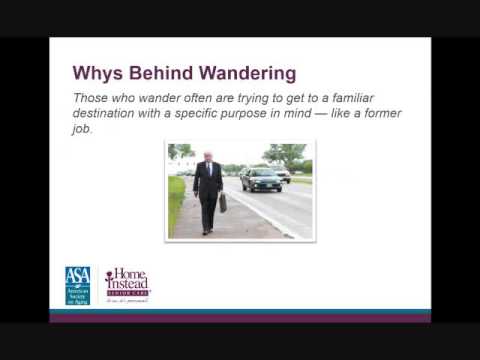 Alzheimer's and Wandering - Professional Caregiver WebinarWandering is a common reason for 911 calls. This webinar teaches you how to prepare for wandering incidents and what to tell responders to keep your loved one safe.
 How to Care for Elderly Parents With Siblings You Deeply Dislike, Resent, or Don't Trust?Family conflict can derail emergency planning. This video offers strategies for communicating with difficult family members so you can create a unified plan.
 How To Get Someone With Dementia To Accept HelpDuring an emergency, your loved one may resist help. This video gives practical phrases and approaches to gain cooperation without force.
2 more videos
 149. Replay: 10 Strategies to combat caregiver stress from the Alzheimer's AssociationCaregiver stress can make you less effective during an emergency. This video offers stress-management techniques that help you stay calm when it matters most.
 106. 10 Strategies to combat caregiver stressAnother helpful resource for managing the emotional toll of caregiving, so you can show up as a calm, clear communicator during a crisis.
Background
Why Emergency Interactions Can Become a Crisis
For a person living with dementia or Parkinson’s, an emergency situation is not just stressful, it can be deeply disorienting and frightening. Brain changes make it harder to process new information, and the fight-or-flight response can be triggered easily. A sudden knock on the door, a loud siren, or a stranger in uniform can feel like a threat, leading to agitation, yelling, or even physical resistance. The person may not understand why strangers are in their home or why they are being touched or moved. This is not willful behavior; it is a neurological response to perceived danger.
The Role of the Caregiver as a Bridge
You are the most important link between your loved one and the emergency responders. Because your loved one may not be able to communicate clearly or remember what is happening, the dispatcher and EMS team will rely on you for accurate, calm information. If you are prepared, you can give a timely warning before care begins, ask for permission for each step, and use simple, one-step commands. This approach, called a 'timely warning' followed by asking for permission, has been shown to prevent both verbal and physical expressions of distress. Your calm presence and clear communication can set the tone for the entire interaction.
Why Planning Ahead Matters So Much
Most families react to emergencies rather than plan for them. But when you wait until a crisis, emotions are high, choices are limited, and the risk of a negative outcome increases. By preparing in advance, gathering information, practicing phrases, and building a relationship with local responders, you can turn a potential crisis into a manageable event. Planning 3 to 5 years ahead is ideal, but even a few hours of preparation now can make a huge difference. As one expert put it, 'If you are not preparing, then you are wasting so much time, money, and energy in caregiving.'
Practical tools
7
Emergency Information Sheet Template
One-page document:
Two copies: one on fridge, one waterproof copy near front door.
Timely Warning Script
Before any care or touch say: '[Name], these people are here to help. Is it okay if they [action]?' Wait for a response (nod or grunt counts). Prevents distress by giving the person control.
911 Dispatcher Script
When calling 911: 'I am calling for my [relation] who has [dementia/Parkinson's]. They may become confused by strangers. Please tell responders to approach slowly, speak calmly, and give space.'
Local First Responder Registry
Call non-emergency line: 'Do you have a voluntary registry for people with dementia? I would like to add my loved one.' Often includes photo, diagnosis, and contact info so responders know what to expect.
Alzheimer's Association 24/7 Helpline
Call 800-272-3900 for dementia-specific guidance during or after an emergency. Staff offer next steps, emotional support, and local resources. Store number in phone and emergency kit.
De-escalation Phrase Card
Small card with ready phrases: 'I know this is scary,' 'I am right here with you,' 'These people are here to help.' Written down so you don't have to think in the moment.
Medical ID for the Person with Dementia
Wearable bracelet or pendant engraved with name, diagnosis ('Dementia' or 'Alzheimer's'), and caregiver phone number. Essential if you are not present during an emergency.
Different situations
Lewy body dementia or Parkinson’s dementia
These conditions often involve visual hallucinations, rigidity, and sensitivity to medications. In your emergency information sheet, note: 'May have visual hallucinations. May become stiff or unable to move quickly. Please avoid using Haldol or other antipsychotics without consulting a doctor.' Also, be aware that stress can worsen motor symptoms, so extra patience is needed.
Late-stage dementia (unable to speak or understand)
Your loved one may not respond to verbal warnings. Instead, use gentle touch and a calm tone. Tell responders: 'They cannot understand words, but they can feel your tone. Please move slowly and speak softly.' You may need to guide the responder’s hand to show them how your loved one likes to be touched.
Spouse caregiver vs. adult child caregiver
If you are the spouse, you may be the only person your loved one trusts completely. Stay by their side and speak for them. If you are an adult child, your loved one may still see you as a child and resist your authority. In that case, ask a neighbor or friend who your loved one trusts to be present during the emergency to help with communication.
Living in a facility (assisted living or memory care)
The facility staff should already have an emergency plan. However, you can still prepare by giving the facility a copy of your loved one’s emergency information sheet and asking to be called immediately if 911 is called. Also, ask the facility if they have a relationship with local first responders and if they have a 'dementia care' protocol in place.
Medicaid or limited financial resources
You can still prepare without spending money. Use free templates online for the emergency information sheet. Call the Alzheimer’s Association Helpline (free) for guidance. Many local senior centers or Area Agencies on Aging offer free emergency preparedness workshops. Focus on the verbal scripts and relationship-building with local responders, these cost nothing and are the most effective tools.
For the doctor
4
- Ask your loved one’s doctor: 'Are there any medications that should be avoided during an emergency because they could worsen confusion or cause dangerous side effects?'
- Ask your loved one’s doctor: 'Is there a specific protocol for managing agitation or aggression in an emergency that you recommend for my loved one’s condition?'
- Ask your loved one’s doctor: 'Should I carry a copy of their advance directive or do-not-resuscitate (DNR) order with me at all times? Where should I keep it so responders can find it quickly?'
- Ask your loved one’s doctor: 'Are there any physical or medical risks I should warn responders about before they touch or move my loved one (e.g., fragile bones, a pacemaker, a feeding tube)?'