Step by step
What not to do
- Do not ignore the caregiver's distress or brush off exhaustion as 'just part of the job', it makes their struggles invisible and they may stop asking for help.
- Do not assume the caregiver has family support; ask 'Who is in your support network?' and help them build one, as shame and isolation prevent caregivers from reaching out.
- Do not offer vague help like 'Let me know if you need anything' and never follow through.Instead, offer something specific: 'I can bring dinner Tuesday and sit with Mom for two hours Saturday.'
- Do not wait until a crisis to discuss nursing home placement; rushed decisions rarely serve the patient. Begin early conversations using Medicare's Nursing Home Compare.
- Do not assume all agitation is 'just dementia', a UTI, medication side effect, or dehydration is often the real culprit, and missing it can worsen behaviors and trigger abandonment.
Key points
- Granny dumping is a sign of caregiver burnout, not malice. The ER is a critical place to identify and support overwhelmed caregivers.
- Always ask the caregiver directly how they are doing. A simple, non-judgmental question can open the door to help.
- Connect caregivers to local resources immediately: Area Agencies on Aging, Alzheimer's Association, support groups, and respite care.
- Create a 'File of Life' for the patient's refrigerator and a 'Care Notebook' for long-distance caregivers to reduce stress and improve emergency response.
- Educate caregivers about dementia behaviors and offer practical strategies to manage them without personalizing the actions.
- Plan ahead for placement or respite care before a crisis hits. Use Medicare's Nursing Home Compare tool and visit facilities early.
Videos
 Ep. 133: What is 'Granny Dumping'?This video explains the term 'granny dumping' and discusses why it happens, especially around holidays, and how the healthcare system can respond.
 Conscious Caregiving with L & L - 'Unmasking Elder Abuse'This video explores elder abuse, including abandonment, and offers insights on how to recognize and prevent it.
 Tammy Lautner Founder of Peace of Mind ConsultingTammy Lautner provides practical advice for caregivers on planning ahead and avoiding crisis situations that can lead to abandonment.
 How Do Healthcare Providers Address Caregiver Burnout in Dementia Care?This video discusses how healthcare providers can identify and support caregivers experiencing burnout, a key factor in preventing abandonment.
2 more videos
 How to offer help to a dementia caregiverThis video teaches friends, family, and professionals how to offer meaningful help to dementia caregivers without overstepping or adding stress.
 Decisions About Putting A Parent Into a Nursing HomeThis video helps caregivers navigate the difficult decision of nursing home placement, offering guidance on timing and resources to avoid crisis-driven choices.
Background
What Is 'Granny Dumping' and Why Does It Happen?
'Granny dumping' is a term used when a caregiver abandons an older adult, often someone with dementia , at an emergency room, a park, a shopping mall, or even a nursing home lobby. The caregiver may say 'I'll be right back' and then disappear, sometimes traveling far away. This is not a cold-hearted act but a sign of a caregiver who has hit a wall of exhaustion, isolation, and hopelessness. They may feel they have no other choice, no support, and no idea where to turn. As one source notes, caregivers often leave a person in an ER waiting room and simply vanish, leaving the staff to discover the abandonment later.
The Role of the ER and the Healthcare System
When a person with dementia arrives at the ER, often brought by law enforcement after a 'domestic' call , clinicians must look beyond the immediate medical issue. They should assess for underlying causes like urinary tract infections (UTIs), medication errors (over- or under-medication), and previous hospital visits. But the system often focuses only on the patient, missing the caregiver who is also in crisis. As one expert points out, healthcare providers rarely have a natural way to start a conversation with a caregiver , it's all about the care recipient. This gap is a missed opportunity to offer support before the caregiver reaches a breaking point.
Why Caregivers Reach the Breaking Point
Caregiver burnout is a serious issue in dementia care. It happens when caregivers feel physically, emotionally, and mentally exhausted from the ongoing stress and responsibilities. The complex needs of the person with dementia, including cognitive decline and behavioral challenges , make this even harder. Caregivers often experience sleep problems, anxiety, depression, and new or worsened health problems. They may also face financial strain from lost work and healthcare costs. When a caregiver feels invisible, unsupported, and overwhelmed, the risk of abandonment rises. As one source warns, providers should watch for caregiver burnout as a warning sign of potential elder abuse or neglect, even unintentional.
Practical tools
3
Caregiver Check-In Script for ER Clinicians
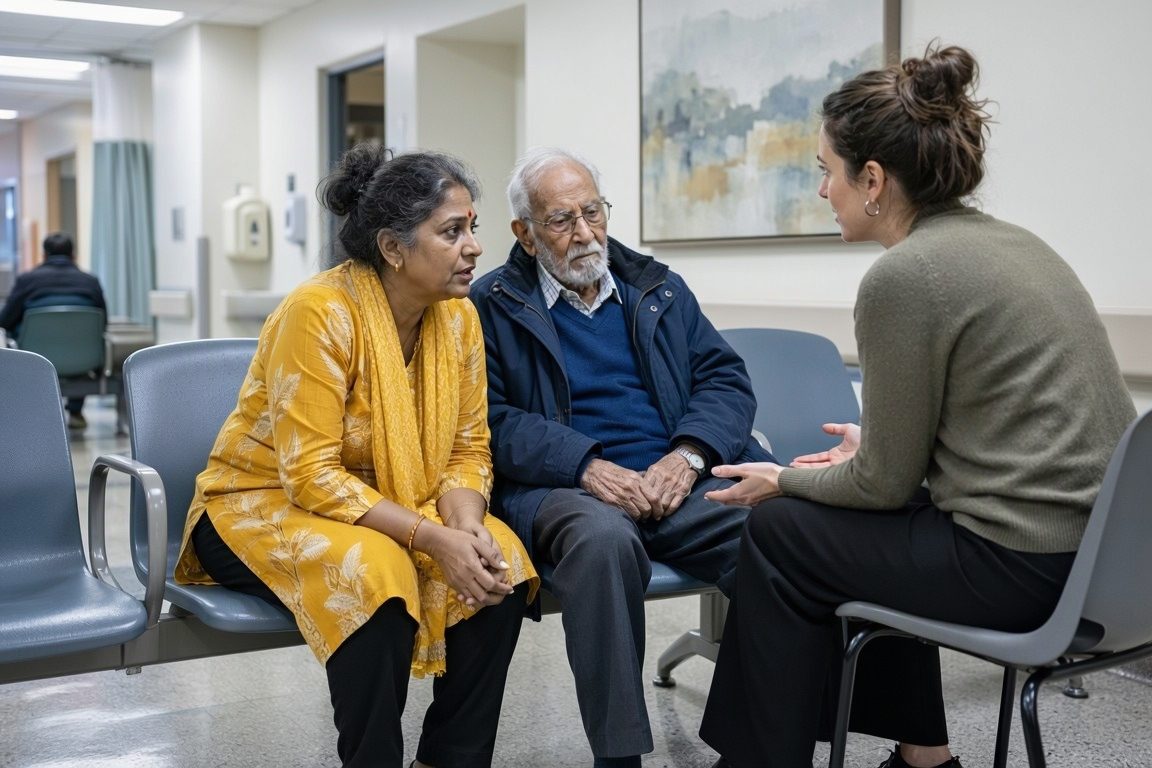
A short, warm opening for every ER encounter: 'How are you holding up? Do you have help at home? Are you sleeping and eating okay? We have resources, would you like me to connect you with a social worker or support group?'
'File of Life' Care Notebook
A plastic pouch for the refrigerator containing:
Keep a duplicate in the ER chart.
Quick-Reference Caregiver Resource Card
A wallet-sized card listing:
Hand it on discharge: 'Call this week, even just to talk.'
Different situations
Lewy body dementia or Parkinson's disease dementia
Be aware that these patients may have visual hallucinations, fluctuating cognition, and severe sensitivity to antipsychotic medications. Caregivers may need extra education about medication risks and strategies to manage hallucinations without medication. The ER team should ask about recent medication changes and consult with a neurologist if needed. Support groups specific to Lewy body dementia (like the Lewy Body Dementia Association) can be especially helpful.
Late-stage dementia
The patient may be bedbound, unable to communicate, and require full assistance with eating, bathing, and toileting. Caregiver burnout is extremely high at this stage. The focus should be on palliative care, hospice referrals, and respite care. The ER team should ask about advance directives and goals of care. Placement in a skilled nursing facility may be the most compassionate option for both patient and caregiver.
Spouse caregiver vs. adult child caregiver
Spouse caregivers often have their own health issues and may be older themselves. They may resist help because they see caregiving as a marital duty. Adult children may have competing demands (work, children) and may feel guilt about placing a parent. Tailor your approach: for a spouse, emphasize that accepting help is not a failure; for an adult child, offer practical tips for balancing caregiving with other responsibilities and connect them with employer-based support programs like the Family and Medical Leave Act (FMLA).
Caregiver is in a facility (nursing home or assisted living)
Even when the patient is in a facility, the caregiver may still be overwhelmed by decision-making, visiting, and managing finances. They may feel guilty about placement. Offer support groups for families of residents, and encourage them to communicate regularly with the facility's social worker. The ER team should ask: 'How are you handling the transition? Do you need help with the facility's care plan?'
Medicaid or low-income situation
Many resources are free or low-cost. The Area Agency on Aging can help with Medicaid applications, in-home care waivers, and respite vouchers. The Alzheimer's Association offers free support groups and a 24/7 helpline. The ER social worker should provide a list of local agencies that offer sliding-scale fees. Say: 'There is help available, even if you don't have a lot of money. Let me connect you with someone who can walk you through the options.'
For the doctor
5
- Ask your doctor: 'Is there a medication that could help with my loved one's agitation or sleep problems without increasing fall risk?'
- Ask your doctor: 'What are the signs that my loved one's UTI is causing confusion, and when should I bring them to the ER?'
- Ask your doctor: 'Can you refer me to a geriatric care manager or a social worker who can help me plan for future care needs?'
- Ask your doctor: 'Are there any clinical trials or new treatments for my loved one's type of dementia that might help?'
- Ask your doctor: 'What are the risks and benefits of antipsychotic medications for my loved one, and are there non-drug alternatives?'