Step by step
What not to do
- Do not confront, argue, or use logic with the person.
- Do not raise your voice, scold, or make sudden movements.
- Do not touch, grab, or physically restrain the person.
- Do not leave the person alone and unsupervised during agitation.
Key points
- Aggression in dementia is a symptom, not a choice. Respond with empathy, not confrontation.
- Environmental triggers (shadows, noise, clutter) are a common cause of agitation. Adjust the environment first.
- Never initiate physical contact during an outburst. Give space and time to calm down.
- Use validation and distraction instead of reasoning or arguing.
- If police are called, tell the dispatcher the person has dementia and request officers trained in crisis intervention.
- Document every incident to identify patterns and inform the care plan.
Videos
 Aggressive Behavior in People with Dementia | Linda Ercoli, PhD | UCLAMDChatProvides expert advice on why aggression happens and how to avoid confrontation, including the critical rule of not initiating physical contact.
 How to reduce violence in dementiaOffers practical strategies for preventing violent outbursts, including the importance of a calm demeanor and removing triggers.
 Ask Teepa Anything! Live on YouTubeTeepa Snow discusses pain management and non-drug approaches, emphasizing that untreated pain is a common cause of aggression.
 how to prevent anger in dementiaCovers five general approaches to prevent anger, including the use of distraction and validation.
2 more videos
 How to stay safe in a dementia emergencyProvides a step-by-step emergency plan for when a person with dementia becomes physically aggressive, including when to call for help.
 What Do I do if my Person with Dementia Becomes Violent?Offers concrete advice on de-escalation and safety, including the importance of creating a paper trail and not hesitating to call 911.
Background
Why Aggression Happens in Dementia
Aggression in dementia is rarely intentional. As the brain changes, the person loses the ability to control impulses and reflect on their behavior. What might look like a deliberate attack is often a reaction to fear, pain, confusion, or an unmet need. The person may not understand why they are upset or be able to stop themselves once triggered. This is not a choice; it is a symptom of the disease. Recognizing this helps staff and caregivers respond with compassion rather than confrontation.
The Role of Environmental Triggers
Many aggressive episodes are set off by things in the environment that the person with dementia cannot process. Shadows from setting sun, loud noises, a busy hallway, or even a caregiver’s frustrated tone can overwhelm their senses. Because their brain has lost the ability to filter out irrelevant stimuli, these triggers can cause a sudden shift from calm to distress. Identifying and reducing these triggers is one of the most effective ways to prevent incidents before they start.
How Police Involvement Can Escalate
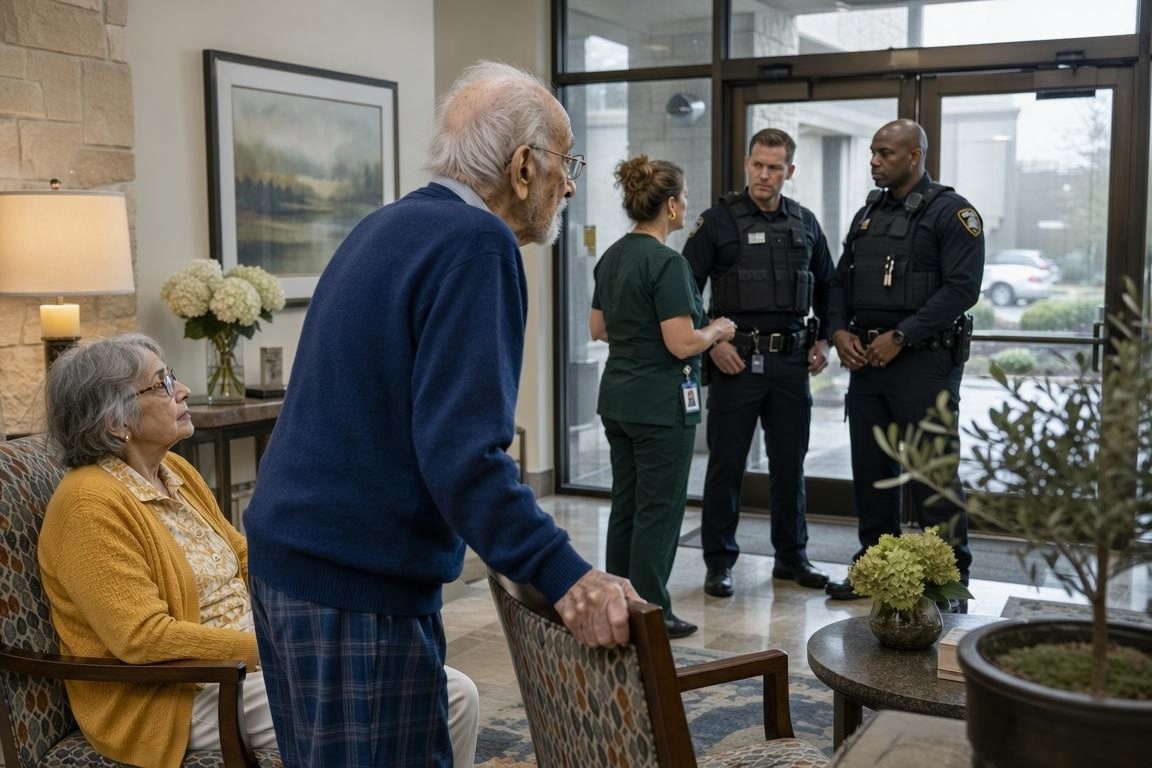
Police officers are trained to respond to threats, not to manage dementia behaviors. When they arrive at a facility, they may interpret a person’s confusion or agitation as resistance or aggression. Without proper training, an officer might raise their voice, make sudden movements, or attempt physical restraint, all of which can escalate the situation. The person with dementia may then react more strongly, increasing the risk of harm to everyone involved. The goal is to prevent the need for police intervention altogether, or to ensure that if officers are called, they are met with a calm, informed staff who can guide the interaction.
Practical tools
7
P.I.E.C.E.S. Assessment Framework
Consider possible causes:
Share observations with the clinical team.
Calming Phrases Card
Keep visible at each workstation: 'I can see you are upset. I am here to help.' / 'You are safe.' / 'Let's take a breath together.' / 'I am listening.' / 'Tell me what is bothering you.' Avoid 'Why?'
Environmental Adjustment Checklist
Before/during an incident:
Discontinue rug if it causes distress or unsafe movement.
Distraction Kit
A basket of soothing items kept within reach:
Offer with 'Would you like to look at these pictures with me?'
Incident Log Template
One-page form with fields: Date, Time, Location, Resident, Trigger, Behavior, Intervention, Outcome, Medication/health changes. Review weekly with team to spot patterns and update care plan.
911 Call Script
Say: 'I am calling from [facility name and address]. A resident with dementia is agitated and confused. They are not a threat to others but may not understand your officers. Please send an officer with crisis intervention training if possible.' Stay on the line.
Resident Profile Card for Responding Officers
One-page handout for officers on arrival:
Large type at top: 'This person has dementia. Please speak softly, move slowly, avoid restraint.'
Different situations
Lewy body dementia (LBD)
People with LBD are extremely sensitive to antipsychotic medications, which can worsen motor symptoms or cause severe reactions. Always consult a clinician before using any medication for agitation. Non-drug approaches are especially critical. Also, visual hallucinations are common; do not argue about what they see. Instead, say ‘I can see that must be frightening for you.’
Late-stage dementia
In late stages, the person may have limited verbal ability. Look for non-verbal signs of pain: grimacing, moaning, guarding a body part, or sudden aggression during care (e.g., bathing). Pain is often undertreated. Discuss with the clinician whether a trial of acetaminophen or ibuprofen might help. Avoid any physical restraint; instead, use positioning aids and gentle redirection.
In a memory care unit vs. nursing home
In a memory care unit, staff are typically trained in dementia care, so the focus is on environmental triggers and consistent routines. In a nursing home, staff may have less dementia-specific training. Advocate for ongoing education. Ensure that all staff, including night shift and housekeeping, know how to respond to agitation. Post a quick-reference card in common areas.
When the person has a history of violence
If the person has been physically aggressive before, create a written emergency plan. Identify which staff members are most effective at de-escalation. Consider a behavioral consult from a geriatric psychiatrist. Document all incidents thoroughly; this may be needed for legal or placement decisions. Do not hesitate to call for help if you feel unsafe.
When the person is on Medicaid or has limited resources
Many non-drug interventions are low-cost: using a dark rug, playing music from a phone, or offering a snack. If the facility lacks funding for specialized training, look for free online resources from the Alzheimer’s Association or local Area Agency on Aging. Advocate for staff training as part of quality improvement initiatives.
For the doctor
5
- If the person is on antipsychotic medications, ask the clinician: ‘What is the lowest effective dose, and is a trial off the medication possible?’ Antipsychotics can increase the risk of stroke and death in people with dementia.
- If the person has Parkinson’s disease dementia or Lewy body dementia, ask the clinician: ‘What are the specific risks of antipsychotics for this person, and are there safer alternatives?’
- If the person shows signs of pain (grimacing, guarding, restlessness), ask the clinician: ‘Could a trial of acetaminophen or ibuprofen help with soft tissue or joint pain?’
- If the person has a sudden change in behavior (e.g., new aggression, confusion), ask the clinician: ‘Could this be due to infection, constipation, or medication side effects?’
- If the person is refusing medications, ask the clinician: ‘Are there alternative forms (liquid, crushable) or a different time of day for administration?’