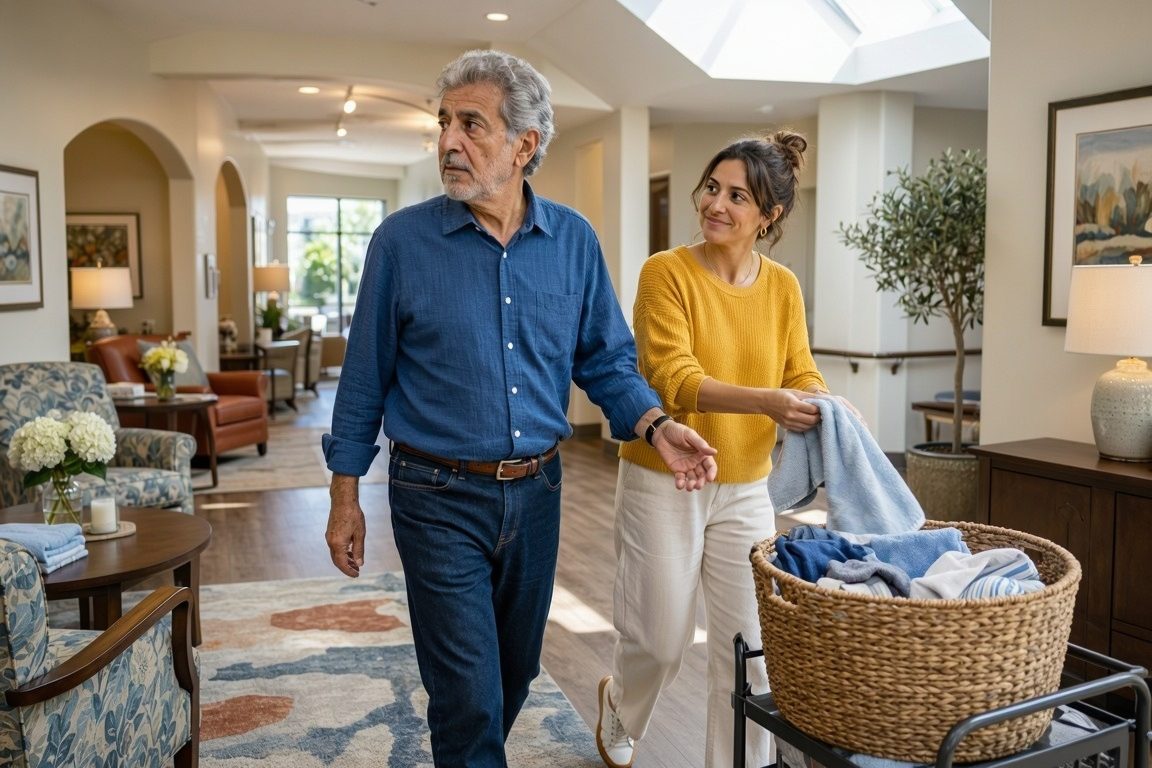
Step by step
What not to do
- Do not argue or correct. Telling them 'You can't go home, that farm doesn't exist' will increase agitation and make them more determined to leave.Instead, validate the feeling and redirect to a related activity.
- Do not use physical force or block them aggressively. Grabbing their arm or standing rigidly in their path can feel threatening. Use a gentle touch on the elbow and a soft voice to guide them.
- Do not leave them alone in a car or in an unsecured area, even for 'just two minutes.' They may forget your instruction and wander off, or become distressed. Always have someone stay with them or secure the environment first.
- Do not assume wandering is always 'bad.' Sometimes it is their way of getting exercise or relieving anxiety. If they are safe, let them walk. Forcing them to sit can cause more agitation.
- Do not ignore signs of sundowning. If wandering increases in the late afternoon, do not try to engage them in complex tasks.Instead, lower lighting, reduce noise, and offer a calming activity like listening to soft music or looking at a familiar photo album.
- Do not use the same redirection every time. What worked yesterday may not work today. Stay flexible and creative. If they are not interested in puzzles, try dancing or petting a therapy animal. Keep a list of activities they have enjoyed in the past.
Key points
- Wandering is often purposeful, not aimless. Validate the feeling behind it before redirecting.
- Use the environment: camouflage exits, create safe walking paths, and reduce triggers like coats and keys.
- Offer enticing, meaningful activities that match the person's past interests and current abilities.
- Never argue or correct. Use phrases like 'You miss home, don't you?' and then offer a related activity.
- Establish a consistent daily routine, especially during high-risk times like late afternoon.
- Have a wandering response plan in place, including enrollment in a safe return program and a recent photo.
Videos
 Unlocking Solutions: How to Safeguard Your Loved One with Dementia from WanderingThis video provides practical home safety tips and wandering prevention strategies that can be adapted for memory care settings.
 The Baffled Brain: Demystifying Dementia Episode 18 March 27 ,2021Offers insights into why wandering happens from a neurological perspective, helping caregivers understand the 'why' behind the behavior.
 3 steps to stop difficult dementia behaviors using redirectionA concise, step-by-step guide to the redirection technique, directly applicable to wandering situations.
 Alzheimer's and Wandering - Professional Caregiver WebinarA professional-level webinar covering wandering triggers, prevention, and response strategies for both staff and family caregivers.
2 more videos
 Wandering, Rummaging, & Hoarding, Oh My!Addresses wandering alongside other challenging behaviors, offering a holistic approach to managing them in memory care.
 How to redirect difficult dementia behaviors (3 mistakes to avoid)Highlights common redirection mistakes and how to avoid them, which is critical for successful wandering intervention.
Background
Why Wandering Happens in Memory Care
Wandering is not random. For a person with dementia, it is often a response to an internal need or memory. They may be looking for something familiar, like a past home or a loved one, or they might be experiencing boredom, anxiety, or physical discomfort. In a memory care unit, the unfamiliar environment can trigger disorientation, especially if the person cannot find the bathroom or their own room. As one expert notes, 'to them they haven't wandered away', they are on a mission that makes perfect sense to them, even if it seems aimless to us.
The Role of Triggers and Sundowning
Common triggers include seeing items that signal leaving, like coats, keys, or a front door. Late afternoon and evening, known as sundowning, can heighten confusion and restlessness, making wandering more likely. The person may feel a strong urge to 'go home', a place from their past that represents safety. Understanding that this is not about the current location but about a deep emotional need is key to effective redirection. Your goal is not to stop the walking but to guide it into a safe, purposeful activity.
What Redirection Looks Like in This Context
Redirection here means gently shifting the person's focus from the exit or the hallway to a positive, engaging alternative. It is not about arguing or correcting. For example, if a resident says they need to go home to the family farm, you do not tell them the farm is gone. Instead, you validate their feeling and offer a related activity: 'Let's look at pictures from the farm. I'd love to hear about Christmas there.' This meets their emotional need without confrontation. The art of redirection takes practice, but it can dramatically reduce the frequency and intensity of wandering episodes.
Practical tools
6
Validation Phrases for 'Going Home'
When a resident says they want to go home, use these phrases: 'You miss home, don't you? Tell me about your home.' 'We'll visit the farm tomorrow. Right now, let's look at these photos.' 'You're safe here with me. Let's walk together.' Avoid saying 'This is your home' or 'You can't go.'
Environmental Camouflage Kit
Install childproof doorknob covers or locks placed high or low on doors. Paint doors the same color as the wall. Use a motion sensor alarm that chimes when a door is opened. Place a black mat in front of an exit, some people with depth perception issues will hesitate to step onto it. Use rope lighting to create a path from the bedroom to the bathroom.
Activity Menu for Redirection
Keep a small basket or cart with ready-to-go activities: a photo album, a soft scarf to fold, a basket of socks to pair, a simple puzzle, a music player with headphones, or a stuffed animal. When you need to redirect, offer two choices: 'Would you like to look at photos or fold these socks?' This gives them a sense of control.
Wandering Response Plan Checklist
Keep this list handy:
Timed Voiding Diary
Track when the person urinates or has bowel movements for one week. Note the time, what they ate/drank, and any accidents. Use this to create a schedule: take them to the bathroom every two hours, or 30 minutes after meals. This reduces wandering caused by needing to find a bathroom.
Safe Walking Path Setup
Create a circular walking path in the unit using contrasting floor tape or a low railing. Place landmarks along the way:
This gives the wanderer a destination and a sense of purpose.
Different situations
Lewy Body Dementia (LBD)
People with LBD may have visual hallucinations and fluctuating attention. Redirection should be gentle and avoid sudden movements. If they are staring at something you cannot see, acknowledge it: 'I see you're looking at something. Is it a person? Let's walk this way together.' Avoid arguing about what is real. Also, they may have more trouble with balance, so ensure the walking path is clear of obstacles.
Late-Stage Dementia
In late stages, the person may not respond to verbal redirection. Use physical cues: take their hand and gently lead them. Offer a simple, repetitive activity like rubbing lotion on their hands or listening to a familiar song. Wandering may decrease as mobility declines, but if they can still walk, allow safe pacing. Do not force them to sit if they are agitated.
Spouse vs. Adult Child Caregiver
A spouse may feel more comfortable using intimate phrases like 'Come with me, honey, let's look at our wedding album.' An adult child might use a more respectful tone: 'Dad, I need your help with something in the kitchen.' Both should avoid a parental tone that can feel condescending. The key is to use the relationship history to find meaningful activities.
In a Memory Care Facility vs. At Home
In a facility, you have the advantage of a secured environment and staff support. Use the unit's common areas for redirection. Work with staff to identify the person's favorite activities. At home, you may need to install additional locks and alarms. In both settings, label rooms with pictures and use nightlights to reduce nighttime wandering.
Medicaid-Funded Facility
Medicaid facilities may have fewer staff and less structured activities. Be proactive: bring in familiar items from home (photos, a favorite blanket) to create a calming environment. Advocate for the person to be included in any available group activities. If wandering is frequent, ask the facility to create a personalized walking route or schedule one-on-one time with a volunteer.
For the doctor
5
- If wandering is accompanied by falls or injuries, ask the doctor about a physical therapy evaluation for balance and strength.
- If the person is on medications for agitation or sleep, discuss whether these might be contributing to confusion or restlessness that triggers wandering.
- If wandering occurs at night and the person is at risk of leaving the facility, ask about a sleep study or medication review to address possible sundowning or sleep disorders.
- If the person has a history of getting lost or leaving the building, discuss the use of GPS tracking devices or a personal emergency response system with the medical team.
- If the person shows signs of pain (e.g., grimacing, guarding a body part) that may be driving wandering, ask for a pain assessment and appropriate treatment.