Step by step
What not to do
- Do not use baby talk or a high-pitched 'parenting' voice. This includes phrases like 'Here comes the airplane' or calling them 'sweetie' in a condescending tone. It makes them feel infantilized and disrespected.Instead, speak in a normal, calm adult tone: 'I am going to help you eat now. Here is a bite of soup.'
- Do not argue or correct them when they say something inaccurate. Arguing escalates the situation because their logic center is compromised. Even if they sound eloquent, they cannot reason the way they used to.Instead, validate the emotion and redirect: 'I can see you are worried about your purse. Let's look for it together.'
- Do not use figures of speech or slang, like 'It's no use crying over spilled milk.' A person with dementia may take this literally and look for spilled milk, causing confusion and distress.Instead, use concrete, simple language: 'It is okay. Let's clean this up.'
- Do not raise your voice or speak louder, even if you think they cannot hear you. Raising your voice raises the pitch, which makes it harder for them to understand and can feel threatening.Instead, keep an even, calm tone and speak clearly. If they do not understand, use gestures or repeat the same simple sentence.
- Do not talk about your loved one as if they are not in the room. Even if they seem unaware, they may catch bits of what you say and feel hurt or embarrassed. If you need to discuss their care with someone else, step out of earshot. Always assume they can understand more than they show.
- Do not use the word 'burden' in their presence or in reference to them. This word can be deeply painful.Instead, frame help as a natural part of your relationship: 'I am happy to drive you. It gives us time together.'
Key points
- Never use baby talk or treat your loved one like a child, even when they need full assistance.
- Always validate the emotion behind their words before redirecting, this is the antidote to escalation.
- Use 'we' and 'let's' language to create a team feeling and reduce their sense of being controlled.
- Avoid arguing or correcting them; their logic center is compromised and arguing only increases distress.
- Keep your tone calm, even, and natural, raising your voice or changing pitch can confuse or upset them.
- Offer simple two-choice options to give them a sense of control without overwhelming them.
Videos
 Should You Force a Loved One with Dementia to Bathe?This video directly addresses the vulnerability of bathing and offers dignity-preserving language and techniques.
 5 TIPS FOR TALKING TO YOUR LOVED ONE WITH DEMENTIAProvides practical tips on tone, validation, and avoiding common conversational pitfalls.
 How to Talk with Loved Ones with DementiaCovers the importance of respect and nonverbal communication in every interaction.
 Remember this when talking about someone with dementiaHighlights how to speak about your loved one in their presence and avoid disrespectful language.
2 more videos


Background
Why Dignity-Preserving Language Matters So Much
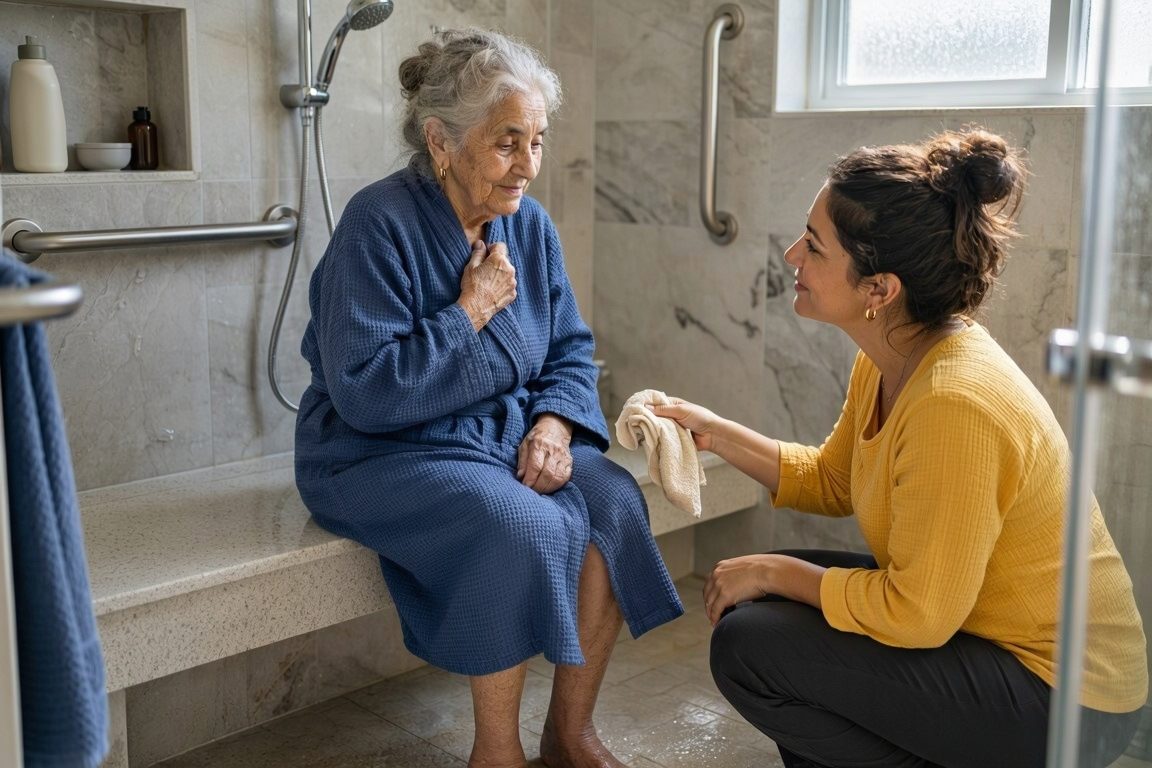
When your loved one needs help with intimate tasks like bathing, dressing, or toileting, they are in an incredibly vulnerable position. Imagine going to work without your clothes on, that is the level of exposure and loss of control they feel, even if you are their child or spouse. They have lost the ability to care for their own hygiene, and that is a deeply emotional and psychological experience. Your words can either soothe that shame or deepen it. As Dr. Camille Sinclair explains, you want to use as much dignity-preserving language as possible, such as saying, 'Not to worry, Dad. I'm going to keep you covered. Here you go.' This small shift acknowledges their discomfort and offers reassurance instead of adding to their distress.
The Feeling Behind the Words: What Your Loved One Holds Onto
A person with dementia may not remember the exact words you said, but they will hold onto the feeling you gave them. Respect is the number one tip for productive conversations because their brain is no longer processing information quickly or accurately. They can still sense your tone, your frustration, or your impatience. Even if they only catch bits and pieces of what you say, a negative message, that you are frustrated or struggling, can come through loud and clear. This doesn't mean you can never talk about your own feelings, but you must learn the difference between being truthful and respectful in their presence versus venting when they are not around. Your goal is to make them feel safe, seen, and supported, not like a burden.
The Trap of Treating an Adult Like a Child
One of the most common mistakes caregivers make is using baby talk or treating their loved one like a child. Even if they can no longer feed themselves or need help with every aspect of care, they are still an adult with a lifetime of experience and pride. Using a high-pitched 'here comes the airplane' voice or calling them 'sweetie' or 'honey' in a condescending way can feel deeply disrespectful. Experts who train dementia caregivers rarely compare caring for an adult to caring for a child, because the emotional needs are completely different. Adults do not want to be treated like children, and doing so can trigger anger, withdrawal, or a complete refusal to cooperate. Instead, speak to them as you would any other adult, calmly, clearly, and with the same respect you would give a friend.
Practical tools
6
The 'We' Language Script
Use 'we' and 'let's' to create a team feeling. Examples: 'Let's get you dressed now.' 'We are going to wash your hair together.' 'Let's solve this problem together.' This reduces the sense of being controlled and builds cooperation.
The Two-Choice Menu
Offer only two simple options to avoid overwhelming them. For example: 'Do you want the blue shirt or the red shirt?' 'Do you want to sit here or by the window?' This gives them a sense of control without overloading their brain.
The Validation + Redirect Script
When they are upset about something that is not real, use this two-step script: 1) Validate the feeling: 'I can see you are really upset about that.' 2) Redirect to a positive activity: 'Let's go look at the garden together.' This stops escalation and shifts their focus.
The 'Keep You Covered' Bathing Phrase
During bathing or dressing, always say what you are doing and reassure them about modesty. Example: 'I am going to wash your arm now. I will keep this towel over you the whole time.' Hand them the shower head or a washcloth to give them a sense of participation.
The Distraction Kit
Keep a small basket nearby with items that can redirect attention:
When a conversation turns negative, gently hand them an item and say, 'Look at this: I found your old photo album. Do you remember this picture?'
The Tone Check Reminder Card
Write on a small card: 'Calm voice. Slow pace. Adult tone.' Tape it to the bathroom mirror or the kitchen cabinet where you will see it before a care task. This simple visual cue can help you reset your approach before you speak.
Different situations
Lewy body dementia
People with Lewy body dementia are especially sensitive to tone and volume. Even a slight change in pitch can make them feel awful. Keep your voice even and natural, and avoid any hint of surprise or alarm. It is also helpful to tell close friends and family about the diagnosis so they know to approach with the same calm, respectful tone. Do not raise your voice or speak louder, as this can trigger extreme distress.
Late-stage dementia (unable to speak or feed themselves)
Even if your loved one cannot respond or understand words, they can still feel your tone and energy. Never use baby talk or a condescending voice. Speak to them as you would any adult, using simple, kind phrases like 'I am going to help you now.' Use gentle touch and eye contact to convey respect. Avoid talking about them in the third person in their presence.
Spouse as caregiver
Spouses often struggle with the role reversal of caring for their partner. It can be tempting to use teasing or familiar banter, but this can feel disrespectful when your partner can no longer keep up. Avoid phrases like 'There you go again' or 'You always do this.' Instead, use the same dignity-preserving language you would with any adult. Remember, they are still your partner, not your child.
Adult child as caregiver
Adult children may find it hard to shift from being the child to being the caregiver. Avoid using a parental tone or phrases like 'Now, now, you know better.' Instead, use respectful language that acknowledges their authority as the parent: 'Dad, I need your help with this. Can you hold this for me?' This preserves their sense of role and dignity.
Early-stage dementia (still aware of their diagnosis)
In early stages, your loved one is often acutely aware of their memory loss and may feel embarrassed or ashamed. Avoid phrases that highlight their deficits, like 'You forgot again?' or 'I already told you that.' Instead, use gentle, normalizing language: 'No problem, I will remind you. We are in this together.' This reduces shame and builds trust.
For the doctor
3
- If your loved one becomes aggressive or refuses care despite using dignity-preserving language, ask your doctor or a dementia specialist about whether there might be an underlying medical cause, such as a urinary tract infection or pain.
- If you are struggling with your own frustration or anger during care, discuss with a clinician or counselor whether caregiver support groups or therapy might help you manage your emotions so they do not leak into your tone.
- If your loved one has a history of trauma or abuse, ask a social worker or therapist for specific language strategies that avoid triggering past wounds.