Step by step
What not to do
- Do not argue or try to prove they are wrong. Arguing triggers their brain's stress response and makes them more confused and agitated.Instead, validate their feeling and redirect to a neutral topic.
- Do not use logic or reason to explain the present. Their brain cannot process new logical connections. Saying 'But I just told you that' only frustrates you both.Instead, give a simple, kind answer each time as if it were the first.
- Do not take their forgetfulness personally. They are not forgetting to hurt you or because they do not care. Their brain literally cannot store the memory. Remind yourself: 'This is the disease, not the person.'
- Do not quiz them or test their memory. Asking 'Do you remember what we had for lunch?' puts them on the spot and can cause shame or anxiety.Instead, offer choices: 'Would you like soup or a sandwich?'
- Do not isolate yourself with your frustration. Many caregivers feel guilty about being angry, but it is a normal response. Talk to a support group, a friend, or a counselor. Bottling it up increases your stress and can harm your health.
- Do not neglect your own needs. Skipping doctor appointments, exercise, or time with friends to care for them will eventually backfire. You cannot pour from an empty cup. Schedule regular breaks and use respite care if available.
Key points
- Short-term memory loss is a core symptom of dementia; long-term memories often remain intact until later stages.
- Correcting or reorienting your loved one to the present usually increases distress for both of you.
- Validating their reality and gently redirecting to a neutral topic is more effective and preserves connection.
- Your frustration is a normal response to ambiguous grief, acknowledge it and seek support.
- Use simple tools like visual schedules, one-sentence answers, and memory kits to reduce daily friction.
- Taking care of your own health is not selfish; it is essential for both of you.
Videos
 Why Someone With Dementia Thinks They're Living in the PastExplains the neuroscience behind why they believe they are decades younger and why correcting them backfires.
 Why Aging Parents With Dementia Can't Try HarderHelps caregivers understand that memory loss is not a choice or a lack of effort, reducing personal frustration.
 How To Enjoy Your Visit With Someone With DementiaOffers practical techniques for connecting in the moment, even when memory fails.
 Dementia Caregiver AngerAddresses the anger and resentment that often accompany the memory disconnect, with coping strategies.
2 more videos
 How to Talk to a Parent With DementiaProvides specific phrases and conversation techniques for navigating memory disconnects with a parent.
 Caregiver Health: Grief, Stress and How to Cope | Brain Talks | Being Patient Alzheimer'sFocuses on caregiver grief and stress, including the health risks of chronic frustration.
Practical tools
6
The 'Time Machine' Script
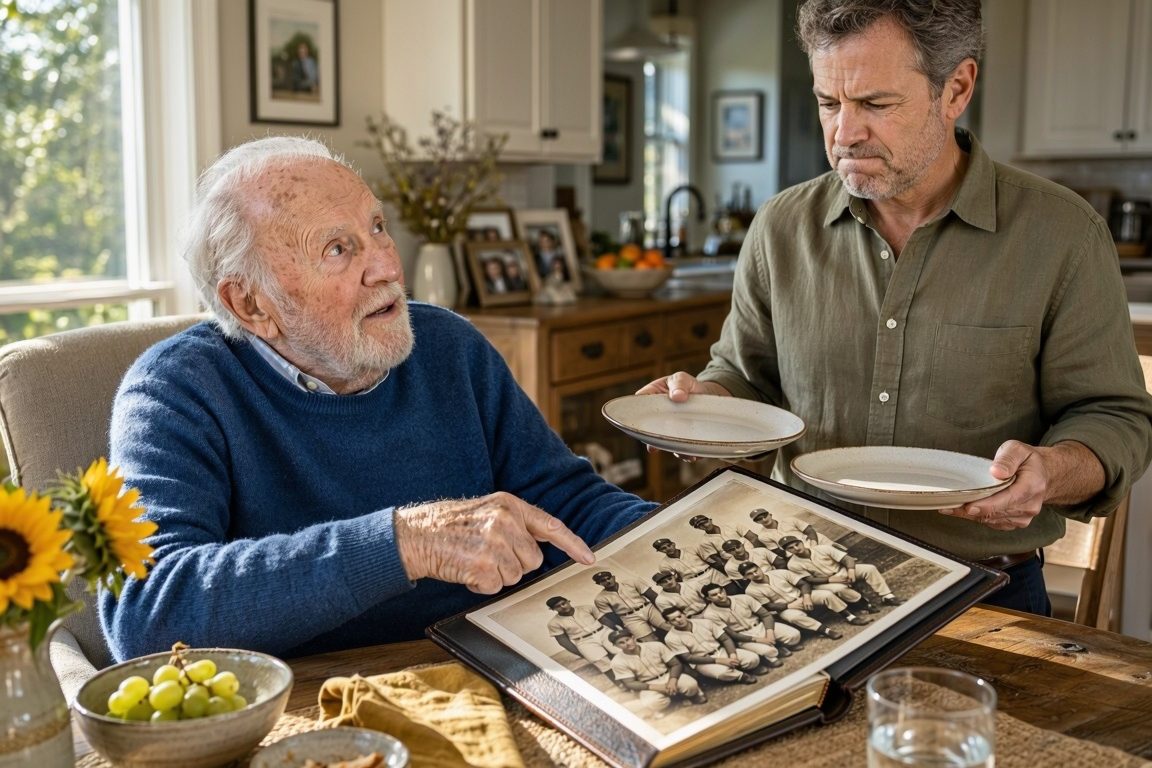
When your loved one believes they are decades in the past, use this phrase: 'It sounds like you are remembering when you were young. That must feel very real. I am here with you now.' Then gently guide: 'Let's sit together and look at this photo album. Tell me about this picture.' This validates their experience without pulling them out of their reality.
The One-Sentence Answer Rule
For repeated questions, prepare a single, short sentence. For example, if they ask 'When is dinner?' every two minutes, say 'Dinner is at 6.' Do not add 'I already told you' or 'Remember?' Just repeat the same sentence calmly each time. This reduces your frustration and their confusion.
Visual Schedule Board
Place a large whiteboard in the kitchen or living room. Write the day's activities in simple words and pictures: 'Breakfast 8am,' 'Walk 10am,' 'Lunch 12pm.' Point to it when they ask what is happening. This offloads the memory demand from you and gives them a visual anchor.
The 'Memory Lane' Kit
Gather a small box of items from their past:
When they are agitated about the present, bring out the kit and say, 'Let's look at these together.' This taps into preserved long-term memory and can be deeply calming.
Caregiver Emotion Log
Keep a small notebook. Each day, write one sentence about your frustration level (1-10) and one thing you did for yourself (even a 5-minute break). Over time, this helps you see patterns and reminds you that your feelings are valid. It also helps you track when you need more support.
The 'Pause and Breathe' App
Use a free app like 'Breathe2Relax' or set a timer on your phone for 2 minutes. When frustration spikes, step away, open the app, and follow a simple breathing exercise. This lowers your stress hormones and helps you return calmer.
Different situations
Late-stage dementia (when they are mostly in the past)
In late stages, long-term memories also fade. Do not try to orient them to the present at all. Instead, fully enter their reality. If they think they are a child, speak to them as that child. Use simple, soothing language and focus on comfort (soft music, gentle touch). Your goal is emotional safety, not accuracy.
Lewy body dementia (with hallucinations or fluctuating awareness)
Hallucinations may mix with memory disconnects. Do not argue about what they see or hear. Validate the feeling: 'That must be scary. I am here with you.' Then redirect to a familiar activity. Short-term memory may fluctuate more day to day, so be flexible and patient.
Spouse vs. adult child caregiver
Spouses often feel a deeper sense of personal loss and may struggle with ambiguous grief more intensely. It can feel like losing a partner while they are still there. Adult children may feel guilt or resentment about lost time with their own family. Both benefit from separate support groups. Spouses may need extra help with practical tasks; adult children may need help setting boundaries.
Loved one in a memory care facility
You may still field phone calls about their confusion. When visiting, use the same validation techniques. Do not expect them to remember your visits. Focus on the quality of the moment, a shared song, a hand squeeze. You can also ask staff to use the same visual schedule and one-sentence answers to maintain consistency.
Early-onset Alzheimer's (under age 65)
The memory disconnect can be even more jarring because the person may look physically healthy. They may be aware of their memory loss early on, which adds to their distress. Use validation and redirection gently. They may benefit from support groups for younger people with dementia. You may also need to navigate workplace and financial changes sooner.
For the doctor
4
- If your loved one's agitation or aggression increases when you try to redirect, ask the doctor about non-drug approaches or medications that might help manage behavioral symptoms.
- If you are experiencing persistent anger, sleep problems, or physical symptoms like chest pain or headaches, discuss your own health with a clinician. Caregiver stress can lead to serious conditions.
- If your loved one is on medications for dementia (like donepezil or memantine), ask the doctor how these might affect memory fluctuations and whether adjustments are needed.
- If you are considering moving your loved one to a facility, discuss the timing and options with a social worker or geriatric care manager to ensure it is the right step for both of you.