
Step by step
What not to do
- Do not assume you have any legal authority as a spouse or adult child. In Wisconsin, you are a legal stranger until a POA or guardianship is in place. Trying to act without authority can lead to bank refusal, HIPAA violations, or even accusations of financial exploitation.Instead, get the proper documents signed as early as possible.
- Do not use a generic online POA form without checking Wisconsin’s specific requirements. Many online forms are too vague and banks or doctors may reject them. The Wisconsin Guardianship Support Center warns that banks often require very specific language. Pay an attorney to draft a document that will be accepted.
- Do not wait until a crisis to start planning. If your loved one is already in the hospital or has advanced dementia, it may be too late for a POA. You will then be forced into guardianship, which is more expensive, time-consuming, and public. Start the conversation at the first sign of memory loss.
- Do not choose an agent who is not trustworthy or who has a conflict of interest. A POA gives the agent enormous power. If the agent is financially irresponsible or has a history of family conflict, they may misuse the authority. Consider naming a backup agent in case the first cannot serve.
- Do not forget that a living will only covers end-of-life situations. It does not give anyone authority to make day-to-day medical decisions. You still need a health care POA for that. Relying solely on a living will leaves gaps in care.
- Do not hide the documents or keep them in a safe deposit box. Your agent needs immediate access. Give copies to the agent, the doctor, and the hospital. Keep a list of where the originals are stored and tell your agent how to find them.
Key points
- Wisconsin is not a next-of-kin state: family members have no automatic legal authority. You must have a power of attorney or guardianship to make decisions.
- A durable power of attorney for finances and a power of attorney for health care are the best tools. They keep control with the family and avoid court. Complete them early, while your loved one still has capacity.
- A living will (declaration to physicians) tells doctors your loved one’s wishes about life-sustaining treatment. It is limited to end-of-life situations and does not replace a health care POA.
- Guardianship is a court process used when no POA exists. It is costly, time-consuming, and strips the person of many rights. It should be a last resort.
- Choose agents carefully, they must be trustworthy, capable, and able to work together if you split financial and health care roles.
- Keep copies of all documents with your agent, the doctor, and the hospital. Review and update them regularly.
Videos
 Elena Sallitto, Esq. Owner & Principal at Stavely & Sallitto Elder LawThis video explains Wisconsin-specific elder law, including powers of attorney and guardianship, from a local attorney. It is directly relevant to understanding the state’s unique rules.
 Conscious Caregiving with L & L 'Planning & Seniors'This video covers practical planning steps for seniors, including how to talk to family about legal documents. It is helpful for the conversation starter step.
 Does someone with dementia need a power of attorney and other legal questions answeredThis video directly addresses the question of whether a person with dementia needs a POA and answers common legal questions. It reinforces the urgency of acting early.
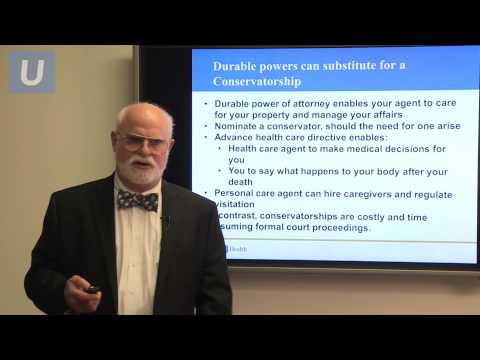 Elder Law: Protecting & Caring for Patients with Dementia | Marc B. Hankin | UCLAMDChatThis video provides a broader perspective on elder law for dementia, including the role of POAs and guardianship. It is useful for understanding the national context, though not Wisconsin-specific.
2 more videos
 Advanced Directives for People With Dementia: A Discussion with ER Physician Dr. Brittany LambThis video focuses on advance directives (including living wills) for people with dementia, from a medical perspective. It helps explain why a living will is important for end-of-life care.
 Sue Ryan, The Founder & Inspirationalist of Sue Ryan SolutionsThis video offers caregiver strategies and emotional support, which can help when navigating the difficult conversations about legal planning.
Background
Why Wisconsin’s Rules Are Different: You Are a ‘Stranger’ to the Law
In Wisconsin, once a person turns 18, they are the only one who can make decisions for themselves. This includes their spouse, adult children, and parents, the law treats them as legal strangers for decision-making purposes. This means that even if you are the primary caregiver, you cannot legally access bank accounts, talk to a doctor about your loved one’s condition, or make housing or medical choices without specific legal documents in place. This is a fundamental rule that surprises many families, especially when a dementia diagnosis arrives and immediate action is needed.
This rule exists to protect the adult’s autonomy. But it creates a serious problem when that adult loses the ability to make sound decisions due to dementia. Without advance planning, you cannot step in to help , even if you are the only family member involved. The only way to gain legal authority is through a properly executed power of attorney (done while the person still has capacity) or through a court-appointed guardianship (used when no advance plan exists). Understanding this ‘stranger’ rule is the first step to realizing why you must act early.
Powers of Attorney: The Preferred Tool for Keeping Control in the Family
A power of attorney (POA) is a legal document where your loved one (the principal) names someone they trust (the agent) to make decisions for them. In Wisconsin, there are two main types: a durable power of attorney for finances (which covers property, bills, and bank accounts) and a power of attorney for health care (which covers medical decisions). The key word is ‘durable’, it remains in effect even after the principal becomes incapacitated. The agent’s role is to act alongside the principal, not instead of them, as long as the principal still has legal capacity. The agent must follow the principal’s wishes and act in their best interest.
A POA is far less restrictive than guardianship. It allows the principal to keep as much control as they can, and it avoids the cost, time, and public nature of court proceedings. However, a POA must be signed while the person still has the mental capacity to understand what they are signing. If dementia has already progressed to the point where a doctor questions capacity, it may be too late. That is why the Alzheimer’s Association and elder law attorneys urge families to complete POAs as soon as possible after diagnosis, while the person can still participate meaningfully.
Guardianship: The Court-Ordered Last Resort
Guardianship is a formal legal process where a judge appoints someone (the guardian) to make decisions for an adult who has been found incapacitated by the court. This is a serious step, the guardian can decide where the person lives, what medical care they receive, who they see, and how their money is spent. In Wisconsin, guardianship is used only when there is no less restrictive alternative, such as a valid power of attorney. The process involves filing a petition, a court hearing, a doctor’s report, and often a guardian ad litem (a lawyer appointed to represent the person’s interests). It can take weeks or months and cost thousands of dollars in legal fees.
Guardianship is not something to pursue lightly. It strips the person of many rights, including the right to vote, marry, or manage their own finances. But when dementia has advanced and no POA exists, it may be the only way to protect the person from financial exploitation, unsafe living conditions, or medical neglect. The Wisconsin Guardianship Support Center (GSC) provides free information and resources to help families understand the process, but they cannot give legal advice. You will need an elder law attorney to guide you through the court system.
Living Wills: Communicating End-of-Life Wishes Directly to Doctors
A living will is a legal document that lets a person state their wishes about life-sustaining treatment in case they become terminally ill or permanently unconscious and cannot communicate. Unlike a health care power of attorney, which names an agent to make decisions, a living will is a direct instruction to physicians. It typically covers things like whether to use a ventilator, feeding tube, or CPR. In Wisconsin, a living will is called a ‘declaration to physicians’ and is only effective when the person is in a ‘terminal condition’ or ‘persistent vegetative state’ as defined by state law.
A living will is limited in scope compared to a health care POA. It does not cover everyday medical decisions, like whether to treat an infection or where to receive care. For that, you need both a living will and a health care POA. The living will gives your loved one a voice even when they cannot speak, and it can prevent painful, unwanted treatments at the end of life. It is important to discuss these wishes openly with your loved one while they can still express them, and to make sure the document is witnessed or notarized according to Wisconsin law.
Practical tools
6
Conversation Starter Script
Use this exact phrase: ‘Mom, I want to make sure that if you ever get sick and can’t speak for yourself, the doctors do exactly what you want. Can we talk about who you trust to make those decisions for you? It’s not about taking away your control, it’s about making sure your wishes are followed.’ This opens the door without sounding like you are taking over.
Wisconsin Guardianship Support Center Helpline
Call (855) 409-9410 or email guardian@gwaar.org. This free, neutral resource provides information on powers of attorney, guardianship, protective placement, and other advance directives. They cannot give legal advice, but they can explain the process, send you publications, and help you understand your options. They also offer a free quarterly newsletter.
Document Checklist for Your Attorney Visit
Bring these to your first meeting with an elder law attorney:
This helps the attorney draft documents that cover everything.
The ‘Orange Team’ and ‘Blue Team’ Concept
From the HOPE Dementia Support video: create two teams. The ‘Orange Team’ is the legal/financial team (attorney, accountant, agent). The ‘Blue Team’ is the medical/care team (doctor, home health aide, facility staff). Make sure both teams have copies of the POA and living will. This ensures everyone knows who to call and what the person wants.
Video Recording for Capacity Documentation
If there is any concern about your loved one’s capacity to sign a POA, ask the attorney if you can video record the signing. The video should show your loved one answering questions about the document and stating they understand it. This can prevent future challenges from family members or banks who might claim the person was not competent.
Emergency Guardianship Petition Template
If you need immediate guardianship (e.g., your loved one is in danger), ask your attorney about an emergency guardianship. This can be granted in a few days instead of weeks. The court will hold a full hearing later. Have a doctor’s letter ready stating that the person is incapacitated and at risk of harm.
Different situations
Early-stage dementia (still has capacity)
This is the ideal time to act. Your loved one can still participate in choosing agents and expressing wishes. Complete both POAs and a living will immediately. The attorney can assess capacity, but if there is any doubt, get a doctor’s note and consider video recording the signing. Do not delay, capacity can decline quickly.
Middle-stage dementia (capacity is declining)
If your loved one still has lucid moments, an attorney may still be able to execute a POA if they are in a clear moment. The attorney will ask specific questions to confirm understanding. If capacity is questionable, the attorney may refuse. In that case, you may need to pursue guardianship. Start the guardianship process early to avoid a crisis.
Late-stage dementia (no capacity)
It is too late for a POA or living will. You must go to court for guardianship. The court will appoint a guardian ad litem to represent your loved one. Be prepared for a longer, more expensive process. Focus on finding an elder law attorney who specializes in guardianship. Also, consider whether a limited guardianship (e.g., only for medical decisions) might be appropriate.
Lewy body dementia or frontotemporal dementia
These types can cause sudden changes in cognition and behavior. Act even faster than with Alzheimer’s. Capacity can fluctuate wildly. Have the attorney assess capacity on a good day. Consider naming a backup agent who can step in if the primary agent is overwhelmed by behavioral symptoms.
Spouse vs. adult child as caregiver
Spouses often assume they have automatic authority, but in Wisconsin they do not. A spouse should still get a POA. Adult children should be aware that if they are named as agent, they may face resistance from siblings. To avoid conflict, consider naming a neutral third party (like a trusted friend or professional fiduciary) as agent, or have the parent state in writing that they want the child to act alone.
For the doctor
4
- Ask your loved one’s doctor: ‘Based on my loved one’s current cognitive status, do you believe they have the capacity to sign a power of attorney or living will today?’
- If capacity is in question, ask: ‘Can you provide a written letter stating their capacity or lack thereof? This will help our attorney and the court.’
- For living wills, ask: ‘What specific end-of-life treatments are common in my loved one’s condition? What should we consider including in the living will?’
- If guardianship is needed, ask: ‘Can you provide a medical report that details the diagnosis, the level of incapacity, and why guardianship is necessary? The court will require this.’