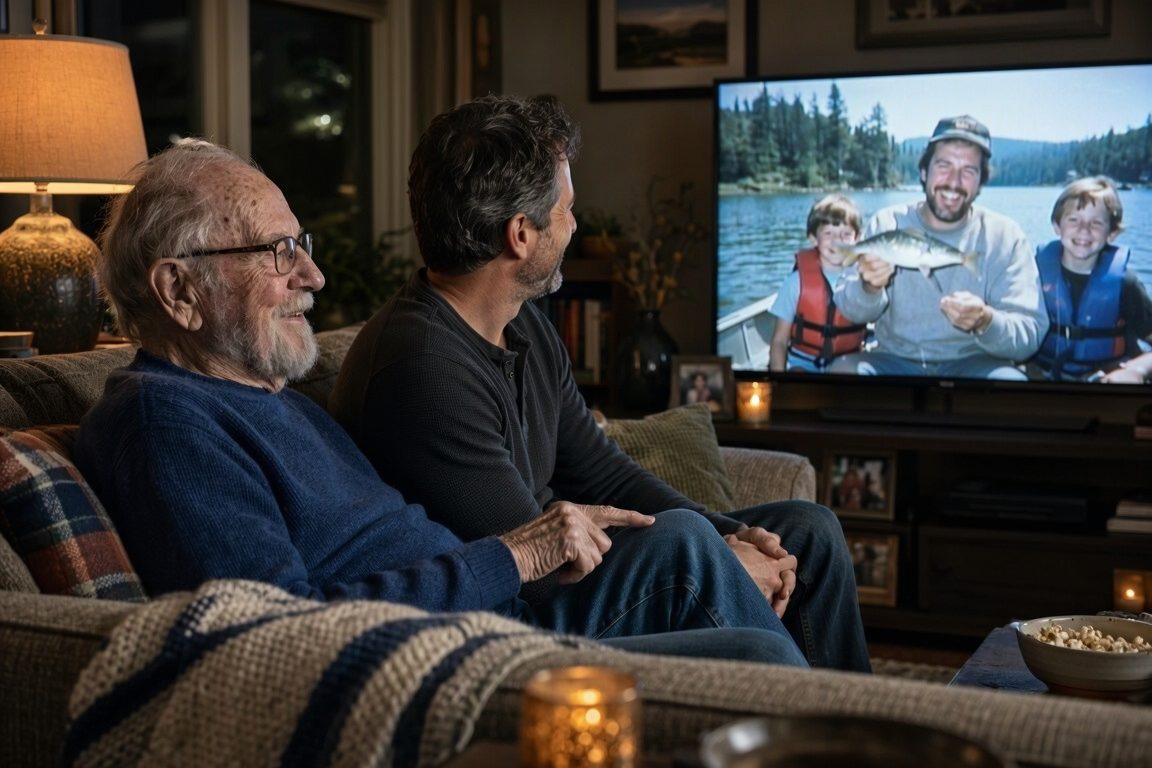
Step by step
What not to do
- Do not use a film that is too long. A 30-minute film can overwhelm and fatigue someone with dementia. Stick to 5–10 minutes maximum, especially in early attempts.
- Do not include sad or confusing content. Avoid photos of deceased relatives or events that might trigger grief or anxiety. Stick to happy, neutral, or joyful memories.
- Do not play the film in a noisy or busy room. Background TV, conversations, or loud appliances will compete for attention and cause overstimulation. Choose a quiet, calm space.
- Do not expect them to remember the content or answer questions. The film is for emotional connection, not a memory test. Avoid asking 'Do you remember this?' Instead, use statements like 'Look at that beautiful dress.'
- Do not force them to watch if they are not in the mood. If they seem tired, agitated, or uninterested, try again later. The film should be a source of comfort, not a chore.
- Do not use unfamiliar technology. If your loved one is uncomfortable with tablets or laptops, consider a simple DVD player or a dedicated digital photo frame that loops the film. Keep the interface as simple as possible.
Key points
- A personalized multi-sensory film uses your loved one's own photos, music, and narration to create a calming, engaging experience.
- It works by tapping into preserved long-term memories and emotions, bypassing damaged areas of the brain.
- Keep films short (5–10 minutes), slow-paced, and focused on one positive theme at a time.
- Watch for nonverbal cues (smiles, relaxation, humming) rather than expecting verbal recognition.
- Repeat the same film daily to create a comforting routine.
- Adapt the film for different stages and dementia types, simpler and shorter for later stages, more interactive for early stages.
Videos
 How a personalized film will transform your experience with your loved one with dementiaThis video explains the concept of personalized multi-sensory films and shows real examples of how they create moments of joy and connection.
 Radio Show VoiceAmericaAn in-depth interview with the creator of Memory Lane TV, discussing the science and emotional impact of personalized films.
 Alzheimers speaks with Lori La BeyA conversation about how personalized films can reduce caregiver stress and improve quality of life for both the person with dementia and their family.
 How Do You Get Specialized Support For Mixed Dementia? - Dementia Help HubWhile not specifically about films, this video explains the importance of personalized care plans for complex dementia, which supports the rationale for personalized activities like multi-sensory films.
2 more videos
 An Interview with Craig Fowler CEO of Joygage Dementia Engagement SoftwareThis interview discusses how personalized digital content (including films) can provide variety and engagement for people with dementia, reducing caregiver burnout from repetitive activities.
 What Activities Are Good For Dementia Patients? Module 1This video provides a broader context on personalized activities, reinforcing the idea that the more you tailor an activity to the person's history, the more effective it will be.
Background
What Is a Personalized Multi-Sensory Film?
A personalized multi-sensory film is a short video (typically 5–15 minutes) built around your loved one's personal history. It layers together their own photographs, video clips, and audio recordings with carefully chosen music, nature sounds, and narration that references specific people, places, and events from their past. Unlike a generic movie or TV show, this film is designed to trigger recognition and emotional connection by using content that is uniquely meaningful to them. The goal is not to test memory, but to create a moment of comfort, joy, and shared engagement between you and your loved one.
Why Does It Help in Dementia?
Dementia gradually damages the brain's ability to form new memories and process complex information, but long-term memories and emotional responses often remain intact much longer. A personalized multi-sensory film works by bypassing the damaged areas and directly stimulating the parts of the brain that still function well, particularly those linked to music, familiar faces, and emotional associations. The combination of sight, sound, and personal meaning can reduce agitation, improve mood, and even spark brief moments of lucid conversation. It also provides a structured, low-stress activity that you can do together, reducing the pressure on both of you to 'perform' or remember.
How Is It Different from Watching a Regular Movie?
Regular movies and TV shows often have fast-paced plots, multiple characters, and complex dialogue that can overwhelm someone with dementia, leading to confusion or frustration. A personalized multi-sensory film is deliberately slow-paced, with simple visuals and a clear emotional thread. It avoids the 'too much going on' problem by focusing on one familiar theme at a time, like a childhood home, a wedding, or a favorite hobby. The content is also predictable and repetitive in a comforting way, which can reduce anxiety. This makes it a 'Goldilocks' activity: not too simple (like a blank screen) and not too complex (like a full-length film).
Practical tools
5
The 'Memory Lane' Approach: A DIY Template
Create a simple storyboard on paper before you start editing. Divide it into 3–5 sections:
Use this template for every film you make. Exact phrase to say during the film: 'This is a special movie just for you. Let's watch together.'
The 'Goldilocks' Checklist for Film Length and Pace
Before showing the film, run through this checklist:
If any answer is 'no,' adjust the film.
The 'Comfort Corner' Setup
Designate a specific chair or spot in the home where you always watch the film together. Use a soft blanket, good lighting (not too bright, not too dim), and a small table for the tablet or laptop. Keep a box of tissues nearby (some memories may be emotional) and a glass of water. This consistent environment signals 'relaxation time' to the brain.
The 'Voice of Connection' Narration Script
Write a simple script for your narration. Use short sentences, present tense, and warm tone. Example: 'Here is the house where you grew up. The front porch had a swing. You loved to sit there in the summer.' Avoid questions like 'Do you remember the swing?' Instead, say 'The swing was your favorite spot.' This reduces pressure and keeps the experience positive.
The 'Sensory Boost' Kit
Pair the film with a related sensory object. For a film about gardening, have a small pot of soil or a fresh flower nearby for them to hold. For a film about baking, have a cinnamon stick or vanilla extract to smell. This multi-sensory pairing can deepen engagement and trigger more positive responses.
Different situations
Early-stage dementia (mild cognitive changes)
In early stages, your loved one may still be able to help choose photos and music. Involve them in the creation process, ask 'Which song do you like best?' or 'Do you remember this vacation?' This can be a bonding activity. The film can be longer (up to 15 minutes) and include more complex narration. You can also add simple text captions for them to read.
Moderate-stage dementia (noticeable memory loss, confusion)
Keep films very short (3–7 minutes) and use only the most emotionally powerful images and songs. Avoid any content that might be confusing (like photos of people who look similar). Use very slow transitions (10–15 seconds per image) and repeat the same film daily. The repetition becomes a comforting ritual. Do not expect verbal responses; watch for smiles, relaxed posture, or humming.
Late-stage dementia (limited verbal ability, bedbound or wheelchair-bound)
Focus on a single sensory element, for example, a 2-minute film of a single image (a loved one's face or a favorite landscape) with one soft song. Use a tablet or a small screen placed at a comfortable viewing distance. The goal is not engagement but calm and comfort. Watch for changes in breathing rate or facial tension as signs of relaxation. Always consult with a clinician before introducing any new sensory stimulation in late stages.
Lewy body dementia (visual hallucinations, fluctuating attention)
Be very cautious with visual content. Use simple, high-contrast images with minimal detail. Avoid fast-moving visuals or flashing transitions. Stick to nature scenes (ocean, forest) and familiar faces. If hallucinations worsen after viewing, stop and consult the doctor. Music can be especially powerful in Lewy body dementia, so consider a film that is mostly audio with a single static image.
Caregiver is a spouse vs. adult child
If you are a spouse, you have deep shared history, use wedding photos, vacation memories, and inside jokes. Your voice is already familiar and comforting. If you are an adult child, focus on your parent's early life (before you were born) or their role as a parent. Use photos from their childhood or young adulthood, and narrate with warmth and respect. Avoid content that might make them feel like a burden (e.g., recent hospital photos).
For the doctor
4
- If your loved one has a history of seizures or epilepsy, ask the doctor if slow-paced visual stimulation is safe.
- If your loved one has significant hearing or vision loss, ask the clinician how to adapt the film (e.g., using headphones or a larger screen).
- If your loved one becomes agitated or distressed after watching a film, discuss this with the doctor to rule out underlying pain or discomfort.
- If you are considering using a commercial service like Memory Lane TV, ask the clinician if they have any recommendations or concerns based on your loved one's specific dementia type.