Step by step
What not to do
- Don’t treat them like a child or use 'elderspeak' (baby talk, pet names like 'sweetie' or 'honey' unless they always used them). This can feel demeaning and trigger resistance.Instead, use the same respectful tone you would have used with them before dementia.
- Don’t force them into activities they never enjoyed. If they hated bingo before, they will likely hate it now. Forcing it can cause agitation.Instead, offer activities that align with their lifelong interests, even if it’s just folding laundry or sorting coins.
- Don’t correct their reality or argue about facts. If they say they need to go home (when they are home), don’t say 'You are home.' This can cause distress.Instead, validate the feeling: 'You miss home. Tell me about your home.' Then redirect to a comforting activity.
- Don’t assume their personality has completely changed. A sudden 'personality change' may actually be a sign of pain, infection, or medication side effect. Always rule out medical causes first. Discuss any sudden changes with their clinician.
- Don’t take their resistance personally. If they refuse care, it’s not about you, it’s about their fear, confusion, or loss of control. Step back, breathe, and try a different approach. As one expert said, 'Move out of a reflex and into a response.'
- Don’t ignore your own personality and needs. If you are naturally impatient, you may need to practice slowing down. If you are a problem-solver, you may need to accept that some problems have no solution. Caregiver self-care is not optional, it’s essential for sustainable care.
Key points
- Know your person as they were, but see them as they are now, their lifelong personality still guides their needs and responses.
- Use the GEMS model (Sapphire, Diamond, Emerald, Amber, Ruby, Pearl) to match your approach to their current abilities, not their past ones.
- Adapt your communication style to their personality: direct and respectful for a former leader, gentle and slow for a shy person.
- Offer two choices to preserve their sense of control without overwhelming them.
- When they resist, pause and assess the person, the people (yourself), and the place before reacting.
- Share a one-page personality profile with all caregivers to ensure consistent, person-centered care.
Videos
 Ep. 121: Holidays, Celebrations, and People Living with DementiaThis video shows how to adapt holiday traditions to the person’s current abilities and personality, reducing stress and creating meaningful moments.
 How To Manage Sundowning: Unconventional Caregiver Tips For Dementia. - Dementia Help HubOffers practical, personality-aware strategies for managing evening agitation, including using familiar routines and calming sensory cues.
 Ian Kremer Executive Director of the LEAD Coalition (Leaders Engaged on Alzheimer's Disease)Discusses the importance of personalized care and advocacy, reinforcing that each person’s journey is unique.
 How and when to move someone with dementia to a nursing homeHelps you make this decision while keeping the person’s personality and preferences at the center, and how to prepare them for the transition.
2 more videos
 How to Manage Repetitive Behaviors in Alzheimer's DiseaseTeaches how to interpret repetitive behaviors through the lens of the person’s history and unmet needs, rather than as a symptom to be stopped.
 Teepa for Ten - Making sense of Sensi.AiExplores how technology can support person-centered care by tracking patterns and alerting caregivers to changes in behavior or routine.
Background
Why Personality Still Matters in Dementia
Even as dementia progresses, a person’s lifelong personality traits don’t vanish, they shift. Research shows that people with Alzheimer’s often become more neurotic (anxious, irritable), less extraverted (withdrawn, less social), and less conscientious (less organized, less able to follow through). But the core of who they are, their humor, their values, their favorite routines, remains. A person who was always a quiet bookworm will not suddenly become a party animal. A person who was fiercely independent will resist help, even when they need it. The mistake many caregivers make is treating the disease, not the person. As Teepa Snow says, 'Know your person as they were, but now see them as they are.' This means you don’t erase their history; you use it as a map to understand their current behavior and needs.
The GEMS Model: A Framework for Seeing Your Person Clearly
Teepa Snow’s GEMS model categorizes dementia stages using gemstone names: Sapphire (early, clear thinking), Diamond (still sharp but rigid), Emerald (green for early-mid stage, losing some abilities), Amber (mid-stage, sensory changes), Ruby (late stage, deep emotional connection), and Pearl (end stage, withdrawn). Each gem has a different set of abilities and challenges. A person who was always a 'take-charge' leader may become frustrated when they can’t follow a recipe (Diamond stage). A person who loved social gatherings may become overwhelmed by noise (Amber stage). By identifying which gem your person is in, you can adapt your approach to match their current abilities, not their past ones. This is not about labeling, it’s about seeing clearly so you can respond with compassion.
The Relationship Guide: Using Their History to Build Trust
Your relationship with the person is your most powerful tool. If they were a teacher, use a calm, instructive tone. If they were a jokester, use humor. If they were a private person, give them space and choices. The Alzheimer’s Association emphasizes that person-centered care means prioritizing individual preferences, routines, and sources of joy. For example, a person who always drank coffee and read the newspaper may still enjoy holding the paper and sipping coffee, even if they can’t understand the words. A person who loved gardening may find peace in touching soil or smelling flowers. By weaving their history into your daily interactions, you honor their identity and reduce the fear and confusion that often trigger distress.
Practical tools
6
The 'Know Your Person' One-Page Profile
Create a single-page document with:
Include their GEMS stage and what helps them feel safe. Share this with all caregivers, family, and facility staff. Update it every few months.
The Two-Choice Script
When offering a choice, always give two options that are both acceptable to you. Say: 'Would you like to wear the blue sweater or the red one?' or 'Would you like to walk now or after lunch?' This gives them a sense of control without overwhelming them. Avoid 'Do you want to take a shower?' (too open-ended) or 'You need to shower now' (too commanding).
The 'Visual Cue' Setup
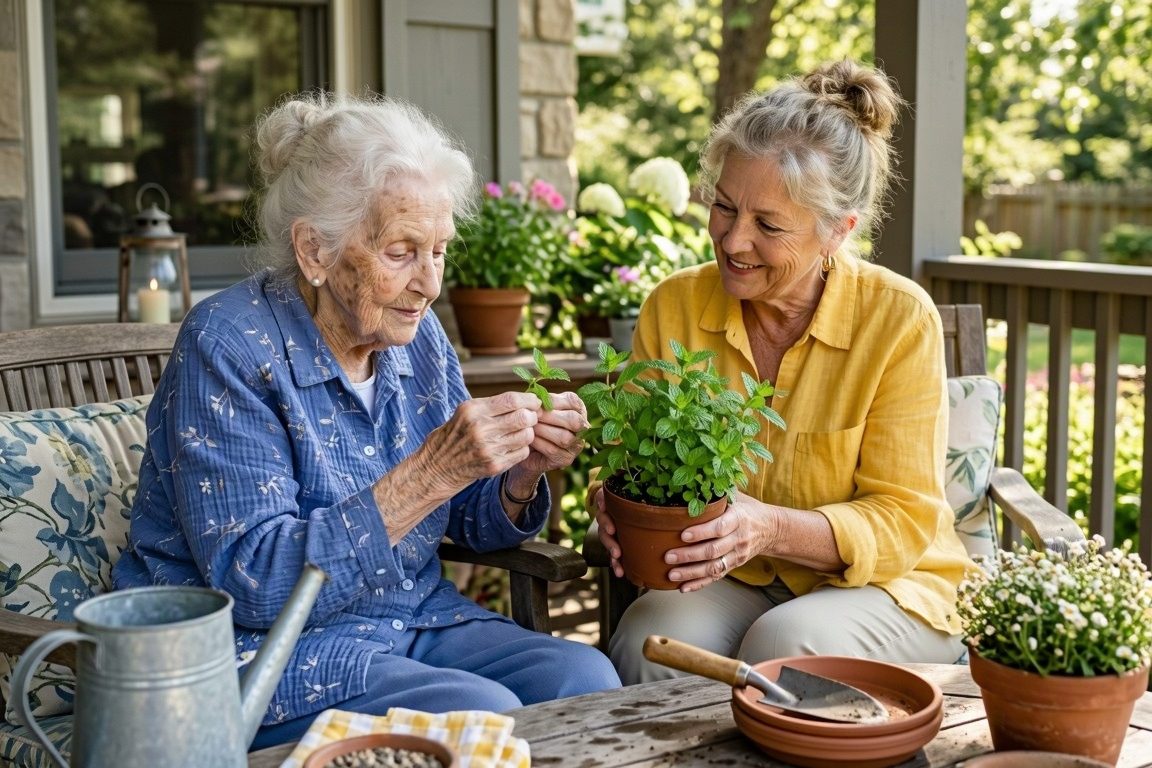
Use their environment to guide behavior without words. For a person who loved coffee, set up a small coffee station with a mug and a jar of beans (for smell). For a person who loved gardening, place a pot of soil and a trowel on the table. Visual cues can trigger positive memories and reduce the need for verbal instructions.
The GEMS Stage Quick Reference Card
Print a small card with the six GEMS stages and their key characteristics. Keep it in your wallet or phone. When you’re feeling frustrated, look at the card and ask: 'Which gem am I seeing right now? What does this stage need?' This helps you shift from frustration to understanding.
The 'Pause and Assess' Checklist
When a behavior occurs, run through this mental checklist:
Change one thing at a time and observe the response.
The 'Favorite Things' Activity Kit
Assemble a small box or bag with items that reflect their personality:
When they are restless or anxious, offer the kit. Let them choose what to engage with. This is especially helpful during sundowning or transitions.
Different situations
For a person who was always introverted and is now in the Emerald or Amber stage
Avoid group activities or crowded spaces. Offer one-on-one time in a quiet room. Use soft music, dim lighting, and a calm voice. Let them initiate interaction. Don’t force conversation, sitting together in silence can be comforting. If they resist care, give them more personal space and time to process.
For a person who was a high-achiever or Type A personality (now in Diamond or early Emerald stage)
They may become frustrated when they can’t do things perfectly. Avoid pointing out mistakes. Instead, say, 'You’re doing great. Let me help with this part.' Give them simple, meaningful tasks like sorting silverware or folding napkins. Praise effort, not outcome. They may resist accepting help, frame it as teamwork: 'I need your help to get this done.'
For a person with Lewy body dementia (fluctuating cognition, visual hallucinations)
Personality-based care is especially important because their abilities can change hour to hour. Use the GEMS model flexibly, they may be Sapphire in the morning and Amber by afternoon. If they are hallucinating, don’t argue. Instead, validate the feeling: 'That must be scary. I’m here with you.' Then redirect to a calming activity. Discuss any medication changes with their clinician, as some dementia drugs can worsen hallucinations.
For a spouse caregiver vs. an adult child caregiver
A spouse may need to grieve the loss of their partner’s former self and adjust to a new role. Use the 'Know Your Person' profile to remind yourself of who they still are. An adult child may need to shift from a parent-child dynamic to a caregiver role. Avoid commands; use collaborative language: 'Let’s do this together.' Both roles benefit from joining a support group that focuses on relationship-based care.
For a person in a facility or memory care unit
On move-in day, ask for 10 minutes with the staff to share your person’s personality profile. Talk about who they were, the coach, the teacher, the gardener. Use positive stories, not just a list of deficits. Request that staff use their preferred name and honor their routines. Visit during different times of day to see how staff interact with them. If you see a mismatch, advocate gently: 'Mom responds better when you approach slowly and smile.'
For the doctor
4
- If you notice a sudden, dramatic personality change (e.g., from calm to aggressive, or from social to withdrawn), discuss with a doctor to rule out infection, pain, or medication side effects.
- Ask your clinician about the GEMS model and whether it aligns with your loved one’s current diagnosis and stage. Some stages may require different medication or therapy approaches.
- If the person with dementia is on medications for mood or behavior, discuss how these may interact with their personality traits. For example, a person who was always anxious may need different support than one who was always easygoing.
- If the person is experiencing hallucinations or delusions that seem tied to their personality (e.g., a former teacher who thinks they are still grading papers), ask a clinician how to respond without causing distress.