Step by step
What not to do
- Do not try to grab their arm or physically stop them during pacing. This feels threatening and can escalate into a struggle or a fall.Instead, walk alongside them and offer a calming distraction.
- Do not argue or try to reorient them during exit-seeking. Saying 'You are already home' will only confuse and frustrate them.Instead, use a 'yes, and' redirect to a different activity.
- Do not leave them alone if they are pacing intensely. They may be burning calories rapidly and could become exhausted or dehydrated. Stay nearby and offer small sips of water or a snack between laps.
- Do not use black mats or dark floor coverings in front of doors. Many people with dementia will try to step over them, which is a fall risk.Instead, use visual cues like a 'Stop' sign or a curtain that blends with the wall.
- Do not assume all wandering is exit-seeking. Some wandering is just restlessness from boredom or understimulation. Offer a meaningful activity like folding towels, sorting photos, or listening to familiar music before assuming they want to leave.
- Do not force them to sit down or lie down if they are in motion. The brain feels threatened by forced movement changes, and they will likely be right back up.Instead, let them move until they naturally tire, then offer a comfortable place to rest.
Key points
- Pacing is anxious, repetitive, and not goal-directed; exit-seeking is purposeful and aimed at a familiar place or person.
- Watch their face and direction: pacing looks down and trapped; exit-seeking looks forward and determined.
- Do not argue or reorient during exit-seeking, use a 'yes, and' redirect instead.
- For pacing, walk alongside and offer a sensory reset (warm blanket, weighted lap pad).
- Make exits less inviting with visual cues like a 'Shop Closed' sign or a door painted the same color as the wall.
- Always check for unmet physical needs (hunger, thirst, bathroom, pain) before assuming the behavior is purely psychological.
- Use a GPS tracker and ID bracelet for anyone who has attempted to exit, and alert neighbors and local police.
- Create a safe walking loop indoors so they can move without risk of falls or getting lost.
Videos
 HOW TO MANAGE Wandering, Pacing, Eloping ~ Smart Tricks When You Are DesperateThis video offers practical, low-cost tricks for both pacing and exit-seeking, including signs and environmental changes that work in real homes.
 Dementia Problem Solving with the PAC team.Teepa Snow and her team demonstrate how to read the person's body language and respond with the right approach for pacing vs. wandering.
 Why does my Person with Dementia WANDER? Simple Steps to FIX WanderingThis video breaks down the reasons behind wandering and gives step-by-step fixes that align with the strategies in this article.
 Wading in Emotional QuicksandA powerful metaphor for how to stay grounded when your person is in distress. It helps caregivers avoid getting pulled into the emotional struggle.
2 more videos
 Ask Teepa Anything! LiveTeepa answers live questions about wandering and pacing, offering real-time solutions for specific situations caregivers face.
 Time with Teepa - Challenging Situations Part 7: Constantly in MotionThis video focuses on the person who is always moving, covering both pacing and wandering with techniques to reduce distress and increase safety.
Background
What is pacing and why does it happen?
Pacing is a repetitive, anxious movement that usually follows a short, back-and-forth path. It is driven by high anxiety, restlessness, or an inability to figure out what else to do. When the brain is struggling to sequence or initiate actions, the person may default to this motion as a way to release nervous energy. It is a sign that they feel trapped, overstimulated, or understimulated. Unlike wandering, pacing is not goal-directed, they are not trying to get somewhere else; they are stuck in a loop of distress. This behavior can burn a lot of calories, especially if the person is not eating well, so it is important to address both the emotional and physical needs behind it.
What is exit-seeking wandering and why does it happen?
Exit-seeking wandering is a purposeful behavior. The person is trying to get to a place or person that feels familiar and safe, often their childhood home, a former workplace, or a parent or spouse. In their mind, they are not lost; they are on a mission. They may believe they have responsibilities elsewhere, like picking up children from school or going to a job. This is not about escaping you; it is about trying to return to a reality that feels more real to them than the present. The drive is so strong that they will ignore signs, locks, or even your attempts to explain that they are already home. They are seeking comfort, and the exit door represents the way to get it.
Key differences you can observe in the moment
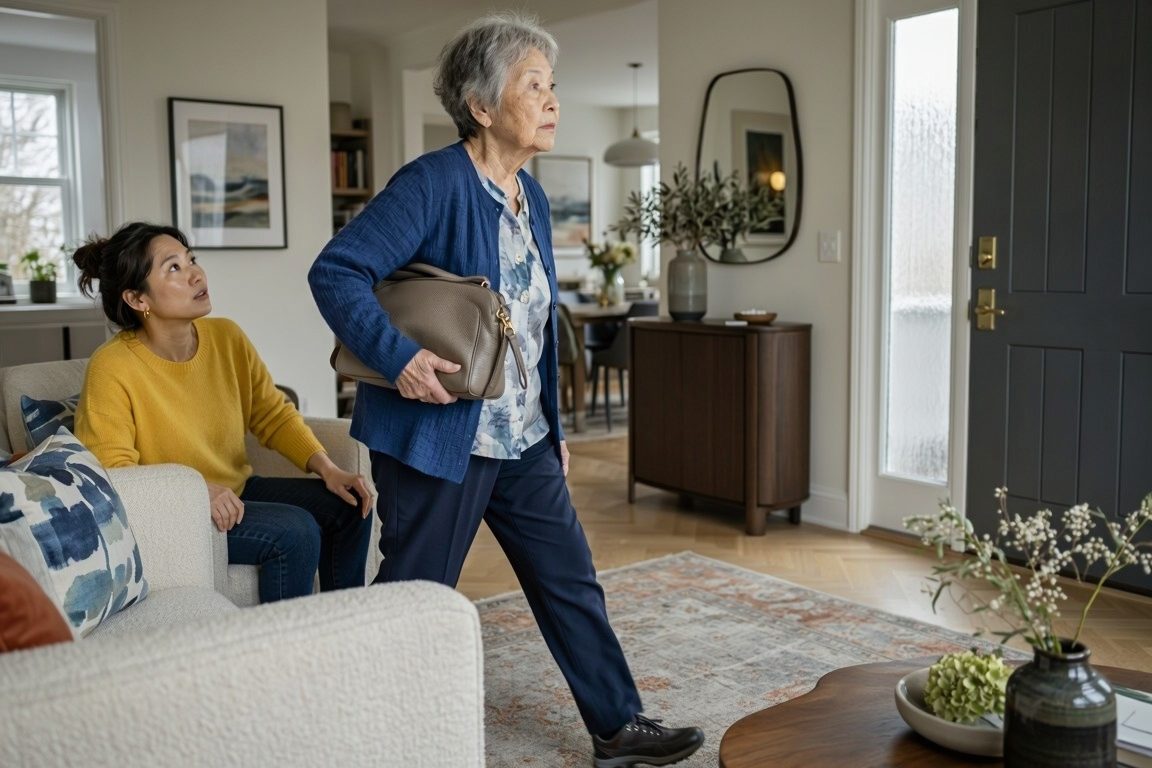
Watch their face and body. A person who is pacing will often look down, have a furrowed brow, or seem agitated and trapped. Their movement is tight and repetitive. A person who is exit-seeking will have a more determined, forward-leaning posture, scanning the environment, and may try to open doors or windows. They might put on a coat or pick up a purse. Pacing tends to happen in a confined area (a hallway or living room), while exit-seeking wandering heads toward a door or exit point. Also note the time of day: pacing is more common during times of high anxiety or sundowning, while exit-seeking can happen anytime but often spikes when the person feels a need to fulfill a role (e.g., 'I have to go to work').
Practical tools
6
The 'How Can I Help?' Opening Line
When you see exit-seeking, approach with a calm, confident face and say, 'How can I help you?' This phrase does not challenge their reality and invites them to trust you. It works because they are looking for someone who looks like they know what is going on. Practice this phrase so it becomes automatic.
Sensory Reset Kit
Keep a basket with
When pacing starts, offer one of these items. The sensory input can shift the brain out of the anxiety loop.
The 'Shop Closed' Sign
Print a simple sign that says 'Shop Closed' or 'Closed for Maintenance' and tape it to the inside of the exit door at eye level. Many people with dementia will read the sign and turn away without questioning it. This is a low-cost, low-stress deterrent.
Safe Walking Loop Setup
This gives them a safe place to move and rest.
GPS Tracker and ID Bracelet
Use a GPS tracker (like a smartwatch or a dedicated device) that alerts you if they leave a safe zone. Also, have them wear an ID bracelet with your contact info and 'memory loss' engraved. This is essential for exit-seekers who may get far quickly.
The 'Yes, And' Redirect Script
When they say 'I need to go home,' respond with 'Yes, let's go home. First, can you help me fold these towels?' or 'Let me get my shoes and we will go. While I do that, can you sit here with me?' This buys time and shifts their focus without confrontation.
Different situations
Middle stage dementia (moderate cognitive decline)
Pacing may still be responsive to redirection and sensory tools. Exit-seeking is more common and more determined. Use the 'Shop Closed' sign and GPS tracker early. Also, establish a daily routine that includes a walk outside at the same time each day to meet their need for movement in a safe way.
Late stage dementia (severe cognitive decline)
Pacing may become more frequent and intense, and the person may not respond to verbal redirection. Focus on safety: clear paths, padding on sharp corners, and a low bed to prevent falls. Exit-seeking may decrease as mobility declines, but still secure doors. Use weighted blankets and warm towels to calm pacing.
Lewy body dementia
Pacing may be accompanied by visual hallucinations or fluctuations in alertness. The person may be more sensitive to sensory input, so use gentle touch and soft lighting. Exit-seeking may be triggered by paranoid thoughts. Approach with extra calm and avoid sudden movements. Discuss any medication changes with the clinician, as some drugs can worsen movement.
Frontotemporal dementia (behavioral variant)
Exit-seeking may be driven by impulsivity and lack of inhibition rather than a desire for familiarity. The person may try to leave without any apparent reason. Use high locks and alarms. Pacing may be less anxiety-driven and more a result of restlessness. Offer simple, repetitive activities like sorting objects or sweeping.
Spouse vs. adult child caregiver
Spouses may feel more personally rejected by exit-seeking ('They are trying to leave me'). Remind yourself that this is the disease, not a personal choice. Adult children may feel more responsible for safety. Both roles benefit from using the 'How can I help?' line to depersonalize the behavior. Consider joining a support group to share strategies.
For the doctor
4
- If pacing is so intense that the person is losing weight or becoming dehydrated, ask the doctor about nutritional supplements or strategies to increase calorie intake.
- If exit-seeking is frequent and you are unable to keep them safe at home, ask about a referral to a memory care specialist or an occupational therapist for a home safety assessment.
- If the person is having hallucinations or paranoia that triggers exit-seeking, discuss whether medication adjustments might help reduce these symptoms.
- If the person is falling frequently during pacing or wandering, ask about a physical therapy evaluation for balance and mobility aids.