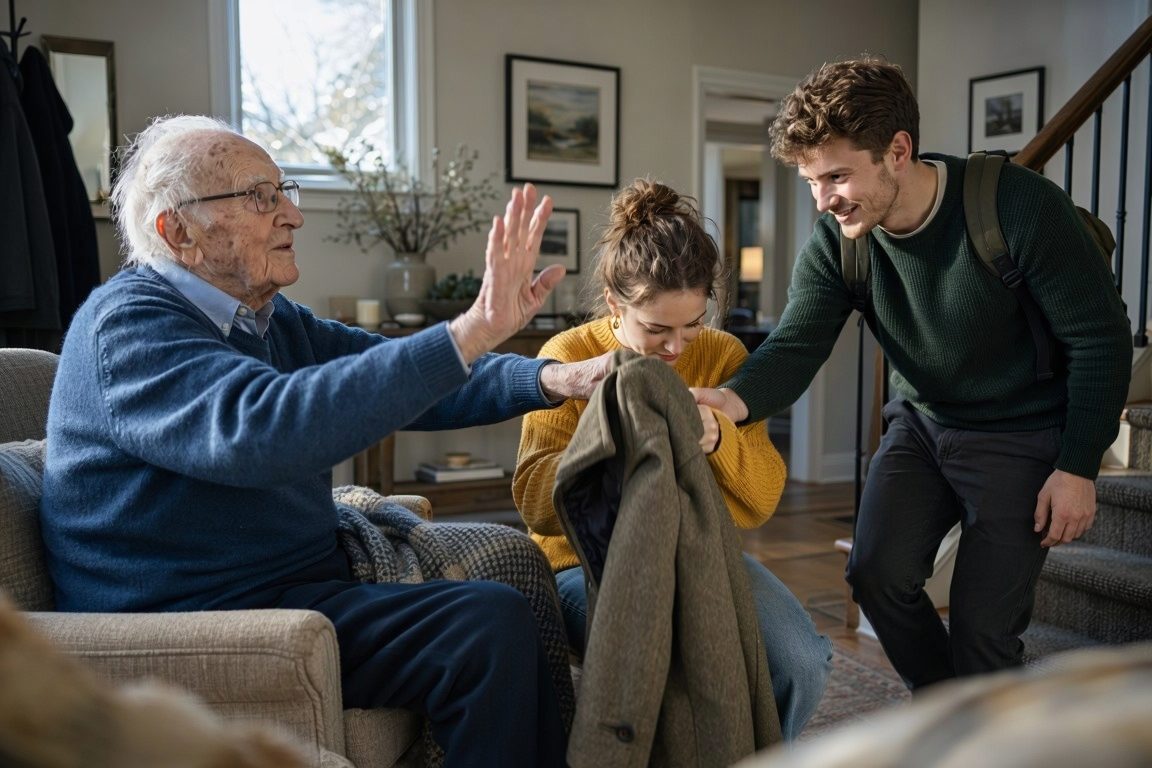
Step by step
What not to do
- Do not argue or try to be logical. When you try to reason with a person whose frontal lobe is damaged, you only make them more agitated. Instead of defending yourself, validate their feeling. For example, if they say 'You stole my money,' do not say 'I never did that.' Say, 'That sounds really upsetting. I'm sorry you're feeling that way.'
- Do not take the words personally, even though it hurts. This is the hardest one. Remind yourself over and over: this is a symptom, like a sneeze or a fever. Your loved one is not choosing to be cruel. If you take it personally, you will burn out faster and may respond with anger, which makes everything worse.
- Do not ignore your own emotional safety. Compassion for their brain does not mean tolerating abuse. If the behavior is emotionally unsafe for you, it is okay to step away. You are not abandoning them; you are protecting your own mental health so you can continue to care for them.
- Do not fall into the victim trap. Resentment often comes from feeling like a victim: 'Why is this always happening to me?' This mindset makes you feel powerless.Instead, remind yourself that you have choices. You can choose how to respond, you can choose to ask for help, and you can choose to set boundaries. You are not powerless.
- Do not compare yourself to other caregivers or to how your loved one treats others. Every person with dementia is different, and every relationship is different. Their favoritism toward a sibling or a paid caregiver is not a reflection of your worth. It is often because you are the safe person they can let their guard down with.
- Do not suppress your own grief and anger. It is normal to feel angry, sad, and resentful. Acknowledge these feelings. Write them down, talk to someone, or even say out loud, 'I am angry and that is okay.' Suppressing them only leads to explosive reactions later.
Key points
- Their cruelty is a symptom of the disease, not a reflection of your worth or your care. Repeat this to yourself until it sinks in.
- Respond to the feeling behind the words, not the facts. Use phrases like 'You seem really scared right now.'
- Protect your emotional and physical safety. Stepping away is not abandonment; it is self-preservation.
- Do not argue or try to be logical. It will only escalate the situation and hurt you more.
- Find a trusted person to vent to who will just listen. Bottling up emotions leads to resentment and burnout.
- When favoritism hurts, remember: you are the safe harbor. Their calmness with others is not a judgment of you.
Videos
 Why Some People With Dementia Become MeanHelps you understand the brain-based reasons for meanness, so you can separate the disease from the person.
 Is It Dementia… or Their Personality?Explains how to tell if the behavior is dementia-related or a long-standing personality trait, which affects your response.
 10 Tips For Responding To Anger in DementiaProvides practical, step-by-step strategies for de-escalating anger without taking it personally.
 The Dance of Caregiving: Acknowledging I am not Invisible with Dr. Edward Smink (Part 1 of 3)Addresses the emotional pain of feeling invisible or unappreciated as a caregiver, which is common when cruelty or favoritism occurs.
2 more videos
 Why Does Dementia Make People Mean?Offers a compassionate explanation of the fear and confusion behind meanness, helping you respond with empathy instead of hurt.
 Beverley Glazer Founder of Reinvent Impossible Inc. & Host of 'Aging with Purpose & Passion' PodcastShares insights on reinventing your role and finding purpose even in the hardest caregiving moments, including when you feel targeted.
Practical tools
6
The 'Feelings First' Script
Keep this short list of phrases handy (on your phone or a note card). When your loved one is angry or cruel, pick one and say it with a calm, caring tone: 'You seem really scared right now.' 'This feels so unfair to you.' 'I can see how upsetting this is.' 'I'm sorry you're feeling this way.' 'I'm here with you.' These phrases validate their emotion without arguing about facts.
The 'Safety Step-Away' Plan
Decide in advance where you will go when you need a break. It could be the bathroom, the porch, or another room. Have a pre-planned phrase: 'I need to get a glass of water. I'll be right back.' Keep a calming activity there, a book, a breathing exercise on your phone, or a stress ball. Use this space to take 3-5 deep breaths and remind yourself: 'This is the disease. I am safe. I can return when I am calm.'
The 'Caregiver Mantra' Card
Write down 2-3 short, powerful statements on an index card and keep it in your pocket or wallet. Examples: 'I am doing my best. This is the disease. I am not a victim.' 'Their anger is their fear. I can stay calm.' 'I have a choice in how I respond.' Read it aloud to yourself during tough moments.
The 'Vent Session' Buddy
Identify one person you trust who will just listen without giving advice. This could be a friend, a family member, a support group, or a counselor. Make a plan to call or text them after a difficult episode. Say, 'I just need to vent for 5 minutes. Please just listen.' This prevents you from bottling up emotions and reduces resentment.
The 'Dignity-Preserving' Approach for Personal Care
When your loved one resists bathing or dressing and becomes angry, use language that preserves their dignity. Say, 'Not to worry, I'm going to keep you covered. Here you go,' or 'Let me know if you need help.' Hand them the washcloth or showerhead so they feel in control. This reduces the vulnerability that often triggers anger.
The 'Favoritism Reframe' Script
When you feel hurt that your loved one is sweet to someone else but cruel to you, say to yourself: 'They feel safe enough with me to let out their fear. I am their safe harbor.' If a sibling or caregiver is getting the 'good' treatment, say to them: 'I'm glad they are calm with you. That gives me a break.' This turns jealousy into teamwork.
Different situations
Early stage vs. middle stage
In early stage, your loved one may still have moments of insight and may apologize later. You can gently say, 'I know you didn't mean that. It's okay.' But do not expect a full apology or understanding. In middle stage, insight is mostly gone. Do not wait for an apology. Use the 'Feelings First' script and the 'Safety Step-Away' plan more often, as the anger can be more intense and unpredictable.
Spouse vs. adult child
As a spouse, the cruelty can feel like a betrayal of your entire life together. It is especially important to have a separate support system, a friend, a counselor, or a support group for spousal caregivers. Remind yourself: 'This is the disease, not the person I married.' As an adult child, old family dynamics may surface. If you were the 'scapegoat' or the 'responsible one,' the favoritism can reopen old wounds. Work with a therapist to separate your childhood feelings from the current situation. You are not that child anymore.
Lewy body dementia or frontotemporal dementia
In Lewy body dementia, anger and cruelty can be more sudden and intense, often with hallucinations or paranoia. The 'Feelings First' script still works, but you may need to step away more often. In frontotemporal dementia, the person may lose empathy and social awareness early on. They may say cruel things without any apparent emotion. Do not expect them to feel remorse. Use the 'Safety Step-Away' plan and protect your own heart by repeating: 'This is the disease. They cannot feel what I feel.' Discuss with your clinician about medications that may help with agitation.
When a paid caregiver is present
If your loved one is sweet to the paid caregiver but cruel to you, do not take it personally. The caregiver is a 'stranger' and your loved one may be on their best behavior. You can use this to your advantage: have the caregiver handle difficult tasks like bathing or dressing, and you focus on pleasant activities like walks or music. This reduces your exposure to the cruelty and preserves your relationship.
When the cruelty is directed at you in front of others
This can be deeply embarrassing. If it happens in public or in front of family, do not try to correct or defend yourself. Instead, say calmly to the other person: 'This is part of the disease. It's hard, but I know it's not personal.' Then redirect your loved one: 'Let's go get a cup of tea.' This shows others that you are handling it with grace and protects your dignity.
For the doctor
4
- If your loved one's anger or cruelty becomes physically dangerous (hitting, kicking, biting) or emotionally unbearable, discuss with your clinician whether medication adjustments or a referral to a behavioral specialist might help. Do not stop or change any medication on your own.
- If you are experiencing symptoms of depression, anxiety, or burnout (e.g., trouble sleeping, constant sadness, irritability, loss of interest in things you used to enjoy), discuss this with your own doctor or a mental health professional. Your health matters.
- If your loved one has a history of personality disorders or mental illness before dementia, discuss with a geriatric psychiatrist how to distinguish dementia-related behaviors from pre-existing patterns. The strategies may differ.
- If you are considering placing your loved one in a care facility because of their cruelty or aggression, discuss this with a social worker or elder care advisor. They can help you evaluate the options and timing without guilt.