Step by step
What not to do
- Don’t argue or try to prove them wrong. Saying 'I did not take your purse' or 'No one is in the house' will only make them more convinced you are lying.Instead, validate their feeling and redirect.
- Don’t take the accusations personally. It is easy to feel hurt or angry, but remember: this is the disease, not the person. Taking it personally will only increase your stress and make it harder to respond calmly.
- Don’t use long explanations or complex reasoning. A brain with dementia cannot process multiple pieces of information. Stick to one short sentence at a time.
- Don’t hide or move objects without telling them. If you need to move something for safety, do it when they are not watching and be prepared for them to look for it later. Better yet, involve them in the decision if possible.
- Don’t laugh or dismiss their fear. Even if the belief seems absurd to you, it is very real and frightening to them. Dismissing it will increase their anxiety and distrust.
- Don’t leave them alone when they are highly paranoid. Your presence can be calming. If you need a break, ask another trusted person to sit with them.
Key points
- Dementia paranoia is caused by brain damage, not by anything you did or didn’t do.
- It is different from mental health paranoia because it is directly linked to memory loss and cognitive decline.
- Never argue or try to reason, validation and redirection are far more effective.
- Consistency in routine and object placement can reduce triggers for paranoia.
- Paranoia often worsens with stress, fatigue, or physical discomfort, address these first.
- Take care of yourself: this is hard, and you deserve support.
Videos
 Dementia Paranoia Explained: Why It Happens & How to RespondDr. Camille Sinclair explains the brain science behind paranoia and gives practical, step-by-step response techniques. Essential viewing for understanding the 'why' and the 'how.'
 Understanding the signs of paranoia, hallucinations and delusional behaviors w/ Lucy Barylak Sept 12Lucy Barylak provides a clear overview of how to recognize paranoia versus hallucinations versus delusions, and how to respond to each. Great for building your observational skills.
 217. 3 Dementia Caregiver Tips: How To Control Anger, Deal With Paranoia & SundowningThis video offers three concrete tips that directly address paranoia, anger, and sundowning, common challenges that often overlap. Practical and easy to implement.
 4 Most Common Types of Dementia in AgingUnderstanding the type of dementia your loved one has helps you anticipate symptoms like paranoia. This video breaks down the four most common types and their unique features.
2 more videos
 What’s The Difference Between Alzheimer’s Disease And Dementia?Clarifies the distinction between Alzheimer’s (a disease) and dementia (a group of symptoms). Knowing this helps you understand why paranoia may appear in some forms but not others.
 Dementia in the Context of Serious Mental IllnessIf your loved one has a history of mental health issues, this video explains how dementia can interact with pre-existing conditions, including paranoia. Important for complex cases.
Background
What Is Dementia Paranoia?
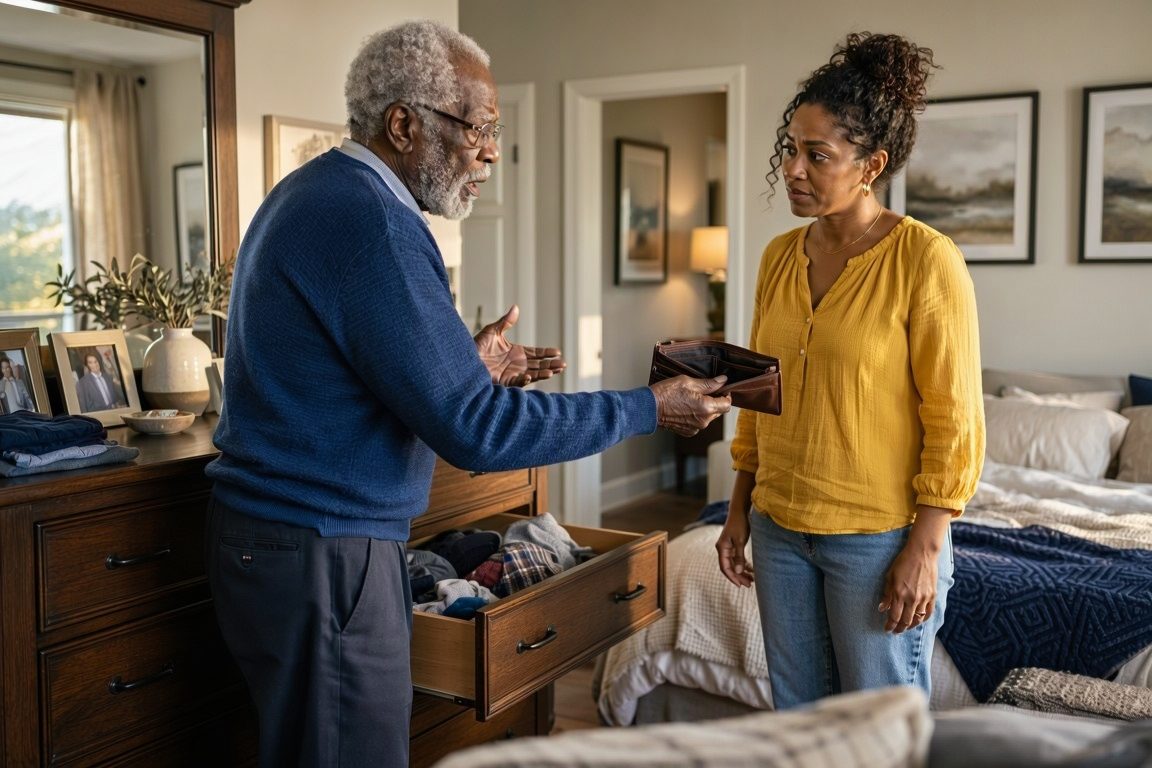
Dementia paranoia is when a person with dementia develops a fixed, false belief that others are trying to harm, steal from, or control them. It often shows up as accusations like 'You stole my purse,' 'Someone is in the house,' or 'They’re talking about me.' This is not a personality change or a sign that you’ve done something wrong, it’s a symptom of brain damage caused by the dementia itself. As Dr. Camille Sinclair explains, paranoia in dementia is far more common than most caregivers are prepared for, and it’s important to know that you are not causing it and you are not missing something. The brain’s ability to process information, store memories, and link events together is damaged, so the person’s mind fills in the blanks with a story that often involves threat or betrayal.
Why Is Dementia Paranoia Different from Mental Health Paranoia?
Paranoia in mental health conditions, like schizophrenia or paranoid personality disorder, usually stems from a psychiatric illness that affects thinking and perception, but the brain structure itself may not be progressively damaged. In dementia, paranoia is directly caused by physical damage to the brain, specifically to areas that control memory, reasoning, and emotional regulation. As the WellMed Charitable Foundation notes, dementia is a chronic, progressive condition where the brain has been damaged, so our expectations of behavior should not surprise us. In mental health paranoia, the person may have a lifelong pattern of suspicious thinking, but their memory and cognitive abilities are often intact. In dementia, the paranoia is almost always linked to memory loss: they can’t remember where they put their purse, so the only logical explanation is that someone stole it. This distinction matters because the response is different, you can’t reason or talk someone out of dementia paranoia, but you can reduce triggers and provide reassurance.
What Triggers Paranoia in Dementia?
Paranoia in dementia is often triggered by confusion, sensory overload, or environmental unpredictability. When the brain can’t process information correctly, it defaults to a threat response. Common triggers include: not being able to find a familiar object, being in a new or unfamiliar place, feeling rushed or pressured, experiencing too much noise or activity, or having a change in routine. As Dr. Sinclair points out, when the brain is overloaded and we respond with long explanations or corrections, we increase stress, and paranoia worsens when stress increases. Additionally, certain types of dementia are more prone to paranoia and delusions. The WellMed Charitable Foundation notes that delusions are more common in dementia with Lewy bodies, but they can also affect people with Alzheimer’s disease and vascular dementia. Understanding the specific type of dementia your loved one has can help you anticipate and prepare for these symptoms.
Practical tools
6
Validation Phrases for Paranoia
Keep a mental or written list of phrases to use: 'I can see you’re worried about that.' 'That sounds upsetting.' 'Let’s check together.' 'I’m here with you.' 'You are safe.' Avoid 'You’re wrong' or 'That’s not true.'
The 'Look Together' Strategy
When they accuse someone of stealing, say, 'Let’s look for it together.' Walk with them to the usual spot. Even if you know it’s not there, the act of looking together shows you are on their side. If you find it, hand it to them without saying 'I told you so.'
Consistency Checklist
Create a short list of 3-5 items that are often misplaced (glasses, wallet, remote, keys, purse). Designate one spot for each and label it with a picture. Check these spots first when something is 'missing.'
Paranoia Trigger Log
Keep a small notebook or use a notes app to record: date, time, what happened before the paranoia, what the accusation was, how you responded, and what helped. Review weekly to spot patterns.
Calming Environment Setup
A calm environment reduces sensory overload, which can trigger paranoia.
Redirect Activity List
Have a list of 3-5 calming activities ready: looking at a familiar photo album, folding towels, listening to their favorite music, having a warm drink, or stepping outside for fresh air. Use these when paranoia starts to escalate.
Different situations
Lewy body dementia
Paranoia and visual hallucinations are more common in Lewy body dementia. Be especially alert for sudden changes in paranoia that might coincide with hallucinations. Consistency in routine and environment is even more critical. Avoid using antipsychotic medications unless absolutely necessary, as people with Lewy body dementia can have severe reactions to them, discuss all medication options with the clinician.
Late-stage dementia
In late stages, the person may not be able to communicate their paranoia verbally. Watch for nonverbal signs: agitation, pacing, hitting, or refusing care. Use a very calm tone and simple touch (like holding their hand) to reassure. The goal is comfort, not reasoning. You may need to accept that the paranoid belief will not resolve and focus on reducing distress.
Spouse vs. adult child caregiver
Spouses may feel more personally betrayed by accusations of infidelity or theft. It can help to remind yourself that the accusation is a symptom, not a reflection of your relationship. Adult children may feel guilty or angry. Both roles benefit from joining a support group specific to dementia caregivers. If you are the adult child, consider that your parent may see you as a child and resist your authority, use a gentle, collaborative tone.
In a facility
If your loved one is in a facility, paranoia may be directed at staff or other residents. Share this article with the care team so they understand the cause and proper response. Ask them to use the same validation and redirection techniques. Visit at different times to observe patterns. If paranoia is severe, request a care plan meeting to discuss non-drug approaches and, if needed, medication review with the clinician.
Medicaid or limited resources
If you have limited access to specialists or medications, focus on the low-cost tools: consistency, validation phrases, and a trigger log. Many of these strategies require no money, only time and patience. Reach out to your local Alzheimer’s Association chapter or Area Agency on Aging for free caregiver support and resources.
For the doctor
5
- Ask the doctor if your loved one’s paranoia could be worsened by a medication side effect or interaction. Some drugs, especially anticholinergics, sedatives, or certain pain medications, can increase confusion and paranoia.
- Discuss whether a thorough medical evaluation is needed to rule out delirium, infection (like a UTI), dehydration, or pain as underlying causes of sudden or worsening paranoia.
- If paranoia is causing significant distress or safety concerns (e.g., the person tries to leave the house or becomes aggressive), ask about non-drug behavioral interventions first. If medication is considered, ask about the risks and benefits, especially for people with Lewy body dementia.
- Ask about the specific type of dementia your loved one has, as this affects the likelihood of paranoia and the best management strategies. If the diagnosis is unclear, request a referral to a neurologist or geriatric psychiatrist.
- If your loved one has a history of serious mental illness (e.g., bipolar disorder, schizophrenia), ask how that might interact with dementia-related paranoia. Pre-existing symptoms may re-emerge as dementia progresses.