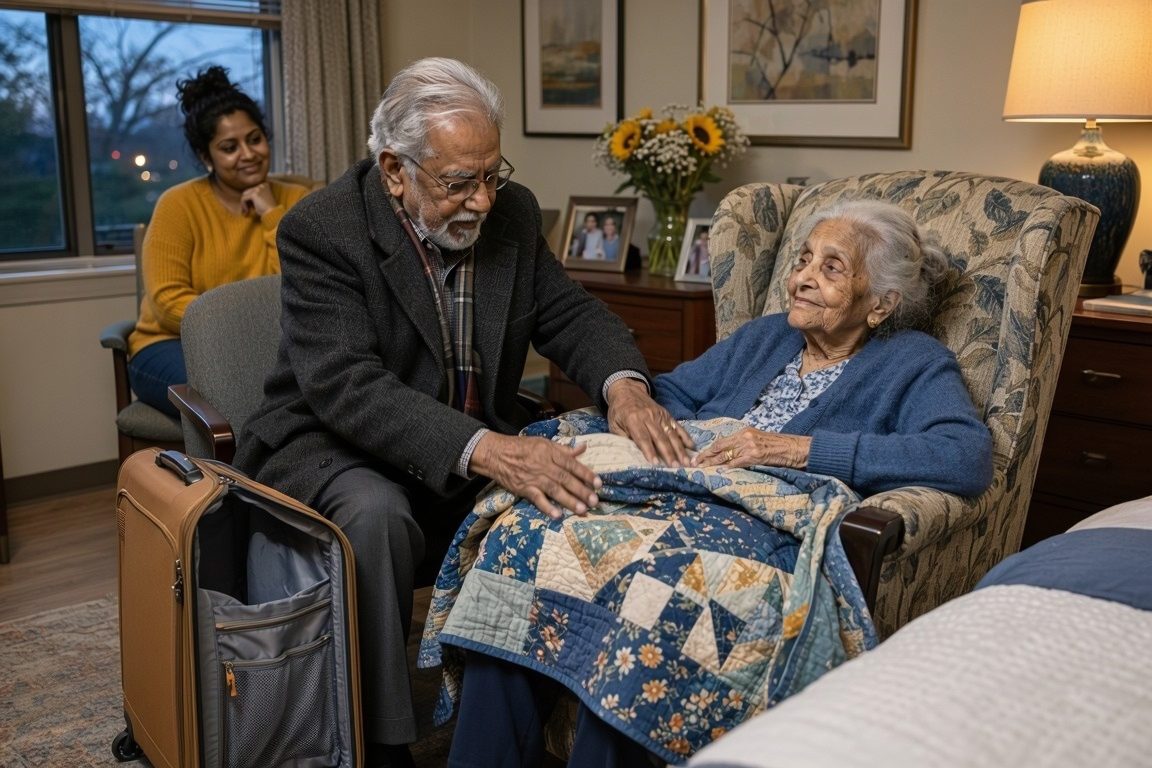
Step by step
What not to do
- Do not promise your loved one you will never place them. This promise is often made early in the disease, before you understand the full trajectory.Instead, say: 'I will always make sure you are safe and loved, no matter where that happens.' This keeps the focus on their well-being, not on a fixed location.
- Do not visit every day out of guilt. This will exhaust you and may actually upset your loved one, who may not understand why you leave. Overvisiting can lead to more guilt when you cannot keep up the pace. Stick to a sustainable schedule.
- Do not compare your situation to others. Every dementia journey is different. What worked for your neighbor or cousin may not be right for you. Comparing only fuels guilt. Focus on what is best for your unique loved one and your unique circumstances.
- Do not neglect your own health. Caregivers who sacrifice their own physical and mental health end up unable to help anyone. If you feel guilty about taking time for a doctor's appointment or a walk, remind yourself: 'I am doing this so I can be strong for my loved one.'
- Do not stop visiting altogether because it is painful. Avoidance can deepen guilt.Instead, find a way to visit that feels manageable, even if it is just a 15-minute phone call or a video chat. Staying connected, even briefly, helps both of you.
Key points
- Guilt about facility placement is a sign of love, not failure. It is a normal response to an impossible situation.
- You made this decision because the disease progressed beyond what one person could handle at home. That is not a moral failing; it is a medical reality.
- Give yourself permission to enjoy your life again. Your loved one would want you to be happy and healthy.
- Visit with a purpose: connection, not evaluation. Quality visits matter more than quantity.
- Build a partnership with facility staff. They are your allies, not your replacements.
- Write down your reasons for placement and read them when guilt strikes. Facts can quiet emotional noise.
Videos
 Working Through Caregiver GuiltThis video directly addresses the guilt that comes with facility placement and offers practical strategies to reframe your thinking.
 Caregiver BurnoutBurnout is often a precursor to placement decisions. This video helps you understand why you reached your limit and why placement was necessary.
 Navigating the Emotional Terrain of Caregiving: Understanding and Overcoming Caregiver GuiltThis video explores the roots of caregiver guilt and gives you permission to let go of unrealistic expectations.
 The Baffled Brain: Demystifying Dementia Episode 21 April 17 ,2021This episode discusses the emotional challenges of late-stage care and the difficult decisions caregivers face.
2 more videos
 Support Caring for Elderly Parents: How to Manage Caregiver GuiltThis video offers concrete tools for managing guilt, including boundary-setting and self-care strategies.
 When a Grandparent Moves InWhile focused on moving in, this video provides insight into the emotional dynamics that also apply when moving a loved one out of the home.
Background
Why Facility Placement Triggers Such Deep Guilt
Caregiver guilt about facility placement is not a sign of weakness; it is a sign of deep love and commitment. Many caregivers have promised their loved one, 'I will never put you in a home,' or they have promised themselves they would manage everything at home. When the disease progresses to late stages, safety risks, 24/7 care needs, and caregiver exhaustion make home care impossible. The guilt comes from feeling you have broken that promise, even though the promise was made before you understood the full reality of dementia.
This guilt is often self-inflicted. We hold ourselves to an impossible standard, believing that a 'good' caregiver should be able to do it all. But dementia is a brain disease that changes behavior, creates unsafe situations, and demands skills no one is born with. Placing a loved one is not giving up; it is acknowledging that the disease has progressed beyond what one person can manage alone. As one source notes, when an elder exhibits troublesome behaviors that create unsafe or unsanitary conditions, it is time to let go of the guilt and make other arrangements (source 6).
The Emotional Trap of 'Should Have' and 'Could Have'
After placement, guilt often takes the form of 'I should have kept them home longer' or 'I could have done more.' These thoughts are natural but destructive. They ignore the reality that late-stage dementia brings incontinence, aggression, wandering, and falls that require professional monitoring. The guilt is compounded by the fact that you may now have time for yourself, and that freedom feels wrong. You might go out to lunch with friends and feel you do not deserve to enjoy yourself because your loved one is in a facility (source 16).
This double standard is common: you would never tell another caregiver they should feel guilty for placing their loved one, yet you judge yourself harshly. The truth is that guilt interferes with your ability to manage the situation well. It can lead you to overvisit, overcompensate, and burn out even more. Recognizing that guilt is a feeling, not a fact, is the first step to moving forward.
Practical tools
5
The 'Letter to Myself' Tool
Write a one-page letter listing every concrete reason you chose facility placement. Include:
Keep this letter in your phone or purse. When guilt hits, read it out loud. It is a factual anchor against emotional spirals.
The Visiting Script
Before each visit, rehearse a short script to say to yourself: 'I am here to connect, not to fix. I will stay for 30 minutes. I will focus on one activity, like looking at photos or listening to music. I will leave calmly, saying, 'I love you, and I will see you soon.'' This script prevents you from getting drawn into guilt-driven overstaying or emotional rescuing.
The 'Permission Slip' Card
Create a small card or note that says: 'I give myself permission to enjoy this moment. My loved one is safe and cared for. I deserve rest.' Keep it in your wallet or on your phone lock screen. When you feel guilty about having fun, look at the card and read it silently.
The Facility Partnership Checklist
Print a checklist with items like: 'Introduce myself to the charge nurse,' 'Ask about the daily activity schedule,' 'Find out the best visiting times,' 'Leave a family photo in the room,' 'Schedule a monthly care conference.' Checking off items gives you a sense of control and partnership, reducing helplessness and guilt.
The Gratitude Journal for Caregivers
Each evening, write down one thing you did well that day, even if small. For example: 'I called the facility to check on Mom,' 'I visited and held her hand,' 'I took a 10-minute walk for myself.' This shifts focus from what you 'should have' done to what you actually did.
Different situations
Late-stage Alzheimer's / non-verbal loved one
When your loved one can no longer speak or recognize you, guilt can be even more intense because you cannot get feedback. In this case, focus on sensory connection: bring a soft blanket, play their favorite music, or use hand lotion to massage their hands. You are still providing comfort even if they cannot say thank you. Visit less often but with more intention.
Spouse caregiver vs. adult child caregiver
Spouse caregivers often feel guilt tied to wedding vows ('in sickness and in health') and may feel they are abandoning their life partner. Adult children may feel guilt about 'putting Mom away' or breaking a promise. For spouses, reframe the decision as an extension of your vow: you are ensuring they get the best care possible. For adult children, remind yourself that you are not their parent; you are their child, and you have limits.
Loved one is in a Medicaid facility vs. private-pay facility
If your loved one is in a Medicaid facility, you may worry about quality of care. This can increase guilt. In this case, visit more frequently at first to observe care, but do not micromanage. Build a relationship with the staff. Ask specific questions like: 'How often is she turned in bed?' or 'What is the toileting schedule?' Knowing the details reduces anxiety. If you see genuine neglect, report it to the state ombudsman.
Long-distance caregiver
If you live far away, guilt about not being there in person is common. Use video calls (FaceTime, Zoom) to connect with your loved one and the staff. Ask the facility to send you weekly updates or photos. Plan a visit every 2-3 months, but do not feel you must visit every month. Your role is to be the advocate from afar, not the daily hands-on caregiver.
For the doctor
3
- If guilt is causing severe depression, insomnia, or thoughts of self-harm, discuss this with your doctor or a therapist. You may need professional support to process these feelings.
- If your loved one is showing signs of distress or decline after placement (e.g., weight loss, increased agitation, new bruises), discuss these observations with the facility's medical director or your loved one's primary care physician. Do not assume it is just 'the disease.'
- If you are considering moving your loved one out of the facility because of guilt, discuss this with a geriatric care manager or social worker first. They can help you evaluate whether a move would actually be safer or more harmful.