Step by step
What not to do
- Do not skip micro breaks because you think they are 'not enough.' A common mistake is waiting for a full hour or a day off to practice self-care. That mindset leads to burnout because you never get that ideal time.Instead, take the five minutes you have now. It is enough to make a difference.
- Do not use micro breaks to scroll through social media or check email. This is a trap because it keeps your brain active and often adds stress rather than reducing it.Instead, choose a truly restorative activity like deep breathing, stretching, or stepping outside.
- Do not feel guilty for taking a break. Guilt is a common reaction, but it backfires by making you feel worse and less likely to take future breaks. Remind yourself that self-care is necessary for you to continue caring for your loved one. You are not being selfish.
- Do not try to multitask during your micro break. If you are stepping outside, do not also try to make a phone call or plan dinner. The point is to be fully present in that moment. Multitasking defeats the purpose of a reset.
- Do not wait until you are completely exhausted to take a break. By then, your stress levels are already high, and it takes longer to recover.Instead, schedule micro breaks throughout the day, even when you feel fine. Prevention is better than crisis management.
- Do not compare your self-care to what you did before caregiving. Your old version of self-care, like long baths or weekend trips, may not be possible now. That is okay. Redefine what self-care means in this season of your life. A five-minute walk is still self-care.
Key points
- Micro breaks of 60 seconds to five minutes are effective for reducing stress and restoring energy.
- Guilt is a major barrier; reframe self-care as necessary, not selfish.
- Use the 'what is the next right step?' question to focus on one small action.
- Habit stacking, attaching a micro break to an existing routine, makes it easier to remember.
- Create a micro break kit with simple items that help you reset quickly.
- Personalize your approach based on your loved one's stage and your role.
Videos
 Self-Care Hacks Every Caregiver Needs to KnowThis video offers practical, time-efficient self-care strategies specifically for busy caregivers, including micro break ideas.
 What Is The Power Of Micro-breaks In Dementia Self-care? - TestThis video explains the science behind micro breaks and how they benefit both caregivers and people with dementia.
 Chair yoga and getting someone with dementia to be more receptive to help: Interview with YogaFlavaThis video demonstrates chair yoga moves that can be done in under five minutes, perfect for a quick physical reset.
 "HOW do I Take Care of ME?" SELF CARE 1:1:1 || TOOLS for a Dementia CaregiverThis video provides a simple framework for self-care that fits into a caregiver's busy day, including micro break techniques.
2 more videos
 All Home Care Matters & Christina Keys Preview Upcoming New Show, "Real Talk with Real Caregivers"This video features real caregivers sharing their experiences with micro self-care, offering relatable examples and encouragement.
 The Care Advocates with Lance A. Slatton & Sharon's Son, George "Caregiver Confessions"This video includes honest conversations about caregiver guilt and practical ways to carve out tiny moments for yourself.
Background
Why Micro Breaks Matter More Than Long Ones
Traditional self-care, like a long bath, a weekend getaway, or a spa day, often feels out of reach for family caregivers. You may not have the time, energy, or money, and even if you manage to get away, it can take days to decompress enough to actually relax. That is because your nervous system is constantly on high alert, anticipating the next need or crisis. Micro breaks, lasting less than ten minutes, work differently. They give your brain a quick reset without requiring you to fully disengage from caregiving. Research shows these short pauses can reduce fatigue, improve focus, and lower stress levels, helping you replenish mental and physical energy so you can continue caring effectively.
The Guilt Trap and How to Escape It
Many caregivers feel guilty taking any time for themselves, as if every moment spent on self-care is somehow stolen from their loved one. This guilt is common but dangerous. If you do not take care of yourself, you will eventually burn out, and then who will care for your person? Remind yourself that self-care is not a luxury; it is a necessity. One caregiver described how she used to feel guilty playing Words with Friends, but she reframed it as intellectual and social self-care. You can do the same. When you take five minutes to breathe, step outside, or stretch, you are not neglecting your loved one, you are ensuring you can keep showing up for them.
Redefining Self-Care for Your Real Life
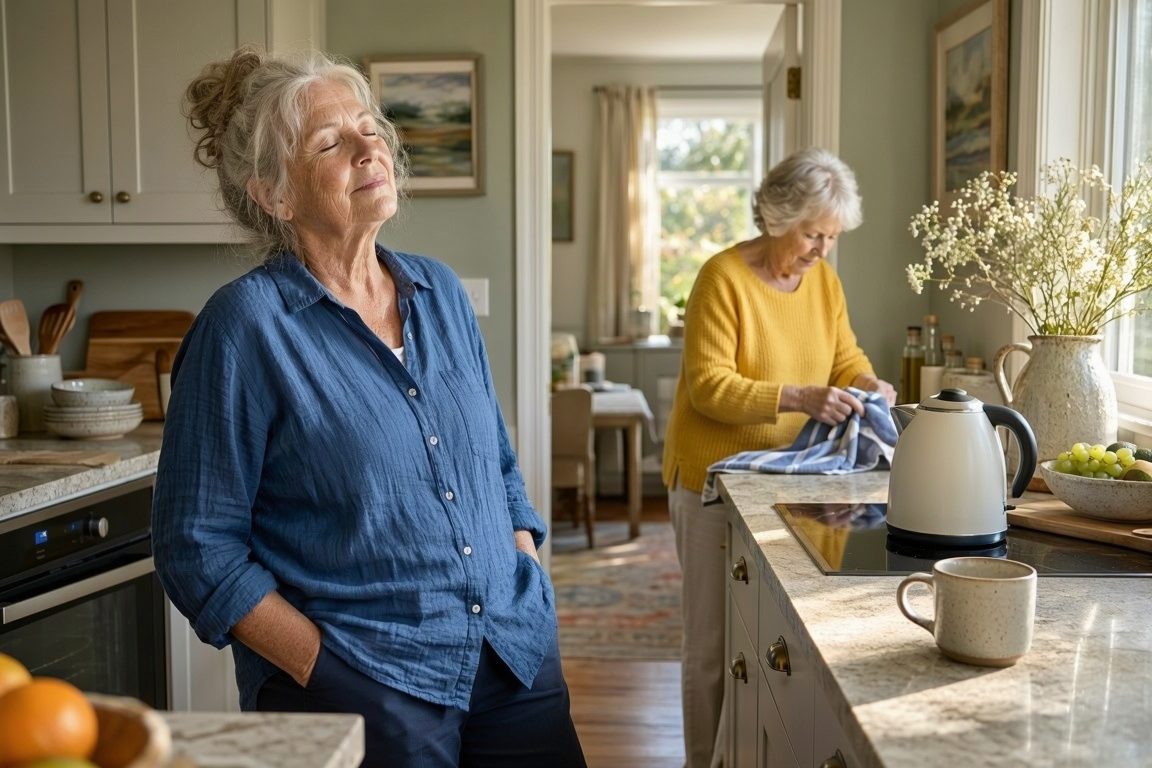
Self-care does not have to look like a magazine cover. For a caregiver, it might mean closing your eyes for 60 seconds while sitting in a chair, stepping outside to feel the sun on your face, or doing a simple stretch while your loved one is occupied. The key is to find what feels good to you in that moment and to do it without guilt. One expert suggests asking yourself, 'What is the next right step?' instead of worrying about the big picture. That question helps you stay focused on what is immediate and doable, rather than getting overwhelmed by everything you think you should be doing.
Practical tools
6
The 60-Second Reset Script
When you have only one minute, say these words to yourself silently or aloud: 'I am safe right now. I can take one breath. I am doing enough.' Then take one slow inhale for four counts, hold for four counts, exhale for four counts. Repeat once. This script is a quick way to interrupt the stress cycle and ground yourself.
The 'Next Right Step' Question Card
Write the question 'What is the next right step?' on a sticky note and place it where you will see it often, on the fridge, your bathroom mirror, or near your caregiving station. When you feel overwhelmed, read it and answer aloud or in your head. This tool helps you focus on one small action instead of the whole mountain of tasks.
Five-Minute Writing Prompt List
Keep a small notebook or a note on your phone with these prompts: 'I am...', 'I wonder...', 'I miss...', 'I worry...', 'I dream...', 'I fear...'. When you have five minutes, pick one prompt and write whatever comes to mind without editing. This is a way to process emotions quickly and release tension.
The 'Micro Break Kit'
Assemble a small bag or box with a few items that help you reset quickly:
Keep it in a drawer near your caregiving area. When you have a moment, open the kit and use one item for 60 seconds.
Chair Yoga Sequence (Under 5 Minutes)
While seated, do these three moves:
This sequence can be done while your loved one is nearby.
Nature Sound App or Timer
Use a free app like Insight Timer or a simple timer on your phone. Set it for two minutes, close your eyes, and listen to a nature sound like rain, ocean waves, or birdsong. The sound itself is regulating and can help lower your heart rate quickly.
Different situations
For early-stage dementia (mild cognitive impairment)
Your loved one may still be independent for short periods. Use those windows intentionally. For example, while they read a book or watch a show, take your five-minute break without guilt. You can also invite them to join you in a short breathing exercise or a walk outside, turning it into a shared micro break. This can reduce your guilt and help both of you.
For middle-stage dementia (moderate cognitive decline)
Your loved one may need more supervision, making micro breaks harder. Use their rest times or when a family member or paid caregiver is present. If you are alone, try micro breaks that keep you in the same room, like closing your eyes for 60 seconds while they are occupied with a simple activity (folding towels, looking at a photo album). Chair yoga or deep breathing can be done while sitting nearby.
For late-stage dementia (severe cognitive decline)
Your loved one may be bedbound or require constant care. Micro breaks may need to be even shorter, 30 to 60 seconds. Use moments when they are resting or when a helper is present. Focus on quick resets like a single deep breath or a sip of water. Ask for respite care so you can have longer breaks, but in the meantime, every second counts.
For Lewy body dementia or Parkinson's disease dementia
These conditions often involve fluctuations in alertness and movement issues. Your loved one may have good and bad hours. Use the good hours to take a micro break while they are more independent. During bad hours, your stress may be higher, so prioritize even shorter resets, like a 30-second breathing exercise while standing in the kitchen. Be extra gentle with yourself.
For spouse caregivers vs. adult child caregivers
Spouse caregivers often feel a deeper sense of duty and may struggle more with guilt. Remind yourself that your marriage includes your own needs. Adult child caregivers may have additional responsibilities like work or children. For them, micro breaks might need to be scheduled around other commitments, like during a commute (pull over safely) or while waiting for a child’s activity. Both roles benefit from habit stacking.
For the doctor
4
- If you feel persistent guilt or anxiety that interferes with taking any breaks, discuss this with your doctor or a therapist. They can help you develop strategies to manage these feelings.
- If you experience physical symptoms like chest pain, shortness of breath, or dizziness during stress, talk to your clinician before starting any new self-care routine, including breathing exercises.
- If you have a history of depression or anxiety, micro breaks may help but are not a substitute for professional treatment. Discuss your mental health with your doctor and consider therapy or support groups.
- If you are considering using any supplements or herbal products (like lavender or chamomile) for relaxation, check with your clinician first, especially if you take other medications.