Step by step
What not to do
- Do not rush into care without preparation. Skipping the warm-up step, like not warming the room or gathering supplies, often leads to resistance and agitation.Instead, invest a few minutes in preparation to set the stage for cooperation (Dementia Caregivers Academy).
- Do not use harsh or sudden movements. Approaching quickly or touching without warning can startle the resident and trigger a fear response.Instead, move slowly, announce your presence, and use a calm, gentle touch (Alzheimer's Association).
- Do not argue or force compliance. If the resident says no or becomes upset, pushing through will only escalate the situation.Instead, pause, validate their feelings ('I see you're not ready right now'), and try again later or with a different approach (Dementia With Grace).
- Do not leave the resident unattended during care. Even a short absence can increase anxiety and make them feel abandoned. Always have everything you need within reach so you can stay present (Dementia Caregivers Academy).
- Do not ignore signs of pain or discomfort. Grimacing, guarding a body part, or sudden agitation may indicate pain. Discuss with the clinician about using a pain assessment tool or trying a scheduled analgesic, as some studies show that treating pain presumptively can reduce agitation (NW GWEC).
- Do not assume the same approach works every time. Needs and preferences change daily. What worked yesterday may not work today. Stay flexible and observe the resident's cues to adapt your approach (Teepa Snow's Positive Approach to Care).
Key points
- Behaviors are communication: agitation, hitting, or refusal often signal an unmet need like cold, pain, hunger, or fear.
- Preparation is key: warm the environment, gather supplies, and use calming music and lighting before starting any care task.
- Greet before you treat: always connect with the resident personally before initiating care.
- Invite participation: ask for help with small tasks to give the resident a sense of control and purpose.
- Check for other needs first: before bathing or dressing, ensure the resident is not hungry, thirsty, or in pain.
- Introduce new caregivers gradually: allow time for trust to build before hands-on care begins.
- Stay flexible: what works today may not work tomorrow; observe and adapt.
Videos
 What Every Dementia Caregiver Needs to Know About BathingThis video demonstrates the step-by-step process of preparing the environment and using warmth to make bathing a positive experience.
 34. Introduce and Integrate a Caregiver: Six Essential Tips / Alzheimer’s and Other DementiasThis video provides practical tips for introducing a new caregiver to a person with dementia, which is crucial for building trust and meeting unmet needs.
 Should You Force a Loved One with Dementia to Bathe?This video explores the ethical and practical reasons to avoid force and instead use warmth and understanding to address unmet needs.
 From Challenging 'Behaviors', to Challenging 'Situations'This video reframes behaviors as responses to unmet needs and offers a compassionate approach to care.
2 more videos
 Management of Agitation in DementiaThis video covers medical and non-medical strategies for managing agitation, including addressing unmet needs with warmth.
 Uniting for Better Dementia Care = Seni + Dementia LiveThis video highlights the importance of empathy and dignity in care, and how training can help caregivers recognize subtle cues of unmet needs.
Background
Why Unmet Needs Lead to Challenging Behaviors
When a person with dementia cannot articulate their needs, whether due to cognitive decline, pain, or sensory loss, they often express distress through behaviors like agitation, hitting, or refusing care. This is not intentional defiance; it is a form of communication. As one expert explains, 'behaviors are because of an unmet need' (Dementia With Grace). Common unmet needs include being cold, hungry, thirsty, in pain, needing to use the bathroom, or feeling frightened or bored. In a long-term care or memory care setting, the environment itself can trigger these needs: harsh lighting, echoing sounds, or a cold room can all cause discomfort that the resident cannot name (NW GWEC).
The Role of Warmth in Meeting Needs
Warmth is a powerful tool to address unmet needs before they escalate. This includes physical warmth, like warming the bathroom before a bath, and emotional warmth, such as using a calm voice, gentle touch, and reassuring words. As Dr. Camille Sinclair notes, 'when your loved one starts to undress, the environment is warm. It doesn't feel like that cold sensation sort of hitting their skin' (Dr. Camille Sinclair). Creating a warm, inviting space also means reducing harsh sounds and lighting. For example, playing soft music can 'mute out that hard echo' of a bathroom, and using warm lighting can make the space feel safer. This preparation helps the resident feel safe and reduces the likelihood of a fight-or-flight response.
How Preparation Prevents Resistance
Many caregivers skip the preparation step and wonder why care activities go wrong. The magic happens before you even mention the task. As the Dementia Caregivers Academy states, 'the magic really happens before you even mention the word bath.' This means gathering all supplies beforehand, warming the room, and ensuring everything is within reach so you never have to leave the resident unattended. When you prepare the environment and yourself, you signal safety and predictability, which helps the resident's brain shift from fear to cooperation. This approach is not about forcing compliance but about 'creating safety, peace, and comfort' (Dementia Caregivers Academy).
Practical tools
6
Warmth Preparation Checklist
Before any care task, use this checklist:
This checklist can be posted in the care area as a reminder.
The 'Greet Before Treat' Script
Use this exact sequence: (1) Approach slowly, smile, and make eye contact. (2) Say the resident's name: 'Good morning, [Name].' (3) Make a personal comment: 'I love that sweater you're wearing.' (4) Ask a yes/no question: 'Are you ready to get up?' (5) If yes, invite participation: 'Can you help me pull the covers down?' This builds connection before any care task (Teepa Snow's Positive Approach to Care).
The 'Help Me' Invitation
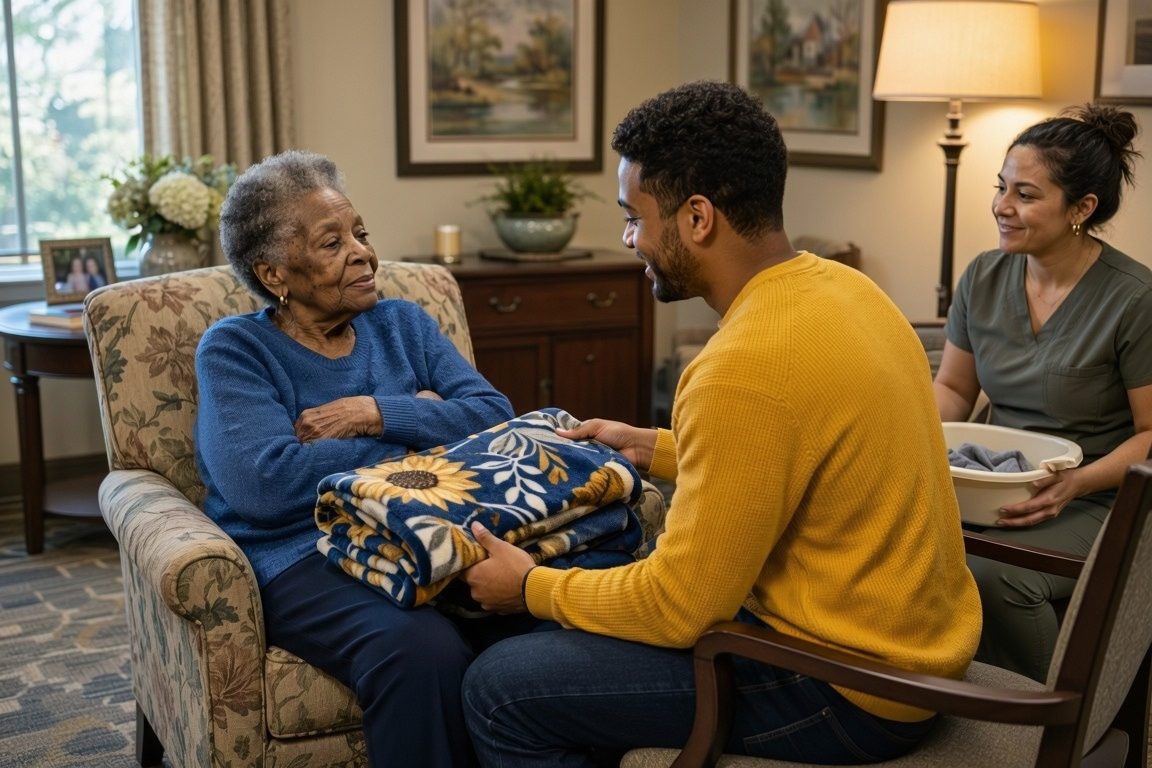
Instead of telling the resident what to do, ask for their help with a small, manageable task. For example, 'I need your help folding these towels. Can you hold this corner?' This gives them a sense of purpose and control, reducing feelings of helplessness. This technique works well for activities like folding laundry, sorting socks, or even 'helping' with care tasks (MelissaBPhD).
Portable Warmth Kit
Assemble a small basket or bin with:
Keep this kit in the resident's room or bathroom so it's ready to use at any time.
Unmet Needs Quick Check Card
Create a laminated card with a simple list: 'Check:
' Before starting care, run through this list quickly. If you identify a need, address it first. This helps you shift from 'task mode' to 'needs-based care' (NW GWEC; Alzheimer's Association).
Caregiver Introduction Script
When introducing a new caregiver (staff or family), use this approach:
Different situations
In a long-term care facility or memory care unit
Coordinate with the care team. Share your warmth preparation checklist with nurses and aides. Ask them to use the same approach consistently. If the resident has a favorite staff member, ask that person to be present during difficult care tasks. Also, ensure the facility's environment supports warmth, ask about adjustable lighting and temperature controls in resident rooms and bathrooms.
For a resident with Lewy body dementia
Be extra cautious with temperature and lighting. Lewy body dementia often involves sensitivity to heat and visual hallucinations. Keep the room warm but not hot, and use very soft, indirect lighting. Avoid music that might be overstimulating; try nature sounds or silence. Also, be aware that these residents may have sudden changes in alertness, so be prepared to pause and try again later.
For a resident in late-stage dementia
Focus on non-verbal cues. The resident may not respond to words, so use gentle touch, a warm blanket, and a calm presence. Keep care sessions very short, sometimes just a few minutes. Use the 'unmet needs quick check' to address pain, hunger, or thirst first. If the resident is non-verbal, watch for facial expressions, body tension, or changes in breathing (James L. West Center for Dementia Care).
For a family caregiver visiting a loved one in a facility
You are an advocate and a bridge. Share your knowledge of the resident's history, preferences, and routines with the staff. Ask to be present during care if it helps the resident feel safe. Use the 'greet before treat' approach yourself when you visit, and model it for staff. Also, take care of your own needs, caregiver burnout is real, and you need breaks too (AAFP; The Caregiver's Journey).
When the resident is a spouse vs. an adult child
Spouses may have a deeper emotional history and may feel more comfortable with intimate care, but they may also be more likely to feel guilt or frustration. Adult children may need to establish new boundaries and may benefit from coaching on how to be a 'caregiver' rather than a 'child.' In both cases, use the same warmth principles, but tailor your language: for a spouse, say 'Let me help you, honey'; for a parent, say 'Mom, let me help you get comfortable.'
For the doctor
4
- If the resident shows signs of pain (grimacing, guarding, agitation) that do not resolve with warmth and comfort measures, discuss with the clinician about using a pain assessment tool or a trial of scheduled analgesics.
- If the resident has a history of falls or is on medications that affect balance, ask the clinician about safe positioning during care activities (e.g., using a shower chair, grab bars).
- If the resident's agitation is severe or persistent despite using these strategies, discuss with the clinician about possible underlying medical causes (e.g., infection, medication side effect, delirium).
- If you are considering using a space heater, ask the facility's maintenance or nursing team about approved, safe devices to prevent fire risk.