
Step by step
What not to do
- Do not argue or try to use logic. Saying 'You don't need that old napkin' or 'You already have ten of those' will only upset the person.Instead, validate their feelings and redirect. Say, 'I see you like that napkin. Let's put it in your special box.'
- Do not throw things away without the person knowing, if it will cause them distress. If they are attached to an item, removing it secretly can lead to anxiety, suspicion, and more hiding behavior.Instead, involve them or wait until they are distracted.
- Do not clean up the clutter all at once. A massive cleanup can overwhelm the person and make them feel violated.Instead, work slowly, bit by bit, and focus on safety first. As one source warns, 'don't clean it up and think it's going to go away because it doesn't.'
- Do not accuse the person of being a 'hoarder' or label them negatively. This behavior is a symptom of dementia, not a character flaw. Using labels can make you feel frustrated and the person feel ashamed.Instead, think of it as a need for comfort or control.
- Do not leave dangerous items within reach. If the person collects scissors or Tide Pods, it is a safety risk. Lock these away immediately. Do not assume they will not use them. As one source notes, 'we've locked up all the poisons and possibly dangerous stuff so they're not collecting like Tide Pods.'
- Do not take accusations personally. If the person says you stole their wallet, remember it is the disease talking, not them. Respond with empathy and help them look. As one source advises, 'try to take it to not take it personally when the person falsely accuses you.'
Key points
- Collecting and hiding objects is a common dementia behavior driven by a need for comfort, control, or security, not by stubbornness.
- Focus on safety first: lock away dangerous items and check for spoiled food every night.
- Create a safe hiding spot and rummage boxes to give the person a place to put their items and a way to satisfy their need to search.
- Keep duplicates of important items like keys and glasses to reduce stress when things get lost.
- Never argue or use long explanations; instead, validate feelings and redirect to a different activity.
- Work slowly and involve the person when possible; a sudden cleanup can cause more anxiety and hiding.
Videos
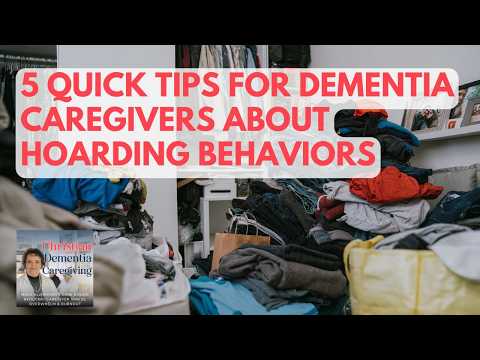 5 Quick Tips for Dementia Caregivers About Hoarding BehaviorsOffers practical, bite-sized strategies for handling collecting and hoarding behaviors in dementia.
 Wandering, Rummaging, & Hoarding, Oh My!Explains the link between wandering, rummaging, and collecting, and how to manage them together.
 Hoarding Behaviors Insights and InnovationsProvides deeper insights into why hoarding behaviors happen and innovative ways to respond.
 5 Strategies to Handle Paranoia and False Accusations in DementiaHelps you respond calmly when the person accuses you of stealing or hiding their things.
2 more videos
 Hoarding Disorder in Geriatric PatientsDistinguishes between dementia-related collecting and clinical hoarding disorder, with geriatric-specific advice.
 How to prevent your loved one with dementia from misplacing all the important thingsGives step-by-step tips for keeping track of important items like keys, wallets, and glasses.
Background
What Is Happening and Why
In the amber state, a person may begin collecting or hiding objects in ways that seem unusual or even risky. This is not the same as hoarding disorder, which is a separate mental health condition. Instead, it is a common dementia-related behavior driven by changes in the brain. The person may feel anxious, lost, or out of control, and collecting or hiding items gives them a sense of comfort, security, or purpose. They might hide things because they fear losing them, or they may collect items that remind them of their past or provide a familiar routine. For example, a man who always carried a wallet might now hide it repeatedly because it feels strange not to have it on him. Or a woman might collect tissues or small stones because the act of gathering soothes her.
The Difference Between Collecting, Hoarding, and Clutter
It helps to know the difference. Collecting means gathering items that are part of a larger whole, like stamps or teacups, and displaying them in a way that does not block living spaces. Hoarding involves keeping too many items, often without a clear purpose, to the point where rooms cannot be used. Clutter is simply a messy home that can be tidied. In dementia, the behavior often falls between collecting and clutter, but it can become unsafe if the person hides food that spoils, or collects items like scissors or Tide Pods. The key is to focus on safety, not on forcing the person to stop. As one source notes, 'if it's a person hoarding food we want to clean out the fridge and make sure the food is not spoiled but really focus on fire safety and spoiled food.'
Why Arguing or Correcting Backfires
When you try to reason with the person or tell them they are wrong, it often leads to more anxiety, agitation, or even accusations. The person's brain cannot process long explanations or logic. They may feel attacked or misunderstood, which makes them cling even tighter to their objects. Instead, the goal is to validate their feelings and redirect their attention. As one expert explains, 'keep those responses short simple and sweet because long explanations or reasoning is going to overwhelm them and cause them more agitation and more confusion.'
Practical tools
6
The 'Safe Spot' Shoebox
Rummage Boxes
Prepare two or three boxes or baskets filled with safe, interesting items. Ideas:
Place them in areas where the person wanders. Rotate the items every few days to keep the activity engaging.
The Evening Safety Check
Duplicate Essentials Kit
Buy two or three sets of inexpensive items:
Keep one set in a locked drawer and let the person have the other. When they hide one, you have a backup.
Short, Calm Phrases to Say
Write down these phrases and practice them: 'I see you found something. Let's put it in your safe box.' 'I'm sorry you're worried. Let's look together.' 'That's a nice napkin. Would you like to fold it with me?' 'I put your keys in the drawer for safekeeping. Let me get them for you.' Keep your voice soft and your words simple.
Locked Cabinet for Danger Items
Different situations
For a person with Lewy body dementia
People with Lewy body dementia may have more visual hallucinations or paranoia. They might hide objects because they think someone is trying to steal them. Use extra validation and avoid arguing. Keep the environment very calm and predictable. Consider using night lights to reduce shadows that might trigger fear.
For a late-stage person who cannot communicate
Focus entirely on safety. Check for hidden objects every few hours. Remove all dangerous items from reach. Use rummage boxes with very soft, safe items like fabric squares or stuffed animals. Do not try to involve them in decisions; just quietly manage the environment.
For a spouse caregiver vs. an adult child
A spouse may feel more personally hurt by accusations or the loss of shared items. An adult child may have more emotional distance but less authority. Both should remember the behavior is not personal. Spouses can use phrases like 'Honey, let me help you with that.' Adult children can say 'Dad, I'm here to help. Let's look together.'
For a person living in a facility
Work with staff to create a safe hiding spot in the person's room. Provide rummage boxes that staff can refresh. Label drawers and cabinets with pictures. Ask staff to do evening safety checks. If the person hides food, request that staff offer small, non-perishable snacks throughout the day.
For a person on Medicaid or with limited resources
Use items you already have at home for rummage boxes: old keys, fabric scraps, plastic containers. Duplicate essentials can be bought at thrift stores or dollar stores. Locked cabinets can be made with simple childproof latches. Focus on low-cost, high-safety solutions.
For the doctor
4
- If the person is collecting or hiding items that could be dangerous, like medications, sharp objects, or cleaning supplies, ask your doctor or an occupational therapist about safe storage solutions.
- If the person's collecting behavior is causing significant distress, aggression, or safety risks, discuss with a clinician whether a medication adjustment or a referral to a dementia specialist might help.
- If you suspect the person has a separate hoarding disorder (not just dementia-related collecting), ask for a referral to a mental health professional who specializes in hoarding behaviors.
- If the person is hiding food and you are concerned about nutrition or weight loss, talk to a dietitian or doctor about safe, non-perishable snacks that can be left out.