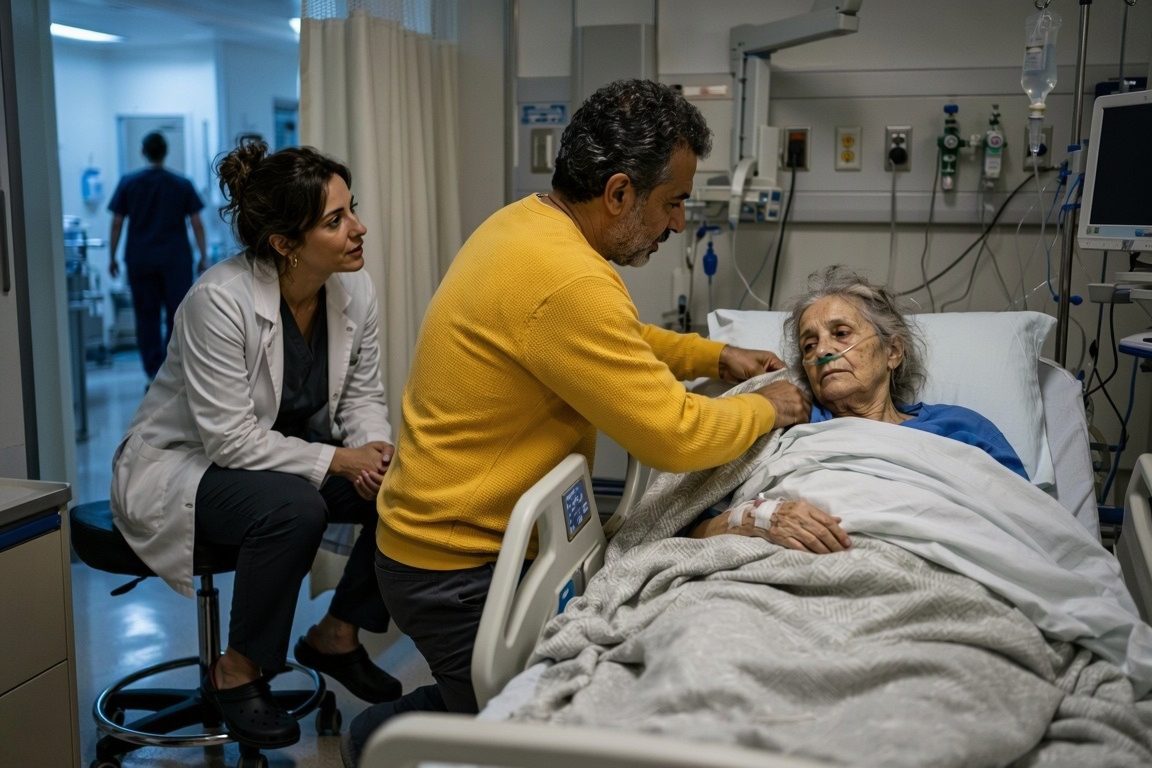
Step by step
What not to do
- Do not assume more treatment equals better care; in advanced dementia, aggressive interventions like feeding tubes, IV antibiotics, or CPR cause pain and suffering without improving survival.
- Do not wait until a crisis to make decisions; start end-of-life conversations now to avoid rushed ER choices that may not reflect your loved one's values.
- Do not use antipsychotics first for agitation; they carry risks of mortality, stroke, and cognitive decline. Use non-drug approaches (reduce noise, maintain routine, address pain) first and only use under close supervision as a last resort.
- Do not let guilt drive decisions; choosing comfort over futile suffering is an act of love, not giving up.
- Do not assume your loved one is not in pain because they cannot tell you; watch for moaning, grimacing, resisting care, or new agitation. Ask the doctor about a formal pain assessment and trial of scheduled pain medication.
Key points
- Dementia is a terminal illness; aggressive treatments in late stages often cause more harm than good.
- Shift your goal from prolonging life to maximizing comfort and dignity.
- Complete advance directives early, they are your loved one's voice when they can no longer speak.
- Use the 'surprise question' to guide decisions: 'Would I be surprised if they died in six months?'
- Hospice care is appropriate for advanced dementia and provides invaluable support for both patient and family.
- You are not giving up, you are choosing love and compassion over futile suffering.
Videos
 Home Health vs Palliative Care vs Hospice for Dementia Patients with Candance RamosThis video clearly explains the differences between these three types of care, helping you understand when to transition from home health to palliative to hospice as dementia progresses.
 Quality of life in end stage dementiaThis video focuses on what quality of life means in late-stage dementia and how to prioritize comfort and connection over medical interventions.
 Putting someone with dementia through medical screeningsThis video helps you decide whether to pursue routine screenings (like mammograms or colonoscopies) for someone with dementia, which is directly relevant to avoiding unnecessary aggressive treatments.
Background
Why Aggressive Treatments Often Don't Help in Advanced Dementia
When a person reaches the late stage of dementia, their brain has been progressively damaged to the point where they can no longer walk, talk, or care for themselves. At this point, dementia is a terminal illness, there is no cure, and no treatment can reverse the underlying disease. Research has shown that many medical interventions, such as feeding tubes, antibiotics for recurrent infections, or intensive hospital care, produce either no benefit or actually cause harm in people with advanced dementia. For example, a feeding tube does not prevent aspiration pneumonia or improve comfort, and it can cause agitation and infections. Similarly, aggressive treatments like CPR or mechanical ventilation are unlikely to restore quality of life and can cause pain and distress.
The Goal Shifts from Cure to Comfort
Palliative care, which focuses on relieving pain, managing symptoms, and supporting emotional and spiritual well-being, becomes the most appropriate approach in advanced dementia. This is not giving up; it is actively choosing to prioritize your loved one's comfort and dignity. Studies show that families and healthcare professionals strongly favor comfort care for end-stage dementia. The key is to recognize that dementia is a fatal disease, and that aggressive treatments often prolong suffering without offering meaningful recovery. By shifting your mindset from 'fighting' to 'caring,' you can make decisions that align with your loved one's values and reduce your own stress.
The Role of Advance Directives and Surrogate Decision-Making
Ideally, the person with dementia completed advance directives while they still had capacity, specifying their wishes about life-sustaining treatments. If they did not, you must make decisions based on what you believe they would want, not what you want for them. This is called 'substituted judgment.' It is crucial to have a designated healthcare proxy (power of attorney for healthcare) who can legally make decisions. Without this, family disagreements can lead to unwanted treatments or delays in comfort care. Start these conversations early, even in the early or middle stages, to avoid crisis decisions later.
Practical tools
4
Surprise Question Script
When facing a treatment decision, ask the doctor: 'If my loved one developed pneumonia or had a cardiac arrest, would you be surprised if they died within six months?' If no, aggressive treatment is likely futile. Then add: 'Given dementia is terminal, we want comfort, not cure.'
Comfort Care Checklist
One-page document listing:
Post in the bedroom or facility room.
Phrases to Push Back on Unwanted Treatments
To a doctor: 'I understand you want to help, but how will this treatment improve my loved one's comfort or quality of life at this stage? We are prioritizing comfort over extending life.' To a family member: 'I know you love them: I am choosing comfort and dignity because that is what they would have wanted.'
POLST (Portable Medical Orders) Form
A medical order signed by the doctor that travels with your loved one and is honored across care settings, including by EMTs and hospital staff. Unlike an advance directive, a POLST turns wishes into actionable orders. Ask the doctor or facility social worker.
Different situations
Early-stage dementia (still able to communicate)
This is the best time to complete advance directives and have conversations about values. Use the DVPT tool to ask about specific scenarios: 'If you had a stroke and could not eat, would you want a feeding tube?' 'If you developed pneumonia, would you want antibiotics?' Document everything. Also, consider a POLST (Physician Orders for Life-Sustaining Treatment) form, which is a medical order that travels with the person.
Middle-stage dementia (moderate cognitive decline, some ADL dependence)
You can still have conversations, but they may be brief. Focus on quality of life now: 'What activities bring you joy?' 'Do you want to avoid hospital stays?' Begin to introduce the idea of comfort care. Also, consider enrolling in palliative care now, which can help manage symptoms like pain, anxiety, and sleep problems, and can ease the transition to hospice later.
Late-stage dementia (bedbound, unable to speak, total care)
Aggressive treatments are almost never appropriate. Your role is to be the guardian of comfort. Ensure a DNR/DNI is in place. Stop all non-essential medications (e.g., cholesterol drugs, blood pressure meds that cause dizziness). Focus on pain management, mouth care, gentle touch, and familiar music. If the person is in a facility, visit often and advocate for a calm, quiet environment.
Caregiver is an adult child vs. spouse
Adult children may feel guilt or pressure from siblings. Hold a family meeting with a neutral facilitator (social worker or clergy) to air differences. Spouses may have more intimate knowledge of the person's wishes but may also be more emotionally overwhelmed. Both roles need respite and support. If you are an adult child, remind yourself: 'I am honoring my parent's wishes, not my own.' If you are a spouse, say: 'I promised to love and honor, and now that means letting go gently.'
Care setting: home vs. memory care facility
At home, you have more control over the environment and can implement comfort measures like music, aromatherapy, and 24/7 presence. However, you need a strong support system (hospice, home health aides). In a facility, you must advocate strongly with staff to ensure the comfort care plan is followed. Visit often, post the plan visibly, and build a relationship with the charge nurse. Ask: 'What is your policy on hospital transfers? Can we have a DNR on file?'
Common questions
5
What ethical principles should guide decisions for a person with late-stage dementia?
Focus on the ethical principles of beneficence (doing good) and non-maleficence (avoiding harm), which means prioritizing your loved one's comfort and dignity over aggressive treatments that may cause suffering.
Should I force my loved one to get up if they want to rest?
No, let them rest; forcing activity when they are exhausted can cause agitation and distress, while honoring their wish to rest supports their comfort and peace.
What are the trade-offs of feeding tubes and other life-prolonging interventions?
Feeding tubes in advanced dementia often do not prolong life and can cause infections, pain, or aspiration pneumonia, so it is usually kinder to focus on hand-feeding for pleasure and comfort.
What does it mean to second-guess a parent's care decisions and why is it problematic?
Second-guessing means questioning care decisions out of guilt or fear, which can create conflict and delay compassionate care; instead, trust the advance directives and medical advice that focus on your loved one's well-being.
How do I provide comfort-focused care for a person with dementia at the end of life?
Provide comfort by managing pain, offering favorite foods or fluids by hand, keeping them clean and calm, and involving hospice to support both of you with dignity and peace.
For the doctor
5
- Ask the doctor: 'What are the specific risks and benefits of continuing my loved one's current medications (e.g., cholinesterase inhibitors, antipsychotics) at this stage? Should any be discontinued?'
- Ask the doctor: 'If my loved one develops an infection like pneumonia or a urinary tract infection, what is the expected outcome with antibiotics versus comfort care alone? When would you recommend against antibiotics?'
- Ask the doctor: 'Is my loved one eligible for hospice under Medicare guidelines? If not, what criteria need to be met, and can we start palliative care in the meantime?'
- Ask the doctor: 'What is the best way to manage pain and agitation without using medications that might cause sedation or increase fall risk? Are there non-drug approaches we should try first?'
- Ask the doctor: 'If my loved one stops eating or drinking, what is the natural course? How can we keep them comfortable without a feeding tube? What are the signs of dehydration versus comfort?'