Step by step
What not to do
- Do not keep pushing when you see frustration: Continuing past signs of overwhelm increases agitation and the sense of failure, stop immediately and redirect.
- Do not say 'You used to be able to do this': It is hurtful and confusing. Stay in the present: 'I love doing this with you. Let's do it together.'
- Do not make stopping feel like a punishment: Avoid 'That's enough' or 'You can't do that anymore.' Frame it as a positive choice: 'We've done a great job. Now let's do something else fun.'
- Do not take over the activity completely: If you finish the task yourself, they may feel useless. Keep them involved in a simpler role, handing you items or watching and commenting.
- Do not expect the same activity to work every time: Dementia is unpredictable. Stay flexible, keep several options ready, and don't take it personally if they reject an activity.
Key points
- Watch for signs of frustration, overwhelm, or freezing, these are your cues to stop the activity immediately.
- Use a warm, positive phrase to end the activity, not a criticism or command.
- Always end on a high note, while the person is still feeling good.
- Simplify activities rather than taking them away completely, keep the person involved at their current ability level.
- Have a backup activity ready for a smooth transition.
- Take care of yourself as a caregiver, you cannot support someone else if you are exhausted.
Videos
 How To Distract Someone With Alzheimer's? Episode 1This video offers practical techniques for gently redirecting a person with dementia when an activity needs to stop, using distraction in a kind and effective way.
 What Activities Are Good For Dementia Patients? Module 1This video helps you choose activities that match the person's current abilities, which is the foundation for knowing when to stop or modify an activity.
 Dementia Friendly Activities at Home: Part 1 of 3This video shows how to set up simple, dementia-friendly activities at home, including how to adapt them as the disease progresses.
 How to increase activity for someone with dementiaThis video provides strategies for keeping a person with dementia engaged without overwhelming them, including tips on when to stop and switch activities.
2 more videos
 What's Wrong with Grandpa? (Talking with Kids about Dementia and Alzheimer's Disease)If children are present, this video helps explain dementia in a way they can understand, which can reduce confusion when activities change or stop.
 How does someone die from DementiaThis video provides a compassionate overview of the end stages of dementia, which can help caregivers understand the long-term trajectory and the importance of focusing on quality of life now.
Background
Why stopping is so hard, for both of you
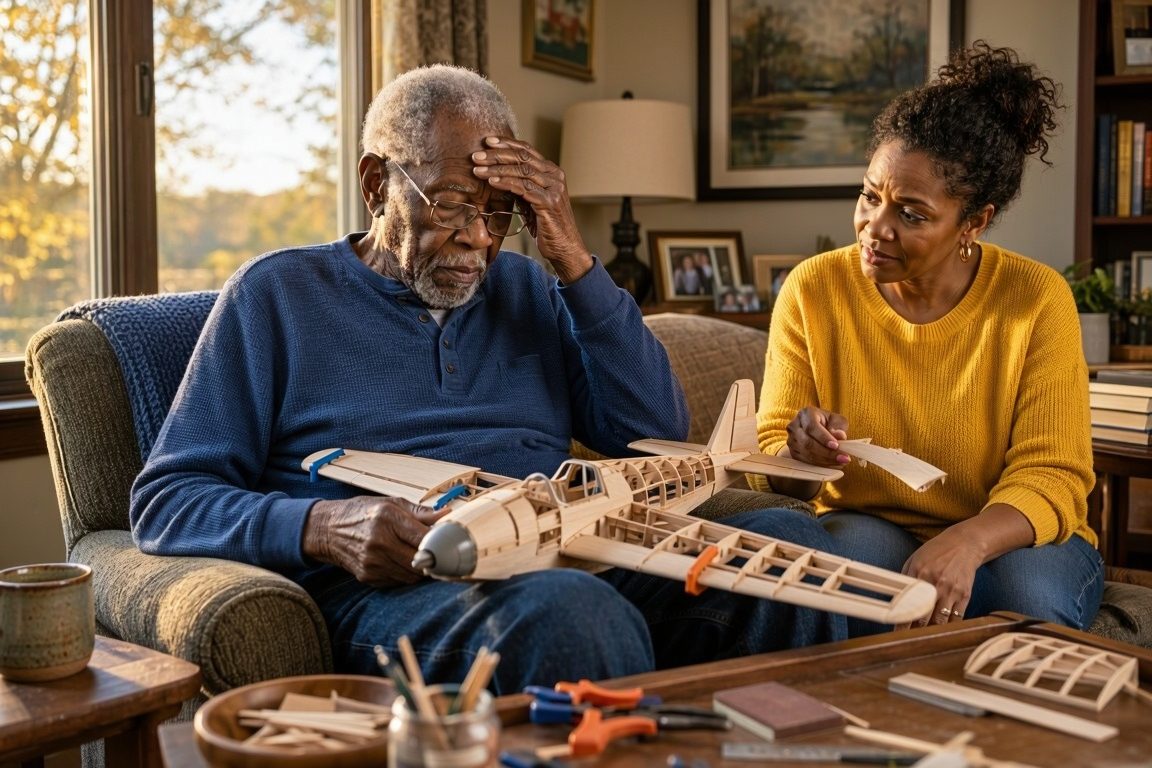
For the person living with dementia, a beloved activity is often tied to their identity, their history, and their sense of competence. When they begin to struggle, losing track of steps, feeling confused, or becoming frustrated , they may not have the insight or the words to say, 'I need a break.' Instead, they might push through stubbornly, become agitated, or simply freeze. As a caregiver, you may feel torn between wanting them to keep doing what they love and seeing that it is causing them distress. The truth is, continuing an activity past the point of frustration does not help anyone. It can lead to feelings of failure, anxiety, and even behavioral challenges like wandering or agitation. The person with dementia does not have to give up the activities they love, but those activities often need to be modified to match their current abilities.
The signals that say 'time to stop or change'
The most reliable guide is your own close observation of the person. Watch for these signs: they may become overwhelmed, frustrated, or 'freeze up', staring blankly at the task without moving. Their attention span may wane, or they might start making repetitive mistakes that they did not make a few minutes ago. Their frustration level may visibly increase: sighing, fidgeting, pushing materials away, or even verbal expressions like 'I can't do this anymore.' These are not signs of failure; they are signals from the brain that the task has become too difficult or too demanding. When you see these signs, it is time to end the activity immediately , not in an abrupt or punishing way, but with a gentle redirection. Remember, it is never about finishing the activity. It is about enjoying the time spent together.
The role of time perception and fatigue
People with dementia often lose their sense of time. Ten minutes can feel like two hours, and two hours can feel like ten minutes. This means that even a short activity can feel exhausting to them, especially if it requires concentration or following steps. Additionally, their energy and ability can vary greatly from day to day, and even from hour to hour. Something that worked beautifully yesterday may be impossible today. This is not a sign of 'getting worse' in a straight line; it is the nature of the disease. As a caregiver, you need to be flexible and ready to pivot. The best approach is to plan for short, successful sessions, 10 to 15 minutes at a time , and to stop while the person is still feeling good. Ending on a positive note builds confidence and makes the next attempt more likely to succeed.
Practical tools
4
The 'One More' Script
A short phrase to use when they want to keep going but are starting to struggle: 'Okay, let's do just one more, and then we'll put it away together. You're doing great.' Gives a clear limited endpoint, validates their effort, and makes the stop a shared decision.
The Transition Basket
A small tray or basket with a few simple sensory items
When stopping, say 'Let's put this away and see what is in our basket today.' Provides smooth positive redirection engaging hands and senses.
The 10-Minute Timer
A kitchen timer or large visual timer app set for 5–10 minutes before the activity. Say 'When the timer goes off, we'll take a break and have a snack.' The timer becomes the neutral signal to stop, so the ending does not feel like it is from you.
The Favorite Music Playlist
A pre-made playlist of songs from their younger years. When stopping, say 'Let's finish this and listen to your favorite song.' Familiar music is a soothing redirect that engages emotion and memory without demanding language or logic.
Different situations
Early-stage dementia (mild cognitive decline)
In early stages, the person may still be able to discuss their own limits. Have an open conversation: 'I notice you seem to get tired when we do this for a long time. How about we set a timer for 15 minutes and then take a break?' They may be able to help you identify when they are starting to struggle. You can also modify activities slightly, for example, if they loved golf, they may still be able to putt in the backyard with supervision, or watch golf tournaments on TV together.
Middle-stage dementia (moderate cognitive decline)
At this stage, the person will likely need more hands-on help and redirection. They may not be able to initiate activities on their own. Use the 'Together' approach, do the activity side-by-side. Simplify tasks to one or two steps. For example, if they loved cooking, they can stir a pre-measured bowl of ingredients while you do the rest. Watch closely for signs of frustration and stop earlier than you think you need to. End with a calming ritual like a cup of tea or a favorite song.
Spouse caregiver vs. adult child caregiver
A spouse may feel a deeper emotional loss when a shared activity ends, it can feel like losing a part of their marriage. It is important for the spouse to also find separate support, such as a caregiver support group or respite care. An adult child may feel guilt or a sense of role reversal. Both need to remember that stopping an activity is not giving up; it is adapting to the disease. Both should practice self-compassion and seek help from family, friends, or community services.
Lewy body dementia or Parkinson's dementia
In these types, the person may have fluctuating attention and physical symptoms like stiffness or tremors. Activities that require fine motor skills (like knitting or drawing) may become frustrating quickly. Stop at the first sign of physical struggle. Also, be aware of visual hallucinations or delusions, if the person seems confused or scared, stop the activity immediately and move to a calm, familiar setting. Use music or gentle movement (like swaying to a song) as a soothing alternative.
When the person lives in a care facility
In a facility, the caregiver may not be present during activities. Communicate with staff about the person's favorite activities and the signs that mean 'time to stop.' Ask staff to use the same gentle phrases and redirection techniques you use at home. Also, ensure the person has access to simple, sensory activities they can do alone, like a fidget blanket or a photo book, so they can stop and start on their own terms.
For the doctor
4
- If the person becomes severely agitated, aggressive, or withdrawn when an activity is stopped, discuss this with their doctor. There may be underlying pain, depression, or a medication side effect that needs attention.
- If the person is on medications that affect mood or cognition (like antipsychotics or antidepressants), ask the doctor or pharmacist how these might influence their ability to engage in activities or handle transitions.
- If the person has a history of falls or physical frailty, ask an occupational therapist for a home safety evaluation. They can recommend strategies to make activities safer and help you know when an activity is no longer safe to continue.
- If you are feeling overwhelmed or burned out as a caregiver, talk to your doctor or a social worker about respite care, counseling, or support groups. You do not have to do this alone.