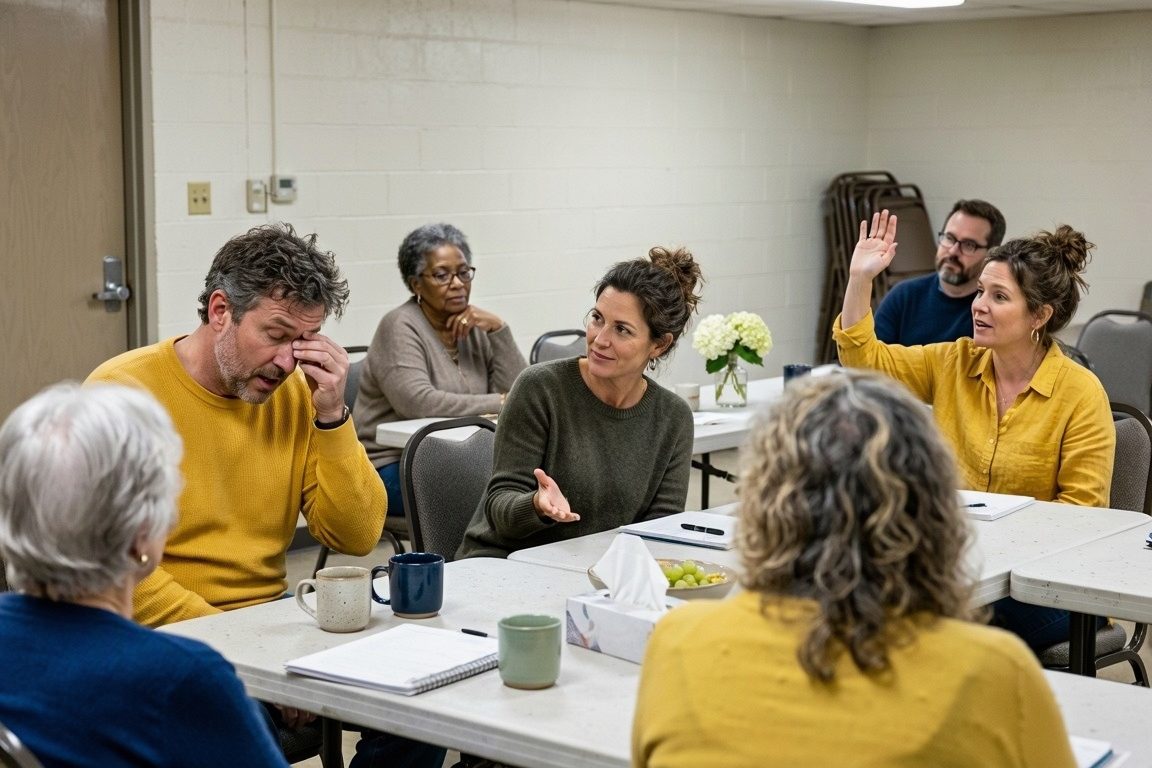
Step by step
What not to do
- Do not let the group become a 'venting-only' session without any forward movement. While it is important to express feelings, if every meeting is just a complaint circle, caregivers will leave feeling more hopeless.Instead, after listening, ask: 'What is one small step you could take tomorrow to make this easier?'
- Do not allow members to give unsolicited advice, especially if it sounds like 'You should just...' This can make the person feel judged or inadequate.Instead, teach the group to say, 'Would you like to hear what worked for me in a similar situation?' before offering suggestions.
- Do not compare struggles or one-up each other. Saying 'Oh, that's nothing, wait until they start wandering' invalidates the other person's pain. Gently redirect by saying, 'Every stage has its own challenges. Let's focus on what is hard for you right now.'
- Do not ignore the emotional needs of the facilitator. If you are a staff member running the group, make sure you have your own support or debrief after the meeting. Compassion fatigue is real, and a burned-out facilitator cannot keep the group positive.
- Do not assume that all caregivers want to talk. Some people come just to listen and learn, and that is okay. Respect their silence and do not pressure them to share. As one caregiver said, 'Some days I talk, some days I listen, but I learn so much from just listening.'
Key points
- A positive support group balances emotional support with practical, actionable tools, caregivers should leave with at least one new idea to try.
- Structure is your friend: use a consistent agenda (check-in, win of the week, educational topic, open discussion, closing) to prevent aimless venting.
- Facilitators must actively guide the conversation, validate feelings, and gently redirect negativity toward problem-solving.
- Online groups can be just as effective as in-person ones, but they require clear rules and active moderation to stay positive.
- Personalize the group's focus based on the disease type, caregiver role (spouse vs. adult child), and stage of dementia to meet everyone's needs.
- Self-care is not selfish, end every meeting with a commitment to one small act of self-care for the coming week.
Videos
 How Can Local Dementia Support Groups Prevent Caregiver Burnout? - Dementia Help HubThis video explains the core benefits of support groups, reducing isolation, sharing practical advice, and preventing burnout, which is the foundation for keeping a group positive.
 The Importance of Caregiver Support GroupsThis video emphasizes the unique understanding that only fellow caregivers can offer, which is the emotional glue that makes a group effective.
 Who Should Be Part of Your Caregiver Support Circle?This video helps caregivers think beyond the support group itself and build a broader team, which prevents the group from becoming the only source of support.
 LIVE Dementia With Grace Caregiver SUPPORT Group 3-28-2019This is a real example of a support group in action, showing how a facilitator can keep the conversation compassionate and solution-focused.
2 more videos
 Ambiguous Loss in a Time of Pandemic on Alzheimer’s Speaks RadioThis video addresses the unique grief caregivers feel, which often surfaces in support groups. Understanding ambiguous loss helps facilitators validate deep emotions without letting the group sink into despair.
 Reducing Caregiver Stress & Compassion FatigueThis video offers stress-reduction techniques that can be incorporated into group meetings, like breathing exercises or mindfulness, to keep the tone positive and restorative.
Background
Why Support Groups Can Feel Negative or Unhelpful
When caregivers are exhausted and overwhelmed, it is easy for a support group to turn into a 'misery loves company' session. Without structure, conversations can spiral into a loop of complaints, fear, and hopelessness, especially when members are at different stages of the disease. One caregiver might be dealing with early-stage confusion, while another is facing late-stage incontinence and aggression. If the group doesn't have a skilled facilitator or clear norms, the person in the early stage may leave feeling terrified, not supported. Research shows that peer groups with the same condition (like dementia caregiving) are very functional, but they need intentional guidance to stay constructive. The key is to balance emotional support with practical problem-solving, so no one leaves feeling worse than when they arrived.
The Power of Shared Experience and Practical Tools
The greatest gift of a support group is the commonality of experience. Friends and family who haven't been caregivers often cannot understand why you can't just 'leave for an hour' or why you feel so isolated. In a support group, you are surrounded by people who get it. But the real magic happens when the group moves beyond empathy into action. Members who share specific phrases to use during a difficult moment, or who describe a successful routine that calmed their loved one, give others a tangible tool to try. As one caregiver described, learning 'some things to say' during role-playing made her feel more confident and able to step back and recognize a situation. A positive group is one where you leave with at least one new idea, a phrase to try, a resource to call, or a different way to see your situation.
The Role of the Facilitator and Group Norms
For a support group to stay positive and effective, the facilitator (whether a staff member or a trained volunteer) must actively guide the conversation. This does not mean lecturing; it means gently steering the group away from pure venting and toward problem-solving. A facilitator can ask, 'What has helped you in a similar situation?' or 'What is one small win you had this week?' They can also set ground rules: no interrupting, no giving unsolicited advice unless asked, and no one-upping each other's struggles. When a member shares a heartbreaking story, the facilitator can validate the feeling and then ask, 'What do you need most right now, a listening ear, or ideas for next steps?' This keeps the group from becoming a dumping ground and turns it into a collaborative space. Online groups, like Facebook groups, can be just as effective as in-person ones if they have clear policies and active moderation.
Practical tools
5
The 'One Small Win' Journal
Give each caregiver a small notebook at the first meeting. Ask them to write down one positive moment each day, no matter how small, like 'He remembered my name' or 'I took a 5-minute walk.' At the start of each group, invite one or two people to share their win. This trains the brain to look for light, even in hard days.
The 'Phrase Bank' Wall (or Chat Thread)
Create a shared document (or a physical poster in the meeting room) where members can add exact phrases that worked for them in tough moments. Examples: 'I see you are upset. Let's sit down together for a minute.' or 'I need your help with this, can you hold this for me?' This gives everyone a concrete script to try.
The 'Resource Swap' Board
Set aside 5 minutes each meeting for a quick round where members share one local resource, a home health aide they trust, a pharmacy that delivers, a support group for the person with dementia, or a free legal clinic. This turns the group into a practical hub, not just an emotional one.
The 'Caregiver Bill of Rights' Handout
Print out a simple list of caregiver rights (e.g., 'I have the right to take a break without guilt,' 'I have the right to ask for help,' 'I have the right to feel angry sometimes'). Read it aloud at the start of the first meeting and keep it visible. This normalizes feelings and sets a compassionate tone.
The 'Two-Minute Breathing' Opener
Begin every meeting with a two-minute guided breathing exercise. Say: 'Close your eyes. Breathe in for four counts, hold for four, out for four. Let go of the tension in your shoulders. You are safe here.' This helps everyone arrive fully present and lowers the emotional temperature before sharing begins.
Different situations
For a group that includes caregivers of people with Lewy body dementia or frontotemporal dementia
These diseases often involve more behavioral symptoms (hallucinations, personality changes, impulsivity). The group should dedicate more time to strategies for managing these specific behaviors, like redirection techniques or how to respond to a loved one who doesn't recognize them. The facilitator should have resources on hand about these subtypes and invite guest speakers (e.g., a neurologist or a behavioral specialist) periodically.
For a group where most caregivers are adult children (rather than spouses)
Adult children often struggle with guilt about not doing enough, sibling conflicts, and balancing caregiving with their own jobs and families. The group should include topics like 'how to have a conversation with siblings about sharing care' and 'setting boundaries with your own children.' The facilitator can also invite a family therapist to talk about sibling dynamics.
For an online support group (e.g., Facebook or Zoom)
Online groups need even more structure to stay positive. The facilitator should post clear rules (no medical advice, no shaming, no political posts) and actively moderate comments. Use a weekly theme (e.g., 'Communication Tips Week') to keep the conversation focused. Research shows online peer groups can be just as effective as in-person ones, but they require consistent moderation to prevent negativity.
For a group that includes caregivers whose loved one is in a facility (nursing home or assisted living)
These caregivers face different challenges: trusting staff, navigating facility policies, and dealing with guilt about placement. The group should include topics like 'how to communicate effectively with care staff' and 'how to visit meaningfully when your loved one doesn't recognize you.' The facilitator can invite a social worker from a local facility to speak about how families can partner with staff.
For a group where some caregivers are caring for someone with early-stage dementia and others are in late-stage
This mix can be tricky. The facilitator should acknowledge the different stages openly and ask the group to be mindful. Consider splitting into breakout rooms or small groups by stage for part of the meeting. The early-stage caregivers can focus on planning and communication, while late-stage caregivers can discuss end-of-life care and hospice. Rejoin for a closing circle where everyone shares one thing they learned from the other group.
For the doctor
3
- If a caregiver in your group mentions they are considering stopping their loved one's medications (e.g., antidepressants, antipsychotics) because of side effects, remind them to discuss this with the prescribing doctor. Never advise medication changes in a support group.
- If a caregiver describes feeling so overwhelmed that they have thoughts of harming themselves or their loved one, do not try to handle it alone. Gently and privately encourage them to call their primary care physician, a crisis hotline (like 988 in the US), or their therapist immediately. The group facilitator should have a list of emergency numbers ready.
- If a caregiver asks about legal steps like guardianship or power of attorney, direct them to consult an elder law attorney. Support groups can share general information but should not give legal advice.