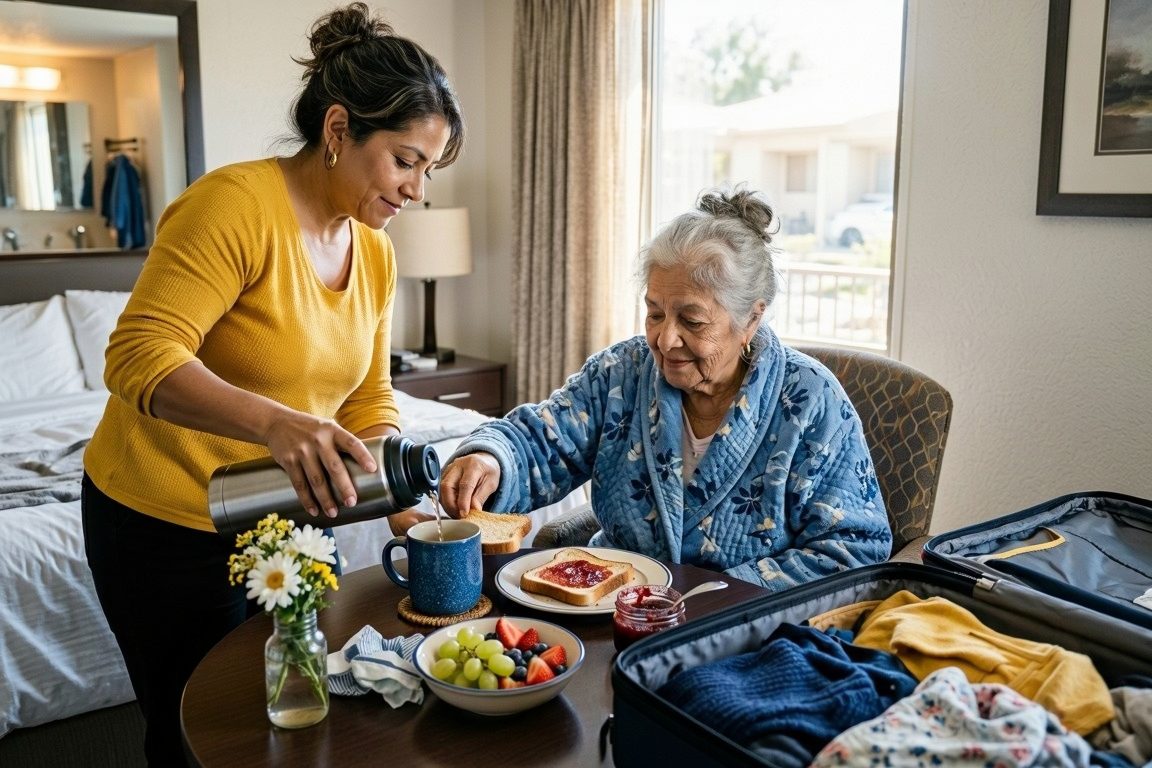
Step by step
What not to do
- Don't try to maintain every single home routine. If your loved one usually showers at 7:00 AM but is exhausted from travel, let them sleep in and shower later. Forcing a rigid schedule can cause more stress than flexibility.Instead, prioritize the two or three rituals that matter most (e.g., morning coffee, bedtime story) and let the rest slide.
- Don't assume that 'vacation mode' means abandoning structure. Some caregivers think that because they're on holiday, they can let go of all routines. This often backfires because the person with dementia relies on predictability to feel safe.Instead, think of the trip as 'home in a different building', keep the same meal times, same sleep schedule, same morning greeting.
- Don't correct your loved one when they confuse the new place with a familiar one. If they say 'This looks like Grandma's house,' don't say 'No, it's a hotel.' This can cause embarrassment or anger.Instead, say something like 'It does feel cozy, doesn't it?' or 'I'm glad it feels familiar.' Stepping into their reality, rather than dragging them back to yours, reduces distress.
- Don't over-schedule the day. Travel often comes with pressure to 'make memories', visiting multiple attractions, meeting many relatives, eating out for every meal. For someone with dementia, this can be overwhelming. Limit activities to one per day, and always have a backup plan to cancel if your loved one seems tired or agitated.
- Don't forget to prepare the people you're visiting. Before you arrive, explain to family or friends what dementia has changed, the person may need more quiet, may not remember names, may repeat stories. Ask them to keep the visit short and to avoid crowded restaurants. The Alzheimer's Association advises explaining 'any changes it has caused' and noting that 'the visit could be short or that you may need to change activities on short notice.'
- Don't use unfamiliar products or scents. Don't switch to a different brand of shampoo, soap, or lotion just because you're traveling. The smell of a new product can be disorienting. Pack travel-sized versions of the exact products used at home.
Key points
- Pack a 'familiarity kit' with items from home, mug, blanket, photo, soap, music , and unpack it first in any new room.
- Keep meal and bedtimes identical to home, even across time zones.
- Use the same words and phrases for transitions that you use at home.
- Limit activities to one per day, with plenty of rest and a designated quiet corner.
- Prepare family and friends in advance about what to expect and how to keep visits short and calm.
- Build in a full decompression day after travel to allow adjustment.
Videos
 Traveling with someone who has dementia- 5 tipsOffers five practical tips for reducing travel stress, including setting realistic expectations and preparing for disruptions, directly relevant to maintaining normalcy.
 Dementia Travel Tips: Make your next trip as smooth as possibleCovers pre-travel planning, packing familiar items, and managing the person's environment, core to preserving routine.
 Holidays and Celebrations | Holidays and Celebrations (Teepa's Clips)Teepa Snow discusses how to incorporate familiar elements into holiday visits, including using music and limiting stimulation, directly applicable to travel.
 The Baffled Brain: Demystifying Dementia Episode 25 May 15 ,2021Explains why routine and familiarity reduce confusion in dementia, providing the brain-science foundation for the strategies in this article.
2 more videos
 Ask Teepa Anything! February 2020Teepa answers caregiver questions about travel, including how to handle wandering and disorientation in new environments.
 Conscious Caregiving with L & L 'Seniors and Travel'Focuses on the emotional and practical aspects of traveling with an older adult, including maintaining dignity and routine.
Background
Why Routine Matters So Much on the Road
For someone living with dementia, the world can already feel like a place where familiar landmarks keep shifting. Travel multiplies that disorientation: new sights, sounds, smells, and schedules can trigger anxiety, confusion, or even agitation. The brain relies on predictable patterns, the same breakfast at the same time, the same chair, the same route to the bathroom , to feel safe. When those patterns vanish, the person may become restless, withdrawn, or start asking repetitive questions about where they are or when they're going home. This isn't stubbornness; it's the brain's way of saying, 'I've lost my map.'
The Hidden Stress of 'New' Everything
Think about how much mental energy it takes to navigate an unfamiliar hotel room: finding the light switch, figuring out which door leads to the bathroom, remembering where you put your glasses. For someone with dementia, that effort is magnified tenfold. They may not be able to articulate that they're overwhelmed, but their behavior will show it, through pacing, irritability, or a sudden refusal to participate. The goal isn't to eliminate novelty (some change is inevitable), but to surround it with enough familiar anchors that the person can still find their footing. One caregiver described how her mother, who was usually calm at home, became deeply confused during a three-week visit to a new house, even though she slid into the family's structured routine. That structure , the predictable meal times, the same bedtime ritual , was what kept her from tipping into full disorientation.
What 'Normalcy' Really Looks Like in a New Place
Normalcy doesn't mean recreating your entire home in a suitcase. It means identifying the two or three daily rituals that your loved one relies on most, the morning cup of coffee in a specific mug, the evening walk after dinner, the familiar music that plays during meals , and making those non-negotiable, no matter where you are. It also means accepting that some routines will shift. The person may need more rest, more quiet time, or more help with dressing. That's okay. The point is to create a container of predictability around the trip, so that even when the location changes, the emotional landscape stays steady.
Practical tools
6
The 'Home in a Bag' Kit
A small bag or backpack containing:
Unpack this bag first in any new room.
Visual Daily Schedule Card
A laminated card (or a note on your phone) showing simple icons: a bed for sleep, a plate for meals, a car for travel, a house for arrival. Review it together each morning. Use the same card every day of the trip. This reduces the anxiety of 'what's next?' and gives the person a sense of control.
The 'Same Time, Same Words' Script
Write down the exact phrases you use at home for transitions, 'Time to brush teeth,' 'Let's get our shoes on,' 'Almost time for dinner.' Use these same words at the same times of day while traveling. Consistency in language is a powerful anchor for the brain.
Quiet Corner Setup Checklist
This becomes the 'safe zone' your loved one can retreat to when overwhelmed.
Familiar Music Playlist
Create a playlist of music your loved one has always enjoyed, opera, classical, old standards, or hymns. Keep it slow-tempo and calming. Play it during meals, before bed, or during travel (e.g., on a plane with headphones). Avoid fast or stimulating music that might increase agitation.
The 'One Activity Per Day' Rule
Write down one planned activity per day (e.g., 'Morning: visit with cousin Sue. Afternoon: rest in room. Evening: quiet dinner in.'). Stick to this plan unless your loved one shows clear signs of fatigue or distress. Always have a backup plan to cancel or shorten the activity.
Different situations
Early-stage dementia (mild cognitive changes)
You can involve the person in planning. Ask them what routines are most important to them, 'Do you want to keep having coffee at 10:00 AM?' or 'Should we bring your crossword book?' They may still be able to help pack their own familiar items. Keep the schedule flexible but predictable. The goal is to preserve their sense of agency.
Middle-stage dementia (moderate confusion, wandering risk)
Routine becomes critical. Do not deviate from meal and bedtimes. Use the 'quiet corner' setup in every room. Consider using a door alarm or a simple lock on the hotel room door to prevent wandering. Pack a 'Go Bag' with a change of clothes, medications, and a recent photo in case of separation. Keep the person's ID and your contact information on them at all times.
Late-stage dementia (severe cognitive decline, limited mobility)
Travel may be too disorienting unless it's absolutely necessary (e.g., moving to a care facility). If you must travel, keep the environment as quiet and low-stimulation as possible. Use the same music and familiar scents. Limit visitors to one or two at a time. The person may need to stay in bed or a wheelchair for most of the trip. Prioritize comfort over activity.
Lewy body dementia (fluctuating cognition, visual hallucinations)
Be extra cautious with new environments. Visual hallucinations can be triggered by unfamiliar patterns, shadows, or lighting. Use soft, consistent lighting (avoid harsh overhead lights). Keep the room clutter-free. If the person becomes agitated, do not argue about what they see, instead, say 'I can see that's upsetting you. Let's move to a quieter spot.' The routine of familiar music and scents can be grounding.
Frontotemporal dementia (behavioral changes, loss of empathy)
Routine may be less about time and more about emotional tone. The person may not respond to schedules but may need consistent, calm interactions. Avoid correcting them if they become fixated on a topic or activity. Use the 'same words' script to maintain a predictable emotional environment. Keep activities short and flexible.
Spouse vs. adult child caregiver
Spouses often have decades of shared routines, use that to your advantage. Remind your partner of inside jokes or familiar phrases from your life together. Adult children may need to be more directive: 'Mom, it's time for your afternoon rest, just like at home.' Both roles benefit from preparing the people you're visiting in advance.
For the doctor
5
- Ask your loved one's doctor if there are any medications that should be adjusted or timed differently during travel (e.g., to manage anxiety or sleep disruption).
- Discuss whether the person's current stage of dementia makes travel safe, especially if they have a history of wandering, falls, or severe agitation.
- Ask about the risks of dehydration or constipation during travel, which can worsen confusion, and how to prevent them.
- Inquire about any medical equipment or supplies you should bring (e.g., a portable commode, a fall alert device).
- If your loved one uses a walker or wheelchair, ask the doctor about safe travel practices (e.g., using a seat belt on the plane, securing the walker in the car).