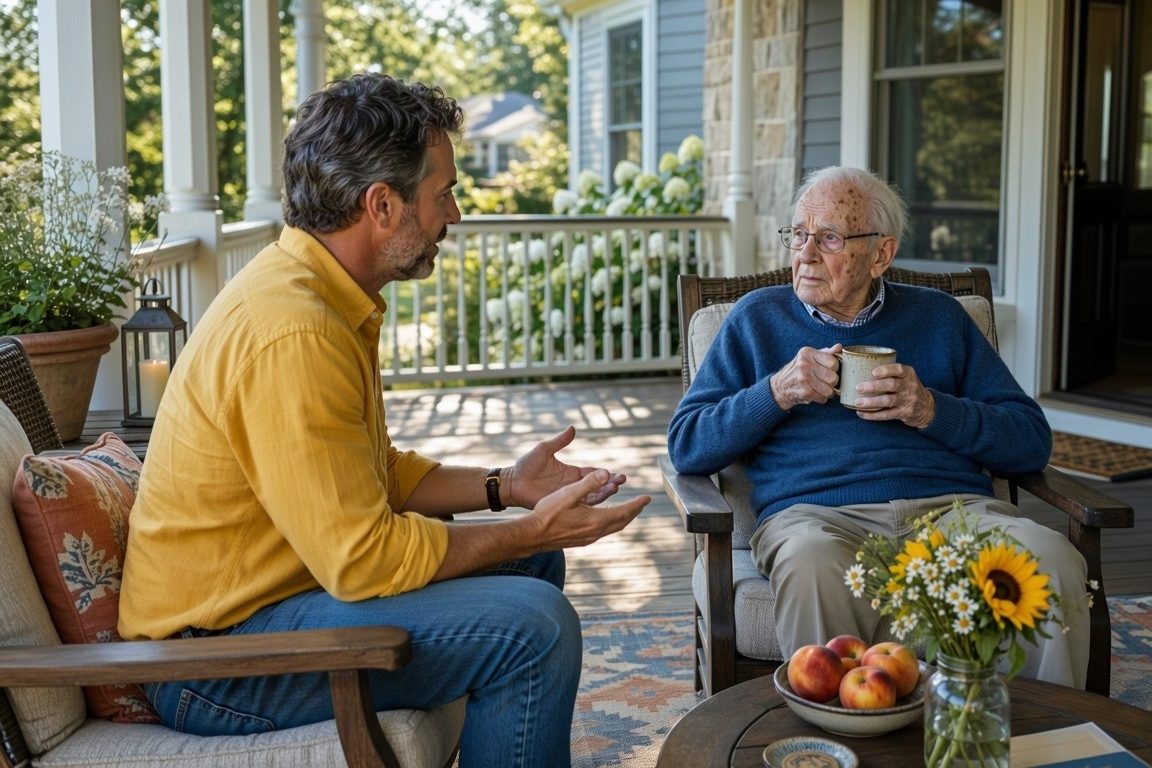
Step by step
What not to do
- Do not use the word 'hospice' when you mean palliative care. Many people associate hospice with dying, and it can cause immediate fear.Instead, always say 'palliative care' and explain it as symptom management and extra support.
- Do not wait until a crisis to bring it up. If you wait until after a fall or hospitalization, the conversation feels rushed and your loved one may feel pressured. Early, calm conversations are more effective.
- Do not frame it as 'giving up' or 'stopping treatment.' Palliative care is not about stopping anything; it is about adding comfort. Use positive language like 'adding help' or 'making things easier.'
- Do not talk to them when they are agitated or confused. If your loved one is having a bad day, postpone the conversation. Timing is everything, choose a moment of calm.
- Do not make it about you. Avoid saying 'I need this' or 'I can't handle this alone.' Instead, focus on their comfort and quality of life. For example, 'This could help you feel better' is more effective than 'I need help.'
- Do not assume they will refuse. Many people with dementia are open to help if it is presented as a way to stay independent longer. Give them a chance to say yes by using a positive, collaborative tone.
Key points
- Palliative care is an extra layer of support, not a replacement for current care, and it can be started early in dementia.
- Frame the conversation around comfort, symptom management, and staying at home, not around giving up or end of life.
- Use simple, positive language like 'extra help' and 'making things easier' to reduce fear.
- Involve your loved one as much as possible, especially in early and mid-stages, to respect their autonomy.
- If they resist, try a short trial or ask a trusted doctor to introduce the idea.
- Document their wishes in an advance care directive once they agree, so their voice is heard later.
Videos
 Palliative Care And Hospice Conversations For Dementia Patients, Families And CaregiversThis video directly addresses how to have the conversation about palliative care with a dementia patient, offering real phrases and strategies.
 palliative care and hospice care for dementiaExplains the difference between palliative and hospice care, which is crucial for framing the conversation correctly.
 Supporting a Loved One with DementiaProvides general support strategies that can be adapted to the palliative care introduction conversation.
Background
Why This Conversation Feels So Hard
Introducing palliative care to a person with dementia is difficult because the word itself can sound scary or final. Many people confuse it with hospice, which is care focused on the end of life. Palliative care, however, is about relieving pain and managing symptoms at any stage of a serious illness, and it can be provided alongside treatments aimed at curing or slowing the disease. For dementia, this means a team that helps with things like pain, anxiety, sleep problems, and behavioral changes, all while your loved one continues seeing their regular doctors. The earlier you bring it up, the more your family member can participate in the decision, which respects their autonomy and reduces later stress for everyone.
What Palliative Care Actually Looks Like for Dementia
In practice, palliative care for dementia often involves a nurse practitioner or doctor who visits your loved one at home every few weeks. They do a thorough exam, checking weight, ankles, feet, and discussing symptoms like pain, mood, or appetite. This happens in the comfort of home, so you avoid stressful trips to the clinic. The team also coordinates with your primary care doctor, so nothing is lost. Palliative care does not replace your current medical team; it adds an extra layer of support. For dementia, this is especially valuable because as the disease progresses, the person may lose the ability to communicate pain or discomfort, and a palliative specialist can help spot these issues early.
The Right Time to Start the Conversation
Experts recommend starting the conversation about palliative care in mid-stage dementia, when the person is still able to express their wishes but may be starting to lose skills. Waiting until a crisis, like a fall, infection, or hospitalization, makes the conversation rushed and more stressful. By talking early, you can plan for 'sentinel events' such as infections or falls, and decide together what kind of care aligns with your loved one's values. This proactive approach improves quality of life and reduces caregiver guilt later.
Practical tools
6
The 'Extra Layer' Script
A simple phrase to use: 'Palliative care is like having an extra layer of support. It doesn't change your current doctors or treatments. It just adds someone who helps manage symptoms like pain or anxiety, and they come to our home so we don't have to go to the clinic.' Practice this until it feels natural.
The Conversation Guide for Dementia Families
This is a free online resource specifically designed for families navigating dementia. It provides step-by-step prompts and sample dialogues for introducing palliative care. Search for 'Conversation Guide dementia palliative care' to find it. Print it out and keep it handy.
The 'Trial Visit' Checklist
Before the first palliative care visit, create a list of what to expect: the nurse will check
Share this with your loved one so they know what will happen. This reduces anxiety about the unknown.
The 'Values' Prompt
Ask your loved one: 'What is most important to you right now? Is it staying at home? Avoiding pain? Spending time with family?' Then connect palliative care to that value. For example, 'Palliative care can help you stay at home longer because they come to you.'
The 'Doctor's Recommendation' Card
Ask your loved one's primary care doctor to write a short note or make a phone call recommending palliative care. Having a professional's endorsement can make the idea more credible and less like a family suggestion.
The 'Symptom Diary'
For a week before the conversation, keep a simple diary of symptoms your loved one experiences:
Use this diary to show concrete reasons why palliative care could help. For example, 'You've had trouble sleeping three nights this week. Palliative care has a specialist who can help with that.'
Different situations
Early-stage dementia (still independent)
Focus on planning and education. Involve them fully in the decision. Use phrases like, 'Let's think ahead so we're prepared.' Emphasize that palliative care is proactive, not reactive. They can still drive and make decisions, so respect their autonomy.
Mid-stage dementia (needs some help)
This is the ideal time to introduce palliative care. They may still understand and participate. Use the 'trial' approach and involve a trusted doctor. Be prepared for some resistance due to confusion, so keep the conversation simple and repeat it gently.
Late-stage dementia (unable to communicate)
The conversation is primarily with the family and medical team. You will need to make decisions based on what you know of their values. Palliative care can still be introduced to manage pain, breathing, and comfort. Focus on quality of life and avoiding unnecessary hospitalizations.
Spouse caregiver vs. adult child
A spouse may have a longer history and more emotional attachment, making the conversation harder. Use 'we' language: 'We need this help for both of us.' An adult child may need to be more gentle, acknowledging the parent's authority: 'Dad, I've been learning about this and I think it could help you. What do you think?'
Living in a facility (nursing home or assisted living)
Palliative care is often available through the facility. Ask the director of nursing or social worker to help introduce the idea. The conversation may be with the care team rather than the resident if they are unable to participate. Ensure the facility has a palliative care provider on staff or can refer one.
For the doctor
5
- Ask your loved one's doctor: 'At what stage of dementia would you recommend starting palliative care for my family member?'
- Ask: 'What specific symptoms (pain, anxiety, sleep issues) would palliative care help manage for my loved one?'
- Ask: 'Can you refer us to a palliative care team that specializes in dementia? How do we get started?'
- Ask: 'Will Medicare cover palliative care visits at home? What are the costs, if any?'
- Ask: 'How does palliative care coordinate with my loved one's current primary care doctor and specialists?'