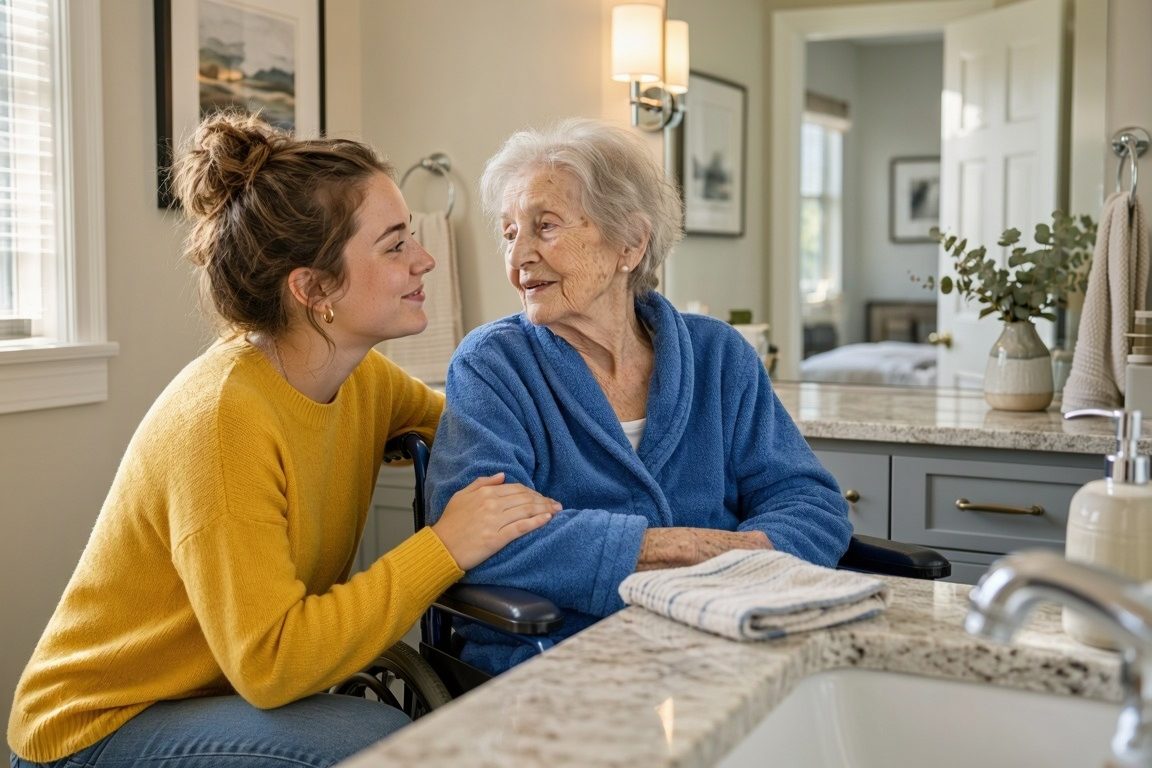
Step by step
What not to do
- Do not approach from behind or the side. This can startle the person and trigger a fight-or-flight response.Instead, always approach from the front, within their visual field, and announce yourself with a calm voice.
- Do not grab the person's hand or arm without warning. Even if your intent is helpful, it can feel like an invasion.Instead, offer your open hand and wait for them to accept it. If they do not, respect that boundary.
- Do not use a high-pitched or rushed tone of voice. This can sound anxious or condescending.Instead, speak slowly, with a low pitch, and use simple words. Pause frequently to let them process.
- Do not multitask during the interaction. If you are looking at a phone or talking to someone else, the person will sense your divided attention.Instead, give them your full presence, eye contact, calm voice, and focused touch.
- Do not force touch if the person pulls away or stiffens. This can escalate into agitation or aggression.Instead, stop, step back, and use only gaze and voice until they relax. Trust is built slowly.
- Do not assume the person understands your words even if they nod or smile. They may be responding to your tone or gesture. Always pair verbal cues with visual and tactile ones to ensure the message is received.
Key points
- Humanitude is relationship-centered care: the connection between you and the person is the foundation for all care.
- Use the three-step sequence in every interaction: visual cue first, then verbal information, then touch only if needed.
- Hand-under-hand is a key technique: it gives the person control and provides calming deep pressure.
- Always approach from the front, at eye level, and announce yourself calmly.
- If the person resists touch, stop and use only gaze and voice until they relax.
- This method reduces caregiver burnout and improves the person's cooperation and quality of life.
Videos
 Multimodal Comprehensive Care Communication Skills in Dementia CareThis video directly demonstrates the multimodal approach (gaze, voice, touch) used in Humanitude, with real caregiving scenarios. It shows how to combine all three elements in practice.
 Pamela Mills Associate Director of Care Management for Corewood CarePamela Mills discusses relationship-centered care and practical communication techniques, including the importance of non-verbal cues and touch in dementia care.
 Time with Teepa: How to Hand-under-Hand to Connect and Assist a Person Living with DementiaTeepa Snow demonstrates the hand-under-hand technique step by step, which is a core touch component of Humanitude. Essential viewing for learning the physical technique.
 Time with Teepa - Seeking Sensory Input, or Is It About Sexual Touch? Section 3This video helps caregivers distinguish between a person's need for sensory connection (which Humanitude addresses) and other types of touch, with guidance on appropriate responses.
2 more videos
 Alzheimer's Answers About AgingCovers the use of signs, gestures, and non-verbal communication, key elements of the 'voice' and 'gaze' components in Humanitude.
 Communication Do's & Don'ts in Late Stage DementiaFocuses on late-stage communication, where touch and gaze become primary. Aligns with Humanitude's emphasis on multimodal connection when words fail.
Background
What Is Humanitude and Why It Matters in Dementia
Humanitude is a relationship-centered care philosophy that places the connection between caregiver and care receiver at the center of every interaction. It was developed in France and has spread across Europe, Asia, and parts of the United States, though it remains less common in the U.S. The core idea is simple but profound: if you do not connect with the person you are caring for, you cannot provide truly person-centered care. This approach is especially critical in dementia, where cognitive decline can make verbal communication unreliable. Research shows that after Humanitude training, healthcare workers significantly increase their use of multimodal communication, using at least two of the three components (gaze, voice, touch) together, by roughly three times. This leads to better empathy scores and reduced burnout among caregivers.
How Gaze, Voice, and Touch Work Together
Humanitude teaches that communication is far more than words. Gestures, eye contact, and physical connection carry most of the meaning, especially when a person has trouble understanding language. The method systematically combines three channels: gaze (making eye contact at the person's level, in their visual field), voice (using a calm, slow tone with simple words), and touch (using gentle, predictable contact like hand-under-hand). These three elements are used in a specific sequence: first give a visual cue (like making eye contact), then verbal information (speak slowly), and only then add touch if needed. This sequence prevents startling the person, which is common when someone with dementia is approached unexpectedly. The touch should often start on yourself, for example, reaching out your hand for them to take, rather than grabbing them, which can feel intrusive.
Why This Works: The Science of Connection
Humanitude is backed by both computational and neuroscientific research. Teams have recorded and analyzed caregiver interactions, measuring eye contact, verbal communication, and touch over time. They found that after training, caregivers not only increased the quantity of these interactions but also their quality, using them in a coordinated, multimodal way. This multimodal approach is key because it engages multiple senses, making the message clearer even when one channel (like hearing) is impaired. For example, a person who cannot understand the words 'time to eat' may still respond to the gentle touch on the arm and the warm tone of voice. The method also addresses the person's deep need for human connection, which can manifest as reaching out, touching, or seeking sensory input. By responding with intentional, respectful touch, you meet that need without escalating into confusion or agitation.
Practical tools
6
The Hand-Under-Hand Invitation
Exact phrase to say: 'May I hold your hand?' while extending your open palm, palm up, at their eye level. If they take it, slide your hand under theirs. This gives them control, they can let go anytime. Use this before any care task like dressing, eating, or transferring.
The Three-Step Sequence Checklist
A mental checklist for every interaction:
Sensory Kit for Redirecting Touch
Create a small bag with items of different textures:
When the person reaches for you (e.g., grabbing your clothes), offer one of these items to hold and manipulate. Say: 'Here, feel this. Isn't it soft?' This redirects their need for sensory input in a safe way.
Calming Lotion Massage
Use a non-scented or lightly scented lotion (lavender is calming). Warm it in your hands first. While the person is seated, ask: 'Would you like some lotion on your hands?' Use the hand-under-hand position to apply lotion with slow, firm strokes. This provides deep pressure and a pleasant sensation, reducing anxiety.
The 'Visual Field' Positioning Guide
Stand or sit where the person can see you without turning their head. For someone with limited peripheral vision (common in later stages), position yourself directly in front, about 2-3 feet away. If they are in bed, sit at the bedside at eye level, not standing over them.
The 'Pause and Process' Timer
After you say something, count silently to 10 before speaking again. This gives the person time to process your words and respond. Many caregivers rush and fill the silence, which overwhelms the person. Use this tool especially when asking a question or giving an instruction.
Different situations
Late-stage dementia (person is mostly non-verbal, may not recognize you)
Focus almost entirely on touch and gaze. Use very minimal words, only their name and simple phrases like 'I'm here.' The person may not understand your words but will feel your presence through gentle touch and eye contact. Hand-under-hand is essential. Use lotion massage or gentle stroking of the arm. Avoid questions; just be present. The goal is comfort, not task completion.
Lewy body dementia (visual hallucinations, fluctuating attention, sensitivity to touch)
Be extra cautious with touch, some people with Lewy body may misinterpret touch as threatening due to visual disturbances. Always give a clear visual cue first, and speak slowly. If they seem frightened, stop and give space. Use a soft, low voice. Avoid sudden movements. The hand-under-hand technique is still useful but may need more patience. Keep sessions short (2-3 minutes) and watch for signs of overload.
Spouse vs. adult child caregiver
Spouses may find it harder to use formal techniques because of their long history and emotional closeness. It can feel unnatural to 'script' interactions. Start small, just add one element, like making eye contact before speaking. Adult children may need to overcome a role reversal (parent now needing care). Use the hand-under-hand technique to preserve the parent's dignity. Both roles benefit from the three-step sequence to reduce frustration.
In a facility (nursing home or assisted living)
Staff may need to adapt Humanitude to a busy environment. Use the technique during high-stress moments like bathing or dressing. The three-step sequence can be done in 30 seconds. Train all staff on the same approach so the person gets consistent cues. For residents who are anxious, a 5-minute 'connection visit' using gaze, voice, and touch before a care task can dramatically improve cooperation.
Person with frontotemporal dementia (behavioral variant, impulsivity, loss of empathy)
This person may resist touch or seem indifferent to your attempts. Do not force it. Use voice and gaze first, and keep touch very brief, just a light hand on the arm. They may respond better to a task-oriented approach: 'Let's go for a walk' with a visual cue (pointing) rather than emotional connection. Adjust your expectations; the goal is safety and cooperation, not emotional bonding.
For the doctor
4
- If the person has a history of aggressive reactions to touch (e.g., hitting or pushing), ask the doctor or occupational therapist for a personalized sensory assessment before using Humanitude techniques.
- If the person is on medications that affect balance or sensation (e.g., antipsychotics, sedatives), discuss how touch and movement guidance should be modified to prevent falls.
- If the person has a skin condition or pain from conditions like arthritis, ask about safe lotions and massage techniques that won't cause discomfort.
- If you notice the person consistently pulls away from touch, consult a dementia care specialist to rule out undiagnosed pain or infection that might make touch unpleasant.