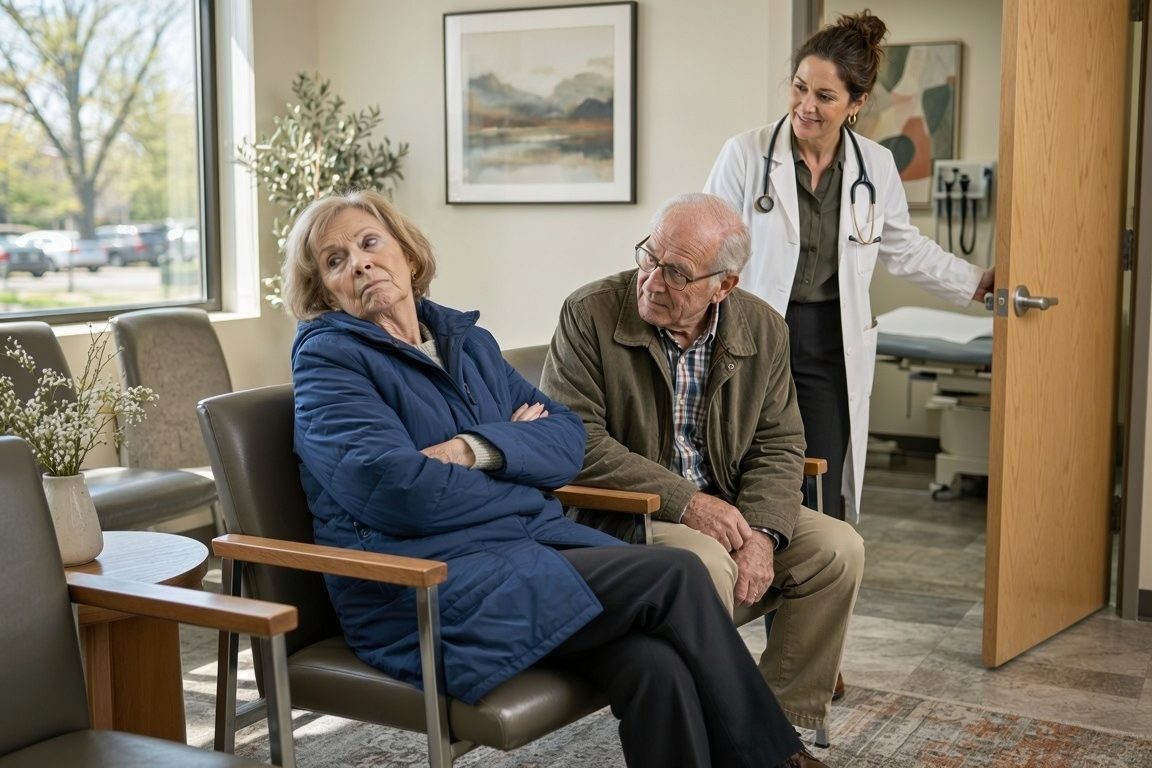
Step by step
What not to do
- Do not argue or try to reason with them about their memory loss. Rationalizing never works with dementia because the brain cannot process logic the same way.Instead, validate their feelings: 'I know you feel fine, and I'm glad. I just want to make sure everything is okay.'
- Do not use the words 'dementia,' 'Alzheimer's,' or 'memory test' unless they bring it up first. These words trigger fear and defensiveness.Instead, use neutral language like 'checkup,' 'wellness visit,' or 'tune-up.'
- Do not get bossy or pull rank. Even if you are the adult child, taking a commanding tone often backfires. Your parent may dig in their heels harder.Instead, be a partner: 'Let's figure this out together. I'm worried about you, and I need your help.'
- Do not ambush them or trick them into the car without warning. Surprise trips to the doctor can shatter trust and lead to even more resistance next time. If you must use a small white lie, keep it gentle and face-saving, not deceitful.
- Do not give up after one try. Persistence with patience is key. Try different approaches on different days. What doesn't work today might work next week. Keep the conversation open and loving.
Key points
- Understand that refusal is often driven by fear, loss of control, and brain changes – not stubbornness.
- Frame the visit as routine, not memory-related, to reduce fear.
- Use a trusted third party (friend, clergy, another relative) to gently encourage the visit.
- Pair the appointment with something pleasant your parent enjoys.
- If all else fails, wait for a crisis but prepare by documenting concerns and sharing them with the doctor.
- Take care of your own emotional health – you cannot force someone to accept help.
Videos
 How to Deal with Aging Parents. Best 5 tips if an Older Parent Refuses to see a DoctorThis video offers five practical, compassionate tips for persuading a resistant parent, including using a third party and framing the visit as routine.
 Family Caregiving Discussions With Elderly Parents Who RefuseFocuses on how to have difficult conversations with a parent who refuses care, emphasizing listening and validation before persuasion.
 Why Do Old People Refuse to Go to the Doctor?Explains the common fears and reasons behind refusal, helping caregivers understand the 'why' so they can tailor their approach.
 3 Steps to Helping Your Parent with Dementia That Refuses HelpProvides a simple three-step framework for reducing resistance and getting cooperation, with real-life examples.
2 more videos
 How to get someone with dementia to go to the doctorOffers specific scripts and strategies for getting a person with dementia to a medical appointment, including using a 'routine checkup' frame.
 Is Your Aging Parent With Dementia Refusing Help? Do This!Covers the importance of empathy and understanding the brain changes behind refusal, with actionable steps for caregivers.
Background
Why They Refuse: The Real Reasons Behind the Resistance
Your parent's refusal is rarely simple stubbornness. Often, it comes from deep fear: fear of a dementia diagnosis, fear of losing independence, or fear of being labeled as 'crazy' or 'incompetent.' Many older adults have watched a friend or relative decline with Alzheimer's and are terrified that could be them. They may also have had a bad experience with a doctor who didn't listen or dismissed their concerns, making them distrustful of the medical system altogether.
On top of these emotional reasons, the brain changes of dementia itself play a huge role. Your parent may genuinely not perceive their memory problems as serious because their brain's ability to self-monitor is damaged. This is called 'anosognosia' – a lack of awareness of their own deficits. They may feel they are doing fine, so any suggestion of a doctor visit feels like an attack or an insult. They aren't being difficult on purpose; their brain is literally not letting them see what you see.
Another layer is loss of control. For someone who has been independent for 70 or 80 years, being told they need to see a doctor for memory issues can feel like the first step toward losing everything – their car keys, their home, their autonomy. Their refusal is a way of clinging to the life they know. Understanding this helps you approach them with compassion instead of frustration.
Practical tools
6
The 'Insurance Checkup' Script
Say: 'Mom/Dad, I just got a letter from Medicare saying everyone needs a yearly checkup to keep their coverage. They said it's really important. Let's just go get it done so we don't lose anything.' This is a common, non-threatening reason that many older adults accept.
The 'Come With Me' Invitation
Make an appointment for yourself and say: 'I'm really nervous about my checkup. Would you come with me to be my second set of ears? I'd feel so much better having you there.' Once at the office, you can ask the doctor to also check on your parent's health.
The 'Doctor Called' Script
Say: 'The doctor's office called and said they need to update your file. It's just routine, nothing to worry about. They said it's important to do it soon.' This puts the request on a neutral authority figure, not on you.
The Pleasant Pairing Plan
Create a simple checklist:
The Home Visit Option
Research if your parent's doctor offers house calls or if there is a mobile medical service in your area. Telehealth is another option. Set up a laptop or tablet and have the doctor call in. Your parent may feel safer in their own environment.
The 'Three Good Reasons' List
Write down three reasons your parent might accept a visit that align with their values:
Share these gently, not as a lecture, but as 'I was thinking about you and wanted to mention...'
Different situations
Lewy body dementia (LBD)
People with LBD often have visual hallucinations, fluctuating cognition, and extreme sensitivity to medications. When persuading them, avoid mentioning hallucinations directly as it may frighten them. Instead, focus on physical symptoms like stiffness or sleep problems. Also, be aware that some antipsychotics can be dangerous for LBD – discuss with the clinician before any medication changes.
Frontotemporal dementia (FTD)
FTD often affects behavior and personality first, not memory. Your parent may lack insight or empathy, making persuasion harder. Use very simple, concrete language: 'We are going to the doctor today at 10. Then we will have lunch.' Avoid emotional appeals; they may not respond. A routine schedule can help.
Late middle stage (moderate dementia)
At this stage, reasoning is very limited. Use short, direct statements and rely on redirection. Say 'Time to go for a ride' and then go to the doctor. You may need to physically guide them. Do not explain the purpose; just make it a part of the day's routine. A professional caregiver may be essential.
Spouse vs. adult child caregiver
If you are the spouse, your parent may be more willing to listen because of lifelong trust. Use 'we' language: 'We need to get our checkups done together.' If you are an adult child, be aware that role reversal can cause resentment. Enlist the help of the other parent or a sibling. Avoid sounding like you are telling them what to do.
Parent lives in a facility (assisted living or nursing home)
In a facility, the staff can help. Ask the nurse or social worker to schedule the appointment and accompany your parent. They are used to handling resistance. You can also ask the facility's doctor to do an in-house visit. Your role becomes supportive, not primary persuader.
For the doctor
5
- Ask the doctor if they can prescribe a low-dose anti-anxiety medication for your parent to use before the appointment, if anxiety is a major barrier.
- Ask about the risks and benefits of using a mild sedative for travel to the appointment, especially if your parent becomes agitated in the car.
- If your parent has a history of falls or heart problems, ask the doctor if a home visit or telehealth is safer than an office visit.
- Discuss whether a cognitive screening test (like the MoCA or MMSE) can be done without explicitly telling your parent it is a memory test, to reduce anxiety.
- Ask the doctor if they have experience with patients who are unaware of their deficits (anosognosia) and what communication strategies they recommend.