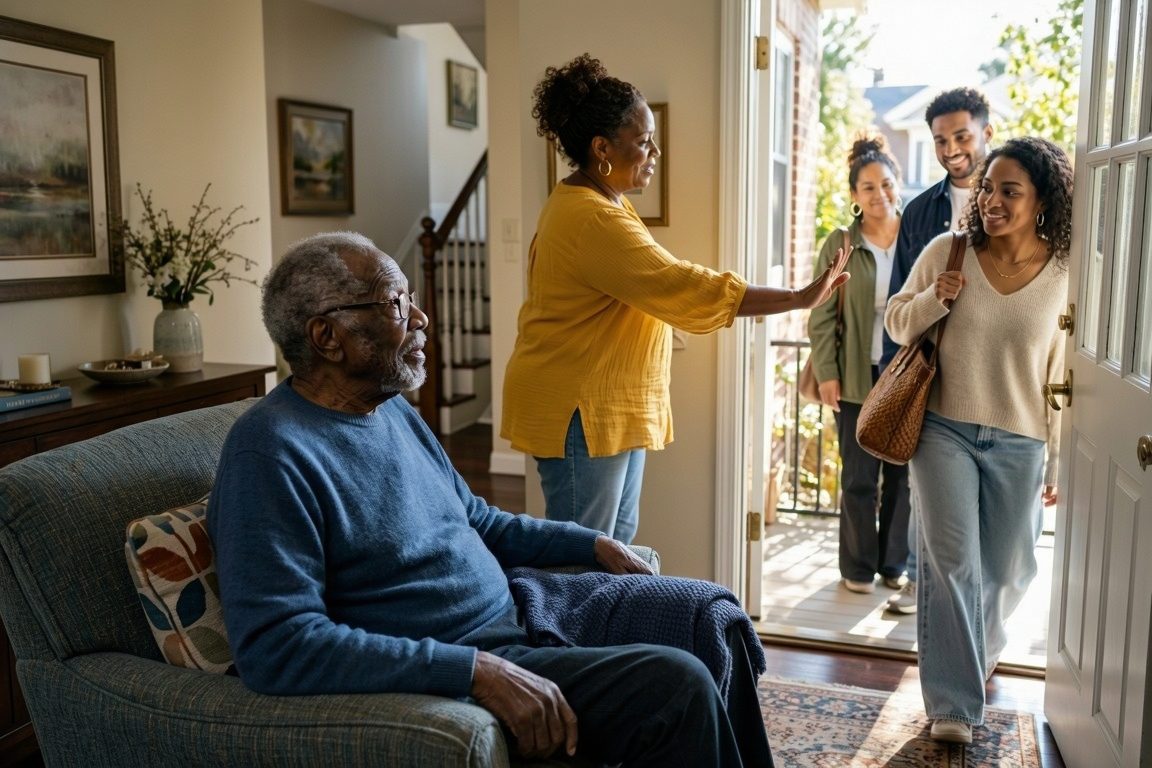
Step by step
What not to do
- Do not speak loudly or raise your voice; higher pitch makes comprehension harder, use calm, clear speech with natural gestures.
- Do not test memory with 'Do you remember...?', this causes shame; instead, share memories yourself (e.g., 'I remember the beach, that was a lovely day') and let them join in without pressure.
- Do not correct mistakes or confused details; their brain creates a version of reality that makes sense to them, go with the flow and focus on the feeling behind the words.
- Do not take it personally if they don't recognize you or seem distant; this is the disease, not a reflection of your relationship, stay gentle and seek connection in small, quiet moments.
Key points
- Plan visits around your loved one's best time of day, not your own schedule.
- Limit visitors to one or two people at a time and keep visits to 2-3 hours maximum.
- Create a calm environment: turn off the TV, close doors, and reduce noise.
- Speak in short, simple sentences with one idea at a time, never test their memory.
- Focus on doing a simple activity together rather than just talking.
- End the visit early if you see signs of distress, it's better to leave on a good note.
Videos
 The Do's and Don'ts of Visiting a Loved One with DementiaThis video gives clear, practical examples of how to adjust your communication and behavior during visits to reduce overwhelm.
 6 Tips for Successful Holiday Visits!Focuses on planning ahead, lowering expectations, and keeping visits short, perfect for holiday gatherings but applicable year-round.
 Dementia and The HolidaysAddresses the emotional side of visits and how to handle family expectations while prioritizing the person with dementia's comfort.
 Holidays and Celebrations (Teepa's Clips)Teepa Snow offers expert advice on creating positive, low-stress visits by focusing on connection rather than tradition.
2 more videos
 New to Dementia Caregiving? STOP Doing This!Highlights common mistakes like correcting or testing memory, which can cause overwhelm, and offers better alternatives.
 How to Prevent Anger in DementiaExplains how overstimulation leads to anger and gives strategies to prevent it, directly relevant to avoiding visitor overwhelm.
Background
What Is Happening in the Brain
When a person has dementia, their brain is like a navigator trying to find its way through a maze surrounded by thick fog. Every sound, every face, every question demands energy to process, and the brain simply cannot filter out the extra noise the way it used to. So, while you might be able to focus on one conversation despite the TV playing and grandchildren running around, your loved one experiences all of it at once, a jumble of sensations that can quickly become overwhelming. This isn't stubbornness or a lack of interest; it's a neurological reality. The result is often anxiety, agitation, or withdrawal, which can look like anger, restlessness, or even tears. Understanding this helps you see that their reaction is not personal, it's a sign that the environment needs to be adjusted.
Why Overwhelm Happens During Visits
Visits bring together several potential triggers at once: unfamiliar faces, changes in routine, multiple conversations happening at the same time, and the pressure to remember names or past events. The person with dementia may not even know why they feel uncomfortable; they just feel flooded. Their brain is already working overtime just to understand what's happening around them, and adding the social demands of a visit can push them past their limit. This is why a visit that feels warm and festive to you can feel chaotic and frightening to them. The key is to recognize that less is more, fewer people, shorter time, simpler interactions, and that your calm, patient presence matters far more than any perfect holiday moment.
Practical tools
5
One Idea Per Sentence Script
Use phrases like 'Hi, I'm Jane. I'm your friend.' 'I brought some photos.' 'Look, here is a picture of your dog.' Offer one clear choice: 'Would you like to look at photos or listen to music?' rather than open-ended questions.
Quiet Corner Setup
Designate a distraction-free area (no TV, no radio, low foot traffic) with a comfortable chair, soft blanket, and a few familiar objects (favorite photo, soft pillow). This serves as a retreat space to calm down if overwhelmed.
Visitor Log or Whiteboard
Keep a notebook or whiteboard by the door. After each visit, write the date, your name, what you did together, and when you'll return. This reduces anxiety about abandonment and helps caregivers track visits.
Two-Hour Timer Approach
Set a phone timer for 90 minutes to 2 hours upon arrival; when it goes off, begin wrapping up the visit even if all seems fine. This prevents overstaying and lets you leave while the mood is positive.
One Activity Focus
Bring one simple, engaging item (photo album, song playlist, soft scarf to fold, simple puzzle). Avoid multiple options or expectations of long conversation; the activity itself reduces pressure and creates a calm, purposeful visit.
Different situations
Early-stage dementia (mild cognitive impairment)
Visits can be slightly longer (up to 3 hours) and may include a bit more conversation. However, still avoid large groups and complex questions. The person may still enjoy reminiscing about recent events, but avoid testing their memory. Use open-ended prompts like 'Tell me about your day' rather than 'Do you remember what you had for lunch?'
Middle-stage dementia (moderate)
Keep visits to 1-2 hours maximum. The person may become overwhelmed more quickly. Use very simple language and focus on sensory activities like listening to music or looking at photos. Avoid any mention of past losses or difficult topics. Be prepared for them to mistake you for someone else, just go along with it gently.
Late-stage dementia (severe)
Visits may be as short as 15-30 minutes. Focus on gentle touch, soft voice, and familiar smells or sounds. The person may not respond verbally, but they can still feel your presence. Sit quietly, hold their hand, and speak in a calm, reassuring tone. Avoid any sudden movements or loud noises. Let them rest if they seem tired.
Lewy body dementia
Be extra cautious about visual and auditory stimulation. Bright lights, busy patterns, or loud noises can trigger hallucinations or severe agitation. Keep the environment very calm and dim. Avoid sudden changes in routine. Visits should be short and predictable. If they seem confused or frightened, stop talking and sit quietly with them.
Visiting in a facility vs. at home
In a facility, coordinate with staff to avoid meal times, activity times, and shift changes. Ask for a private room or a quiet corner. At home, you have more control over the environment, turn off the TV, close curtains, and ask other family members to keep noise down. In both settings, have a backup plan if your loved one becomes overwhelmed (a quiet room to retreat to).
Spouse vs. adult child visitor
Spouses may be able to stay longer and use more familiar routines, but they also risk triggering old conflicts or sadness. Adult children may need to be more patient and avoid correcting or directing. Both should remember that the person with dementia may not recognize them, this is not personal. Use your name and relationship in every greeting: 'Hi, it's me, your daughter Sarah.'
For the doctor
3
- If your loved one becomes severely agitated or aggressive during or after visits, discuss with their doctor whether a medication adjustment or a referral to a dementia behavioral specialist might help.
- If you notice that visits consistently trigger sundowning (increased confusion or agitation in the late afternoon or evening), talk to the clinician about strategies to manage this pattern, including possible adjustments to daily routine or light exposure.
- If your loved one has a history of wandering or elopement, discuss safety measures with the clinician or a dementia care specialist before planning visits in unfamiliar environments.