
Step by step
What not to do
- Don't ask vague questions like 'Can you help?', this puts the burden on them to figure out what to do, and they'll likely say nothing or offer something unhelpful.
- Don't reject or redirect offers with 'yes, but', if a friend says 'I can bring dinner,' don't say 'Yes, but we have dietary restrictions.' Say 'Thank you! Could you pick up a gluten-free pizza from Domino's?'
- Don't assume family members know what you need, they may be in denial or think you have it under control. Tell them explicitly using specific examples.
- Don't wait until you're burned out or in crisis to ask. Ask earlier, while you can still be clear and specific; it's a kindness to everyone.
Key points
- Make a private list of specific tasks you need help with, then choose one person and one task to ask for.
- Use direct, concrete requests like 'Could you order us a pizza?' instead of vague 'Can you help?'
- Accept any offer of help immediately, don't play the 'yes, but' game.
- When someone says no, respond with grace: 'Thank you, I understand. If your situation changes, give me a call.'
- Repeat the process: choose a person, choose a task, make the ask. Build a network over time.
- Most people want to help but don't know how, your job is to tell them exactly what you need.
Videos
 GET THE HELP YOU NEED (When siblings won't help with elderly parents)This video directly addresses how to ask siblings for help, with step-by-step strategies for making specific requests and handling resistance.
 MAKE A DIFFERENCE FROM AFAR - How to Provide Care to Parents from a DistanceIf you have family who live far away, this video gives practical ideas for how they can help remotely, such as ordering meals or handling phone calls.
 Caregiving HelpThis video covers the emotional side of asking for help and offers scripts for making requests without guilt or resentment.
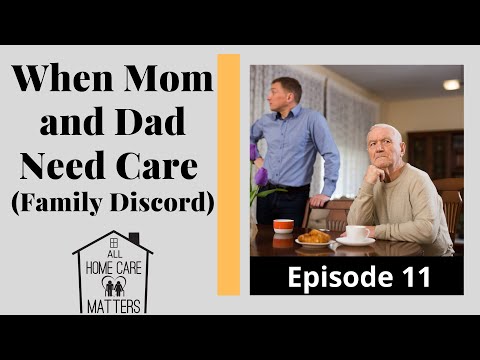 When Mom and Dad Need Care (Family Discord)This video addresses family conflict and how to navigate disagreements about care, including how to ask for help when siblings are in denial.
Background
Why Asking for Help Feels So Hard
Caregiving is super stressful and time-consuming. You're putting in so much time, effort, and money, but if you feel like your siblings aren't helping or could help more, you might rather take an arrow in the side than ask. That's normal. Part of the struggle is that you don't want to stop caring for your parent, you just need backup. But caregiving takes a toll in other areas of your life, and you can't always do it by yourself. The fear of being judged, rejected, or seen as weak can stop you from even making the ask. Yet most people actually want to help and feel needed; they just don't know what you need unless you tell them.
The Real Reason Family Doesn't Step In
Your siblings or other family members may not be helping because they don't see the full picture. They might be in denial that your parent needs help, or they may think you've got it under control. Some may feel guilty or inadequate, so they avoid the situation entirely. Others might be waiting for you to give them a specific task, they don't want to overstep or do the wrong thing. The problem isn't that they don't care; it's that they don't know how to help in a way that feels meaningful to you. That's why you need to be specific and direct when you ask.
The Key Shift: From 'Can You Help?' to 'Here's What I Need'
The most effective way to get help is to stop asking vague questions like 'Can you help?' and start making clear, concrete requests. For example, instead of saying 'I need more help,' say 'Could you order us a pizza tonight?' or 'Can you sit with Mom for two hours every Wednesday afternoon so I can run errands?' When you are specific, people can say yes without guessing. This approach works because it removes the emotional burden from them and gives them a clear action to take. It also helps you feel more in control because you are choosing what help you need and who to ask.
Practical tools
2
The 'Help Me Understand' Script
When a family member is resistant, open with: 'Help me understand what you think Mom needs right now. I'm seeing [specific problem], and I could really use help with [specific task].' This lowers defensiveness before you make a request.
The 'Shared Help Board'
Set up a free shared space (e.g., Lotsa Helping Hands, a group text thread, a shared note, or a paper list on the fridge) where tasks from your private list are posted and family/friends can sign up. This removes repeated individual asks and shows who is doing what.
Different situations
If your loved one has dementia (especially early-stage) and has anosognosia (doesn't believe they have a problem)
You may need to educate your family about anosognosia first. Send them a video or article explaining that your parent genuinely cannot see their own deficits. Then, when asking for help, frame it as 'I need help keeping Mom safe' rather than 'Mom needs help.' Use the 'help me understand' approach to get siblings on the same page before making specific requests.
If you are an adult child caring for a parent, and siblings live far away
Focus on tasks that can be done remotely. Ask a sibling to handle phone calls with insurance companies, order groceries online for delivery, or research local resources. They can also send meals via DoorDash or Grubhub. Use the 'one small ask' template for things like 'Could you order a pizza for us tonight?' This keeps them involved without requiring physical presence.
If you are a spouse caring for a partner with dementia
You may feel even more isolated because friends and extended family may not understand the depth of your daily struggle. Start with one trusted friend or neighbor and ask for one specific thing: 'Could you sit with my husband for one hour every Tuesday so I can go to the grocery store alone?' Build from there. Use the 'caregiver break' request as a gift idea for holidays.
If your loved one is in a facility (assisted living or nursing home)
Your help needs shift to emotional support and advocacy. Ask family to visit on a regular schedule, call the facility to check in, or attend care plan meetings. You can also ask them to handle specific tasks like ordering flowers, managing mail, or researching Medicaid options. Use the 'doctor's appointment' prep list to communicate with staff and family together.
If your family is in conflict or has a history of discord
Start with the 'help me understand' script to de-escalate. Avoid blaming or criticizing. Instead, say 'I could see how you would think that. Let's stay focused on what Mom needs right now.' Rehearse neutral phrases like 'No decision has to be forever' and 'Can we both commit to doing this for Mom?' Establish boundaries and stay focused on the outcome, not the past.
Common questions
2
How do I set boundaries with, and redirect to professional help, an anxious parent who calls all day?
When your anxious parent calls repeatedly, say calmly, 'I love you and I need to care for myself so I can care for you. Let's call Dr. Lee's office together to talk about this worry.' Then redirect the conversation to a simple, pleasant topic, like what they had for lunch, and gently end the call after a few minutes.
How can I talk to my older relative about why they fear or avoid doctor visits?
Sit down with your relative and say, 'I know doctor visits can feel scary. Let's write down one thing you're most worried about, and I'll go with you the whole time so you're not alone.' Then offer a concrete next step, like booking an appointment for a check-up only, not a test, to start small.
For the doctor
3
- If your loved one's behavior changes suddenly (e.g., increased confusion, aggression, or refusal to eat), discuss with their doctor whether a medication adjustment or medical evaluation is needed before asking family for help with those behaviors.
- If you are considering hiring paid in-home help or respite care, ask your clinician about local resources, financial assistance programs, or Medicare/Medicaid coverage for these services.
- If family conflict is severe and affecting your mental health, discuss with a therapist or social worker who specializes in caregiver support. They can help you set boundaries and communicate more effectively.