Step by step
What not to do
- Do not assume you are the primary nurse. The program provides around-the-clock staff; your role is to be an extra set of eyes and ears. Call the 24/7 line if overwhelmed, doing too much leads to burnout and missed warning signs.
- Do not skip the home safety check. Loose rugs, cluttered walkways, poor lighting, or unlocked hazards can cause falls or disqualify the patient. Walk through critically before the evaluation, and ask the social worker for help if needed.
- Do not let the patient leave home unless the visit is pre-approved. An unapproved outing can disqualify them and trigger a transfer back to the hospital.
- Do not assume every insurance plan covers hospital-at-home. Medicare Part A often covers it, but Medicare Advantage and private plans may require prior authorization. Ask the program's financial coordinator to verify coverage before you agree.
- Do not neglect your own rest and meals. With staff arriving early and late, arrange a backup family member or friend to sit with your loved one. If you are the sole caregiver, tell the program so they can adjust the visit schedule.
Key points
- Hospital-at-home is a short-term, hospital-level care program delivered in the patient's own home, with daily doctor visits and frequent in-person nursing.
- Eligibility requires a doctor's certification that the patient is homebound and needs acute care but can be safely managed at home with monitoring and support.
- Cost is typically covered by Medicare Part A as an inpatient benefit, but always verify with your specific insurance plan before enrolling.
- The patient must stay home for the entire program and cannot leave for non-medical reasons without approval.
- Family caregivers are not expected to provide medical care, the program supplies nurses and paramedics , but you must be available to supervise and communicate changes.
- For dementia patients, hospital-at-home can reduce confusion and agitation compared to a hospital stay, but the home must be made safe and the care team must be informed of the patient's specific needs.
Videos
 Dementia and Hospice: The Who, What, When, Where, and How of hospiceThis video explains hospice eligibility for dementia patients, which is important to understand if hospital-at-home is not appropriate and the patient is nearing end of life.
 What Level Of Care Does A Dementia Patient Need?This helps you match the patient's current needs to the right care setting, including hospital-at-home versus other options like home health or assisted living.
 Hospice 101:Everything You Ever Wanted to Know, but Were Afraid to AskA comprehensive overview of hospice, which may become relevant if the patient's condition declines and they are no longer a candidate for hospital-at-home.
 Home Health vs Palliative Care vs Hospice for Dementia Patients with Candance Ramos April 4 at 10Clarifies the differences between home health (which hospital-at-home falls under), palliative care, and hospice, helping you understand what each covers.
2 more videos
 What is Home Care?Explains non-medical home care, which is different from hospital-at-home but may be needed afterward for ongoing support.
 Top 10 Things About Home Care You May Not KnowReveals hidden aspects of home care services, such as transportation to appointments and respite care, which can complement hospital-at-home.
Background
What Is Hospital-at-Home?
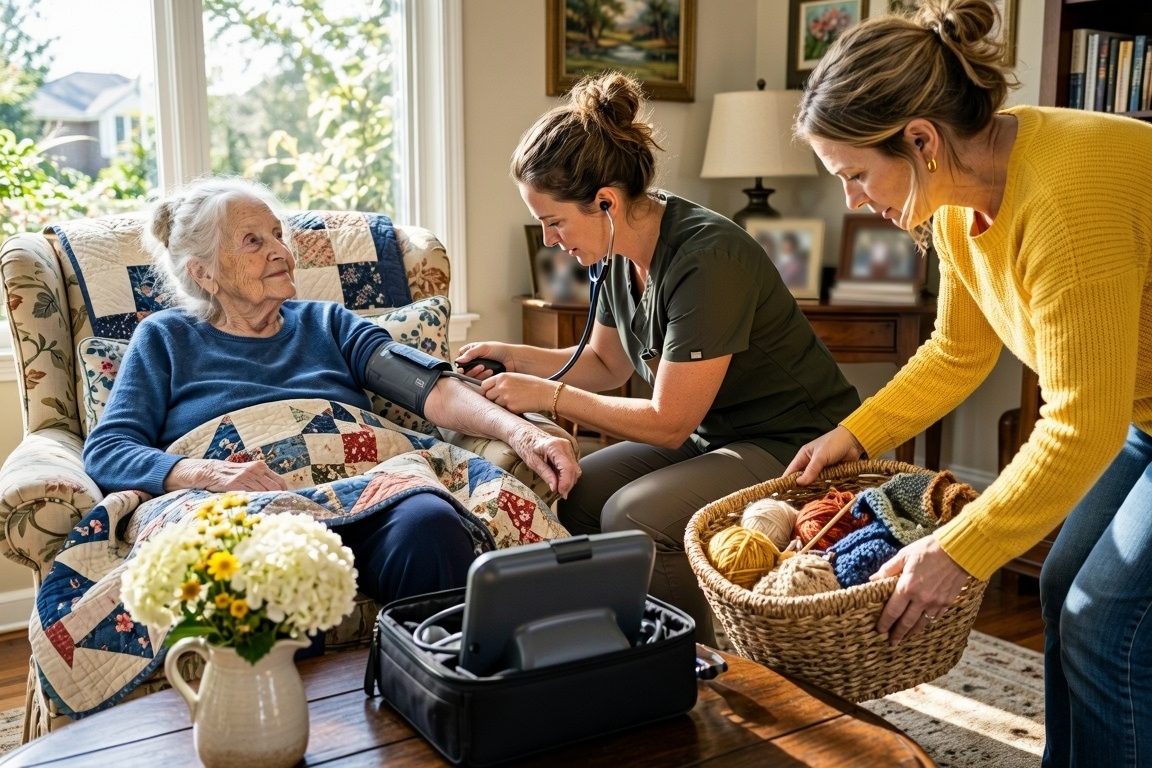
Hospital-at-home, also called Advanced Care at Home, is a program where a patient receives hospital-level medical care in their own home instead of in a hospital building. According to Mayo Clinic, while enrolled, the patient must stay at home for the duration of care. The program delivers medications, supplies, and equipment to the home, and the patient has daily virtual visits with a physician or advanced practice provider. In-person visits from nurses, community paramedics, and other team members happen several times a day, sometimes early in the morning or late at night, based on the doctor's orders. The patient is monitored as if they were in a hospital, for example, a nurse actually watches them take their medicine and verifies it. The patient also learns to take their own vitals (like blood pressure and oxygen levels) and sends them to the care team. If something feels wrong at 2 a.m., they push a button and a live person appears on screen to help.
Who Is Eligible?
Eligibility for hospital-at-home is not automatic, it requires a doctor's certification that the patient is homebound and needs hospital-level care but can safely receive it at home. The Medicare definition of homebound means the patient needs help (like a cane, walker, wheelchair, or another person) to leave home, or leaving home is medically contraindicated. They may leave for medical treatment or short, infrequent non-medical reasons (like religious services), but the norm is that they cannot leave without significant difficulty. The patient must also have a condition that justifies daily physician oversight and frequent in-person nursing visits. For dementia patients, this might be an acute illness like pneumonia, sepsis from a UTI, or recovery from a surgery (like a hip fracture) , not the dementia itself. The goal is to help the patient get better, regain independence, and become as self-sufficient as possible, so it is typically a short-term service, not a long-term care solution.
What Does It Cost?
Cost depends on the patient's insurance. For those with Medicare Part A, hospital-at-home is often covered as an inpatient benefit, meaning the patient pays the same deductible and coinsurance as they would for a traditional hospital stay. Some Medicare Advantage plans and private insurers also cover these programs. For dementia patients, it is critical to check whether the program is considered 'skilled home health' (which requires a homebound certification and is usually short-term) versus 'custodial care' (which is not covered by Medicare). If the patient has Medicaid or long-term care insurance, those may also cover some costs, but the rules vary by state. Always discuss with the hospital's financial counselor or the program's coordinator before enrolling to understand exactly what will be billed and what the patient's out-of-pocket responsibility will be.
Practical tools
1
Emergency Action Card
Different situations
For a patient with early-stage Alzheimer's who is still living alone
Hospital-at-home may not be appropriate because the patient must have a caregiver present or at least available. If the patient lives alone, the program may require a family member to stay overnight or hire a private-duty aide. Discuss with the program coordinator whether a 24/7 caregiver is mandatory. If not, the patient will need to be able to use the video call button independently and follow instructions, which may be challenging with early memory loss.
For a patient with Lewy body dementia (LBD)
LBD patients are very sensitive to medications, especially antipsychotics and some pain meds. The hospital-at-home team must be informed of this. They should avoid giving any new medication without first checking with the patient's neurologist. Also, LBD patients often have fluctuating cognition and visual hallucinations, the home environment should be calm, with low lighting and minimal clutter, to reduce confusion. The 24/7 video call may be frightening if the patient does not recognize the face on the screen; consider having the nurse call by phone instead.
For a spouse caregiver who is also elderly or has health issues
The program may be too demanding for an elderly spouse alone. Ask the program if they can provide a home health aide for a few hours each day to help with bathing, meals, or supervision. If not, consider having an adult child or friend stay overnight. The spouse should also have their own backup plan for their own health needs, for example, a neighbor who can check on them. Do not let guilt push you into doing more than you safely can.
For a patient on Medicaid or with limited income
Medicaid coverage for hospital-at-home varies by state. Some states have waivers that cover these programs, but others do not. Contact the state Medicaid office or the program's financial counselor to find out if the patient qualifies. If not, ask about charity care or sliding-scale fees. Do not assume that because the program is offered, it is free, always get a written estimate of costs before agreeing.
For a patient in a nursing home or assisted living
Hospital-at-home is typically designed for private homes, but some programs may allow the patient to stay in their facility room if the facility agrees and can accommodate the equipment and visits. The facility's staff will need to coordinate with the hospital-at-home team. This can be complex, so discuss it with the facility's director of nursing and the program coordinator early. If the facility cannot support it, the patient may need to be transferred to a family member's home for the duration.
For the doctor
5
- Ask the doctor: 'Is my loved one medically stable enough to be at home, or are there risks like sudden breathing problems or severe infection that would make the hospital safer?'
- Ask the pharmacist: 'Are there any medications in the hospital-at-home plan that could interact with my loved one's dementia meds or cause delirium?'
- Ask the program coordinator: 'What is the exact process if my loved one gets worse at home? How quickly can they be transferred back to the hospital?'
- Ask the insurance company: 'Does my plan cover hospital-at-home? What is my deductible, copay, and any out-of-pocket maximum for this type of care?'
- Ask the social worker: 'If we cannot manage at home, what are our options for a short-term skilled nursing facility or hospice?'